(CHARLOTTE, NC.) – The Mecklenburg Public Transportation Authority (MPTA) board approved its FY 2027 budget, adopted a new fare policy, and advanced multiple transition agreements during its Wednesday meeting, while residents called for expanded commuter rail access and increased transit equity across North Charlotte.
The meeting, which included board action on financial, governance, and operational policies.
The board approved the FY 2027 operating and capital investment budgets, authorized procedures to receive federal transit funding, and unanimously adopted the Primary Interlocal Agreement (PILA) with the City of Charlotte, establishing the framework for MPTA’s continued transition into an independent transit authority.
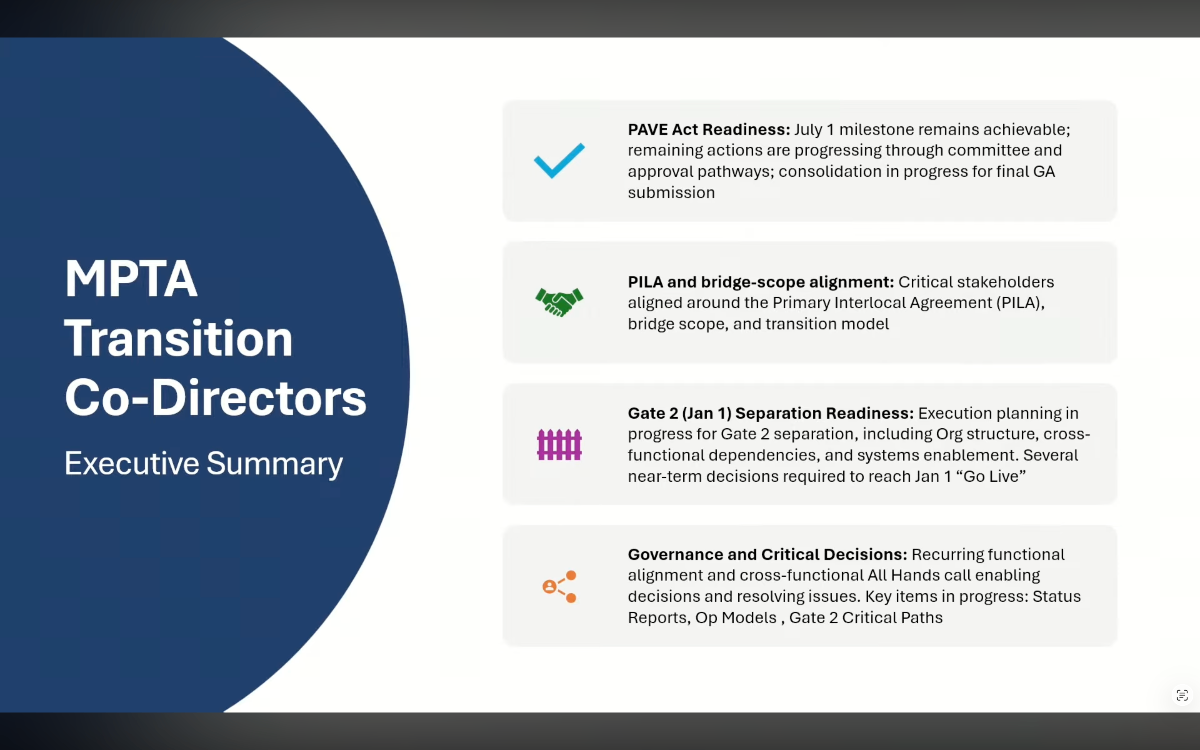
This operational timeline outlines the critical path and committee approval milestones required before the final PAVE Act submission deadline on July 1, 2026.
Photo Credit: City of Charlotte/YouTube
Discussion on the budget centered on provisions allowing the finance officer to reallocate funds within approved budget categories. Some trustees raised concerns about oversight authority, though the measure ultimately passed without amendment.
The board also approved a depository resolution designating Bank of America as the agency’s primary financial institution and requiring dual-signature procedures for specified transactions.
The most extensive debate centered on the MPTA's new fare policy.
The policy transitions the system toward electronic fare collection, expands reduced-fare eligibility, and introduces fares for the Gold Line streetcar following a 12- to 18-month implementation period.
Several trustees questioned whether fare collection should be introduced on the Gold Line before the streetcar achieves full network connectivity. Other members supported the policy, citing the need for consistent fare structures and long-term financial stability.
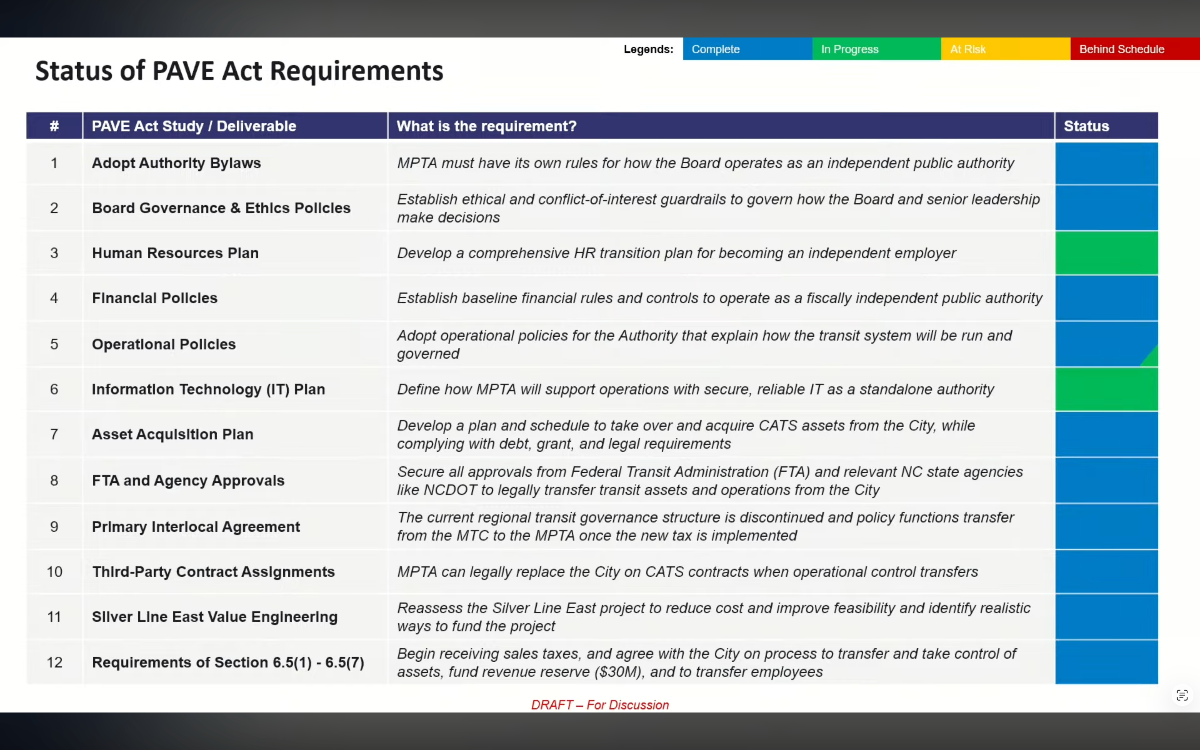
A transition dashboard tracks the progress of twelve core statutory deliverables required for the agency to establish independent governance, financial controls, and operations.
Photo Credit: City of Charlotte/YouTube
A motion to maintain free Gold Line service temporarily failed before the board approved the broader fare policy.
Additional approvals included the MPTA Transit Advertising and Sponsorship Policy, interim adoption of existing Charlotte Area Transit System operational policies, creation of a temporary Public Transportation Advisory Committee (PTAC), and the Disadvantaged Business Enterprise (DBE) program.
Some trustees requested additional transparency regarding which legacy policies would remain in effect during the transition period, citing the need for clearer operational documentation.
This local friction over administrative transparency mirrors a broader national conversation about public accountability.
For instance, in an article titled "If a Data Center Here Was Above Board, It Wouldn’t Need an NDA," OpGov.news journalist Pepper Mc'Quiffins reported from Pensacola on mounting community pushback against a proposed AI data center operating under non-disclosure agreements, highlighting the universal struggle of public agencies trying to balance large infrastructure developments with basic resident transparency.
Marjorie Parker, president of the Hidden Valley Community Association and a representative of the Red Line Commuter Coalition, urged the board to include a station at West Craighead Road and North Graham Street, citing long-standing environmental and transportation burdens in the area.
Karen Sullivan echoed concerns about industrial impacts on North Charlotte neighborhoods and said transit investment could improve access to jobs and essential services.
Tanya Jameson of Leading on Opportunity said transit-oriented investment has historically transformed industrial corridors in Charlotte and argued that similar outcomes could occur in North End communities if a station were approved.
Public commenter Stephen Salscer proposed a commuter rail line from Charlotte Gateway Station to Kings Mountain with a potential extension to Shelby, as well as additional airport rail connectivity.
The deeply personal and urgent nature of these Charlotte transit appeals highlights a growing trend of residents aggressively using public comment periods to pivot local policies.
A similar municipal dynamic played out in California, where OpGov.news reporter Sarah Denos detailed a tense Board of Supervisors meeting in her piece, "Rooster Ordinance Debate Draws Emotional Testimony From Sacramento County Residents," illustrating how raw citizen feedback on neighborhood quality-of-life and property rights continues to directly sway local regulatory decisions across the country.
The board also received an update on a recent knife-related incident on the Blue Line and discussed potential safety improvements, including technology enhancements and ongoing partnerships with UNC Charlotte and Central Piedmont Community College.
Officials also provided an update on the search for MPTA’s first chief executive officer, describing the process as ongoing and focused on identifying leadership capable of guiding the agency through its transition period.
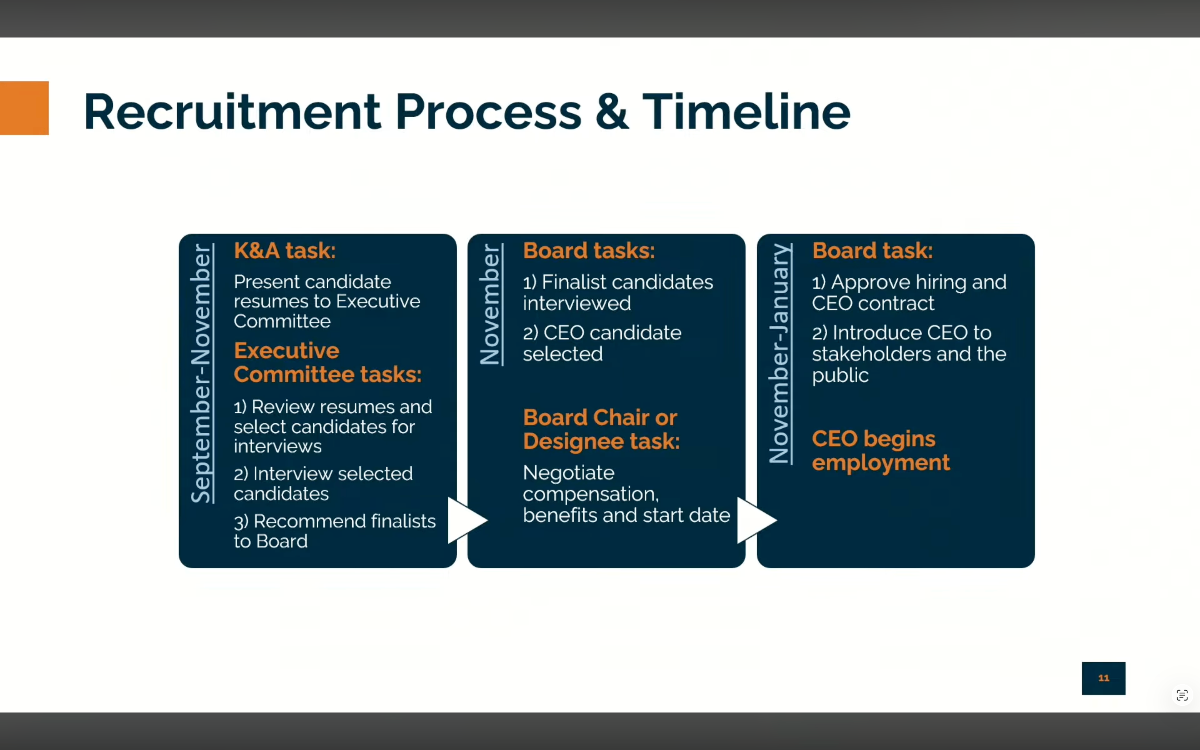
The presentation detailed the initial phases of the executive search timeline, highlighting active outreach and stakeholder engagement strategies running through September to secure a permanent CEO.
Photo Credit: City of Charlotte/YouTube
To add to or correct any information in this report, please contact Victoria Osborne at victoria.o@lead4earth.org.
Thumbnail Photo Credit: City of Charlotte/YouTube
0
1

Comments