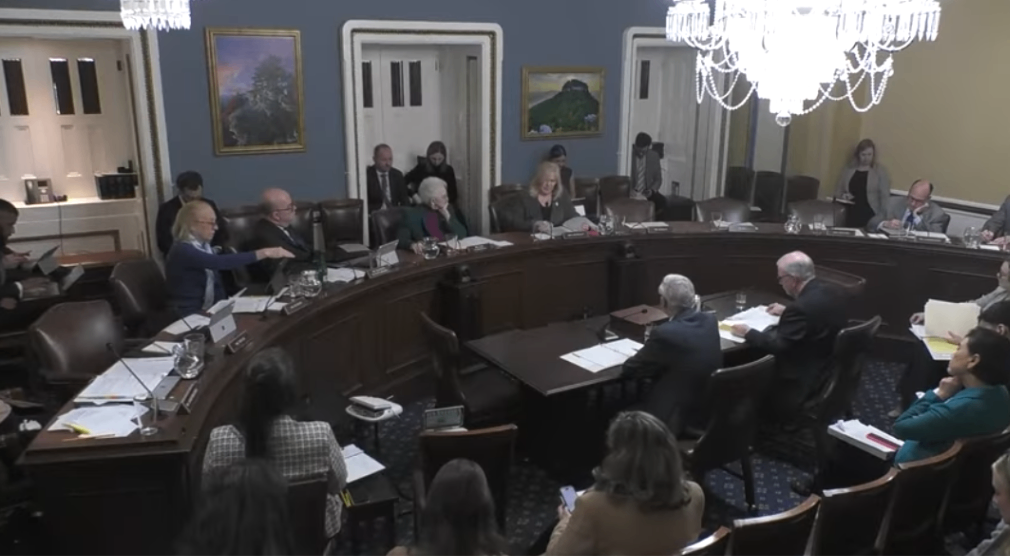
Photo Credit: YouTube / House Rules Committee Hearing H.J.Res. 140, Jan. 20
(WASHINGTON DC., MINNESOTA) - Voting on H.J. Resolution 140 may have been delayed in February, but it’s far from dead in the water. The resolution to repeal the 20-year ban on mining near the Boundary Waters Canoe Area (BWCA) in Northern Minnesota passed the U.S. House of Representatives in Jan., and the delayed Senate vote gives you more time to weigh in.
About H.J. Resolution 140
Proposed by Minnesota Rep. Pete Stauber, H.J. Resolution 140 uses the Congressional Review Act to eliminate the 20-year moratorium on mining in the wilderness surrounding the BWCA. The ban was approved by the Biden administration in 2023. Mining is already banned within the Boundary Waters itself, but Stauber and other proponents of H.J. Resolution 140 believe it should be allowed within the watershed that flows into the BWCA.
If the resolution passes, it could lead the way for Twin Metals Minnesota to reapply for the State and Federal permits required for underground copper-nickel mining on the outer edge of Ely, Minn. Supporters of the resolution argue that it would bring union jobs, increase US mineral stability, and generate millions in revenue for local, state, and federal governments.
Why the draw for copper-nickel? It’s essential to carbon-emissions reducing technologies, including electric vehicle (EV) batteries, solar panels, and more. It’s also a crucial component in many in-house gadgets, including many of the smart devices used by billions of Americans daily.
What it means for the BWCA
Copper-nickel mining, like most forms of mining or drilling, isn’t without risk of negative environmental impact, regardless of how carefully planned and monitored. The US Forest Service reviewed 20 separate copper-nickel mines across the US and Canada in 2022 and found that all of them caused some form of environmental degradation.
This isn’t surprising, as mine waste piles are known to release harmful sulfates, heavy metals, and even sulfuric acid into surrounding ecosystems. The BWCA attracts over 150,000 tourists a year from around the world, and Lake Superior is one of the largest gateways to the BWCA. With waste leaching almost certain, the run-off could contaminate more than the Boundary Waters.
Environmental impact could reach the Illinois River, a major tributary of the Mississippi, as Lake Superior and Lake Michigan are connected. The legendary river isn’t just a source of tourism revenue, recreation, and wonder for Minnesotans; it spans 10 U.S. states. The stakes are high, and some form of environmental degradation is inevitable if copper-nickel mines are placed within the BW watershed.
Alternative Options to Increase Copper-Nickel Materials
Copper-nickel alloys are infinitely recyclable, and the recycling process isn’t as carbon-intensive as mining. That means creating more recycling centers will have a smaller environmental impact than opening another mine. Moreover, copper-nickel retains its value during the recycling process. Some argue that copper-nickel devices can last up to ten years, so the rate of turnover to produce the recycled material required would still suggest the need for another mine, but that’s unlikely.
Infrastructure, pre- and post-production, and electronic waste have been accumulating for years, all containing the material H.J. Res. 140 proposes the mine to produce. Over $6 billion of copper scrap was exported from the U.S. in 2025, making it the 63rd most exported product of 1,200+. In 2022, the US exported approximately 784k tons of copper that was regenerated from scrap.
This means exporting scrap-generated copper is an equally feasible revenue source. The problem is that the U.S. has few refining facilities capable of recycling copper-nickel. That means the jobs the resolution proposes to create could also come through building additional refineries throughout the US.
What’s next?
There’s no set date for the vote yet, but the Senate only has 60 legislative days to act before the window to vote closes at the end of April. If you want to voice your support or opposition to H.J. Resolution 140, you can contact your State representatives directly or via the Save the Boundary Waters website Action Center.
To add to or correct any information in this report, please contact me at kristin.h@lead4earth.org and leave a comment below.
0
0

Comments