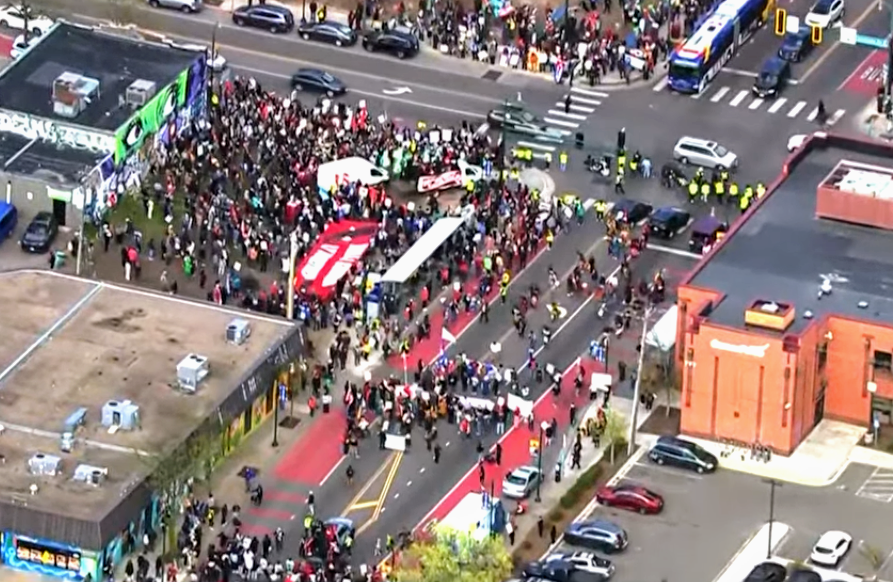
Photo Credit: YouTube / May Day march begins to gather in Minneapolis
(MINNEAPOLIS, MN.) -- It all started in 1886, when fed-up workers went on strike and demanded an eight-hour workday. Since then, May Day has been a common time for marches and peaceful protests in the US, eventually becoming an international labor holiday in 1889. Participation is global, but here in the U.S., Minneapolis was one of the many cities, including St. Paul, that threw a May Day rally.
This year's primary focus was on peace, improved rights and working conditions for workers, and the challenges immigrant communities face. Due to Operation Metro Surge, many local businesses had financial loss and some even underwent closures because many immigrants stayed home, fearing they may become targets of the sweep. The result was businesses on Lake Street losing a combined total of 30 million dollars in a single month.
Crowds stretched multiple city blocks and grew late into the afternoon, exceeding 3,000 people. Aztec dancers led the march, which started near Mercado Central and extended down Lake Street, Chicago Avenue, and Hiawatha Avenue. Union workers, community leaders, teachers, and students all spoke in a show of unity, many stressing a need to bring an end to the exploitation of immigrants and targeting of minorities. A rally cry of “The people united will never be divided,” ringing the air.
Video Credit: YouTube / CBS News Minnesota
The march also brought awareness to the strides made by workers and unions nationally and internationally. It celebrated a growing number of labor rights victories, including court rulings that prevent AI replacement of fired/laid-off workers, Teamster and Auto Workers contract wins, and extended paid sick leave.
Minnesota notably placed a ban on ‘captive audience’ meetings in the past year. This ban makes it unlawful for employers to schedule mandatory meetings during regular work hours if the meeting requires an employee to listen to their employer's views on religion, politics, and other opinion or belief-centered topics.
Overall, the march was a celebration and a protest, celebrating advancements in working conditions and protesting current immigration enforcement policies. Regardless, it sent a message. Despite the growing fear among immigrant workers in the U.S., community support is still out there, and workers worldwide are still advocating for fair treatment 140 years after that first strike.
To add to or correct any information in this report, please contact me at kristin.h@lead4earth.org and leave a comment below.
0
0

Comments