(CONTRA COSTA, CA.) – Mike Arata also used his appearance before the Contra Costa Taxpayers Association to criticize the Contra Costa Community College District’s proposed Measure G bond proposal.
Arata, a longtime Bay Area activist and former educator, said voters should closely examine the district’s debt levels, enrollment trends and executive compensation before approving additional borrowing.
(Video OpGov.News: Mike Arata speaks about CoCo Tax at community event)
The Contra Costa Community College District’s proposed Measure G bond has drawn criticism over long-term debt and falling enrollment.
The measure would authorize about $920 million in borrowing, with total repayment costs estimated at $1.88 billion with interest over time.
The district already has more than $700 million in debt from earlier bond measures.
Arata questioned the need for additional borrowing as student enrollment has declined in recent years.
District officials say the bond would help fund repairs, modernization projects and improvements across district campuses.
Arata also pointed to executive compensation as a concern, pointing to several top administrators earning total compensation packages exceeding $400,000, and rising to more than $500,000 with benefits, arguing that rising employee compensation is a major cause of future budget strain.
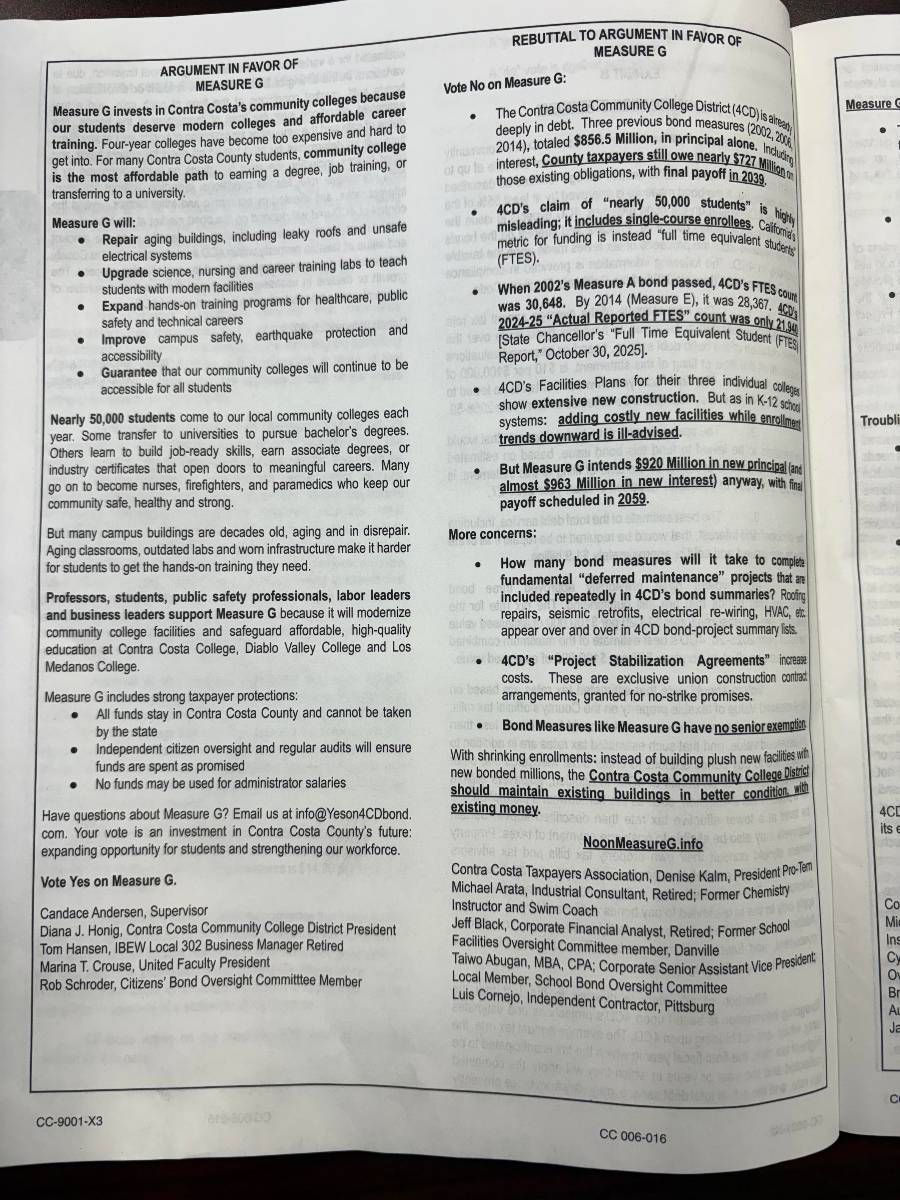
Photo Credit: OpGov.News
“The Chancellor here, starting with a base salary of $400,000 plus, makes more than the statutory salary for the President of the United States,” said Arata, speaking on the Chancellor of the Contra Costa Community College District. “Much more than Governor Newsom’s salary, of (approximately) $245,000,” he continued.
Critics of Measure G argue that existing debt levels and administrative costs should be addressed before taxpayers are asked to support another bond measure.
Supporters of the proposal maintain that long-term investment is necessary to keep facilities updated and safe for students.
Arata disagreed and urged residents to vote no on Measure G.
0
0

Comments