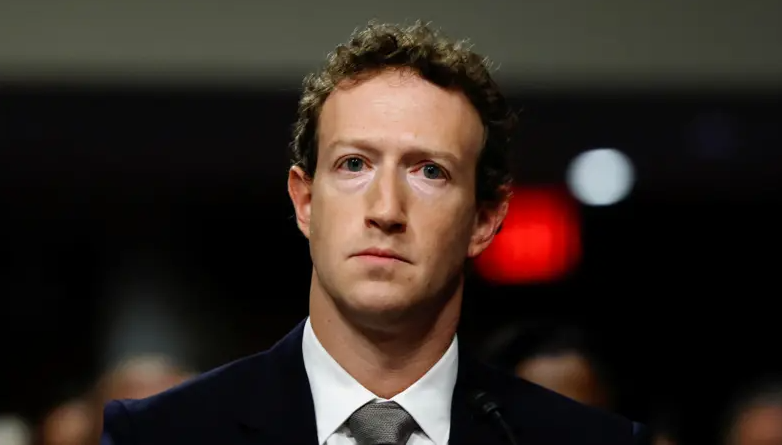
Photo Credit: Reuters / Mark Zuckerberg
(CALIFORNIA) – An unprecedented case regarding Meta’s product design began in California on August 18. The basis of the trial is the accusation that Meta deliberately designed Facebook and Instagram to be addictive to kids and teens. California isn’t the only state to think so, either.
Colorado, Kentucky, and New Jersey make similar accusations, citing the use of infinite scrolling, likes, filters, and recommendation algorithms that keep youth online longer. Plaintiff States assert that Meta does so to extend user engagement and increase revenue. They aren’t wrong; Meta’s revenue grows with each click, like, share, follow, and scroll.
Unfortunately, what the States see as "harmful product design" is a feature built into most websites, social media platforms, and message boards. So while the case is unprecedented for going after harmful product design, it’s also a springboard for future lawsuits against AI chat (e.g., wrongful death), VoIP apps like WhatsApp (e.g., visible private information*), and more.
Many prior cases against Meta for knowingly allowing harmful content to be posted haven’t stuck due to protections created under Section 230, but proving design flaws that created an avenue for addictive behavior could change that.
Section 230 states that internet platforms and users can’t be held legally liable for any content posted by third parties. Still, it doesn’t provide protections for software or product design flaws, so the tech giant won’t be able to fall back on the law this time.
Another major accusation in the trial is the violation of children’s privacy laws by collecting data from users 13 and under without parental consent. Both accusations assert that Meta knew about potential mental health harms but publicly minimized the extent of harm. The company said the states have taken internal statements and research out of context.

Photo Credit: Getty Images / Arturo Béjar
Whistleblower and former Meta safety engineer Arturo Béjar testified that Meta’s internal research revealed that young users viewed harmful content at high rates on Facebook and Instagram; up to a hundred times worse than reported. Béjar also divulged that he believed Meta used the term "problematic use" instead of "addiction" to undermine how big the issue really was.
Video Credit: YouTube / CBS News
Meta argued it recognized the risks and took steps to protect teens, including strengthening privacy settings and adding usage reminders. Valiant, but these features aren't mandatory, and many children and teens won’t enable them if they prevent them from viewing content unfiltered.
Next comes the argument that parents should monitor and control youth accounts, but how many do? Let’s be honest, even with frequent monitoring and time limits, kids will see harmful content if a company doesn’t implement features to prevent it.
Meta has already paid out $567 million in New Mexico for child-safety violations, and a $6 million verdict involving mental health harm sustained by a young woman via social media. Potential estimates in this case are $1.4 trillion, though no concrete amount has been set. That means the approximately six-week trial could be very expensive for Meta if it loses, appeals, and the trial reaches the Supreme Court.
The entire situation leads me to question a lot of things, but the primary query is: why is a child under age 13 on Facebook? The app serves no educational purpose; anyone can post anything they want, and the chances of the platform taking responsibility for anything without legal action are pretty low. According to a Wall Street Journal study, users 22 and under are one of the keys to Instagram's success.
One researcher noted, "Thirty-two percent of teen girls said that when they felt bad about their bodies, Instagram made them feel worse,” the researchers reportedly wrote. The information used in the Journal study came from Facebook's own internal documentation—the company knew about the effects and, for the most part, ignored them.
An internal Meta presentation displayed data that "among teens who reported suicidal thoughts, 13 percent of British users and 6 percent of American users traced the issue to Instagram."
What about age verification? I can tell Facebook or Instagram I’m a 92-year-old man living in the UK, then spoof my IP with a VPN, and they wouldn’t know any different. Tiny barriers make adults feel better, but they aren’t as useful as they seem.
So, would changing the product design help? Maybe, if Meta makes some features mandatory for anyone under a certain age (I vote for 16). Even then, I refer you to my second point: people lie on the internet, and kids are exposed to devices from a very early age now. iPad videos during snack time are becoming extremely commonplace for very young children.
By the time they’re in first grade, most can work a smartphone well enough to find their favorite game or call home. I applaud the States involved for actively attempting to hold Meta responsible for the safety of its younger users, but it isn’t the only company using these tactics to make money.
A study by the National Library of Medicine (NLM) revealed that approximately 70 percent of children 12 and under use social media, despite platforms' efforts to enforce age restrictions. Statistics also show that children aged 9-12 spend upwards of 1.5 hours a day on various social media platforms; YouTube and TikTok are among the most popular.
Facebook was called out in the study as well; several test groups from different countries discovered that the platform has an overall effect on children's subjective well-being, and that overuse can lead to depression, isolation, lowered self-esteem, and sleeplessness.
That’s why proving its design violated consumer-protection and child-safety laws is important; it would set a precedent for holding other online platforms accountable. It would be a step toward getting video and social media platforms to rethink sidestepping laws and then claiming protection under Section 230.
*WhatsApp is undergoing changes that would give users a username if requested and hide their phone number, but it was not live as of this post.
To add to or correct any information in this report, please contact me at kristin.h@lead4earth.org.
0
0

Comments