(CHARLOTTE, N.C.) — Mecklenburg County is entirely under drought conditions, according to federal monitoring data, as North Carolina continues to experience widespread dry weather and increasing fire risk across much of the state.
The U.S. Drought Monitor shows 100% of Mecklenburg County is affected by drought classification, reflecting ongoing rainfall deficits and low soil moisture levels in the Charlotte metro area.
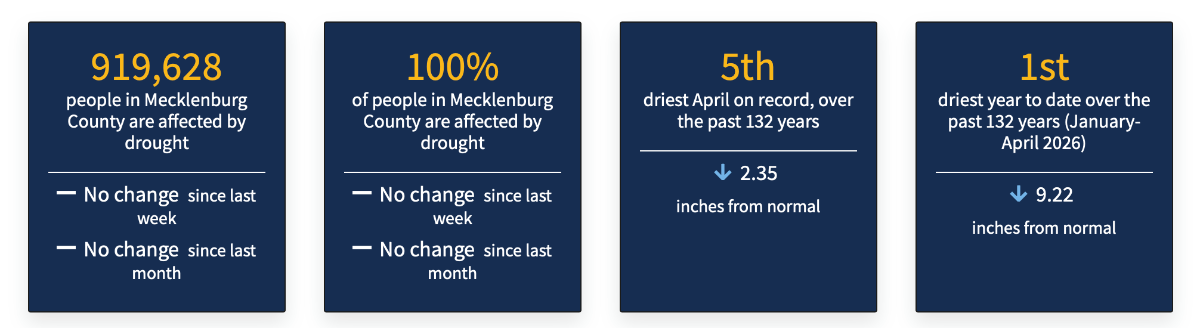
Federal climate data indicates that 2026 has started as the driest year on record for Mecklenburg County, with rainfall more than 9 inches below normal levels.
(Photo Credit: Drought.Gov)
Statewide Drought Conditions Cover Most of North Carolina
Drought conditions are not limited to the Charlotte region. According to the latest U.S. Drought Monitor map, released May 7 and based on data through May 5, large portions of North Carolina are experiencing moderate to severe drought, with some areas in extreme categories.
The North Carolina State drought assessments show that a majority of central and western North Carolina is in severe (D2) drought or worse. Large portions of the Piedmont, including Mecklenburg County, are in extreme drought (D3) classification in recent updates, and only small portions of eastern North Carolina remain in lower drought categories
In some recent state assessments, more than 70 counties have been classified as experiencing severe drought conditions, with dozens more in moderate drought levels across the state.
Officials say the pattern reflects a sustained precipitation deficit that has developed over several months, rather than a short-term dry spell.
100% of Mecklenburg County Impacted
Federal data confirms that all residents of Mecklenburg County, roughly 900,000 people, are affected by drought conditions, underscoring the scale of water stress in the region.
The classification is based on a combination of rainfall totals, streamflow levels, reservoir storage, and soil moisture conditions tracked weekly by federal and state climate agencies.
Fire Risk Prompts Restrictions and Safety Warnings
While the statewide burn ban was recently lifted as immediate forest fire danger moderated, local officials continue to urge extreme caution and maintain restrictions in city parks due to persistent long-term drought.
“When you follow water restrictions, you are helping firefighters do their job when it matters most,” officials said.
Mandatory Water Restrictions Take Effect as Conditions Worsen
Effective Friday, May 15, Charlotte Water is moving to mandatory Stage 2 water restrictions, requiring residents to limit outdoor irrigation to a strict two-day-a-week schedule and banning the home washing of vehicles and driveways.
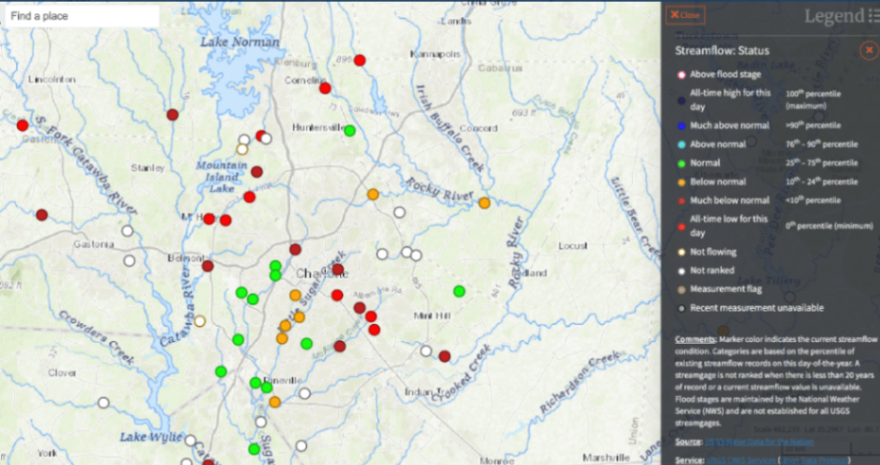
Real-time monitoring shows several streamflow gauges across the Charlotte metro area reaching "all-time low" levels (dark red) as the regional water supply faces sustained stress.
(Photo Credit: National Water Dashboard)
These enforceable measures follow a directive from the Catawba-Wateree Drought Management Advisory Group, as record-low reservoir levels force officials to transition from voluntary conservation to mandatory reductions across the Carolinas.
Outlook Remains Dependent on Rainfall
While isolated rainfall events have occurred, officials say they have not been enough to meaningfully reverse drought conditions.
State climate data indicate that recovery will require sustained precipitation over an extended period, not short-term storms. Until then, drought conditions are expected to persist across much of North Carolina, including the Charlotte region.
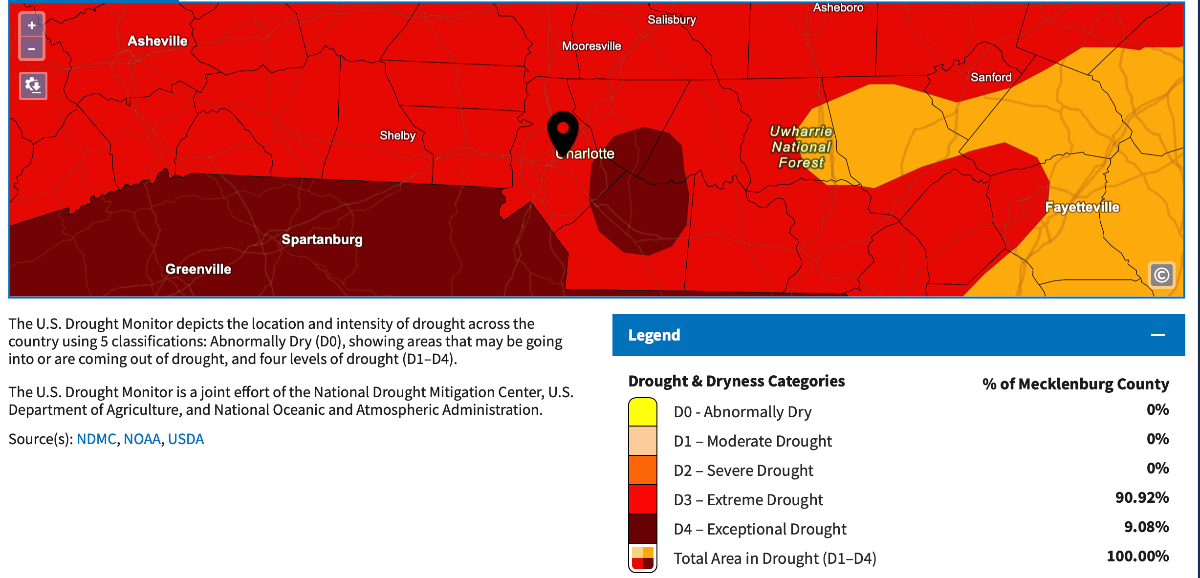
Mecklenburg County is almost entirely classified under "Extreme" or "Exceptional" drought, the two highest categories of water stress defined by federal monitors.
(Photo Credit: US Drought Monitor)
You can reach Victoria Osborne at victoriao@lead4earth.org.
(Thumbnail Photo Credit: US Drought Monitor)
0
0

Comments