(CHARLOTTE, N.C.) – Leadership of Mecklenburg County’s child welfare system is shifting, following the resignation of Kim Henderson, the county’s Child, Family and Adult Services director.
County officials confirmed Henderson stepped down effective immediately. No further details about the decision have been publicly provided, and officials have not indicated that the resignation is tied to any specific case or policy issue.
Even without further details, leadership changes in child welfare draw attention, given the critical role these systems play in protecting vulnerable populations.
The weight of the role
Child welfare agencies operate at the intersection of public safety, family services, and government oversight. Directors are responsible for setting policy direction, managing staff, and ensuring that procedures are followed across a wide range of cases.
In large and growing counties like Mecklenburg, that responsibility is particularly complex. Agencies must balance high caseloads, evolving state guidelines, and limited resources.

Mecklenburg County’s child welfare headquarters enters a period of interim leadership following the sudden resignation of Director Kim Henderson.
(Photo Credit: Mecklenburg County)
According to the North Carolina Department of Health and Human Services, county departments administer child welfare services locally, while the state provides policy guidance and oversight—placing significant responsibility on local leadership.
A system under increasing focus
According to the U.S. Department of Health and Human Services’ 2020 Report to Congress on Child Welfare Outcomes, child welfare systems across the nation are evaluated on safety, permanency, and well‑being measures, with persistent challenges in consistency and resource allocation.
Across North Carolina and the United States, child welfare systems have faced increased attention in recent years. Policymakers, advocacy groups, and researchers have raised questions about how agencies manage caseloads, evaluate risk, and maintain consistent oversight.
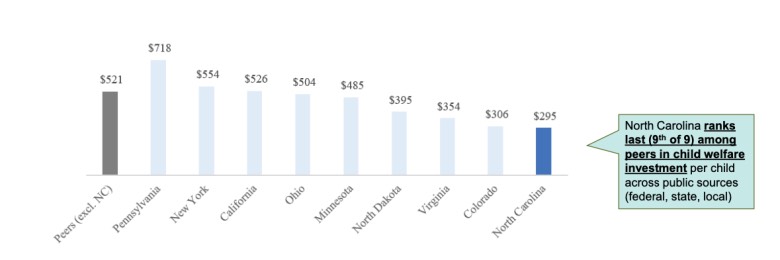
Data shows North Carolina ranks last among peer states in child welfare investment, highlighting the resource challenges facing new agency leadership.
(Photo Credit: North Carolina Health News)
These pressures are not unique to child welfare. Broader concerns about oversight and accountability have appeared across multiple areas of government. Recent reporting in OpGov.news, including Children's Trust Fund Brings Up Concerns Again, Again, has highlighted scrutiny over how public funds and services are managed at the local level.
The broader political landscape
Child welfare has increasingly become part of larger policy conversations at both the state and national levels. Discussions around funding, workforce shortages, and oversight mechanisms have been central to debates about how to strengthen these systems.
Questions about public trust in government institutions have also extended beyond a single sector. In another OpGov analysis, No Public Faith For the Department of Industrial Relations, concerns were raised about confidence in regulatory agencies and the processes used to ensure accountability.
Taken together, these conversations reflect a broader environment in which transparency, oversight, and performance in public systems are receiving increased attention.
What leadership transitions can signal
A resignation does not necessarily indicate a specific issue or failure. Leadership changes occur for a range of reasons, many of which are not publicly disclosed.
However, transitions can serve as moments for reflection. They can prompt questions about how systems are structured, how performance is evaluated, and how agencies adapt to changing demands.
They can also create opportunities for new leadership to bring different approaches to longstanding challenges within child welfare systems.
Looking ahead
County officials have not yet announced a permanent replacement or outlined next steps for the department’s leadership. As that process unfolds, attention may turn to how the county positions its child welfare system moving forward.
This includes how leadership priorities are defined, how resources are allocated, and how oversight is maintained within a complex and high-stakes system. In the meantime, Letecia Loadholt will serve as interim director, guiding the department through this transition.
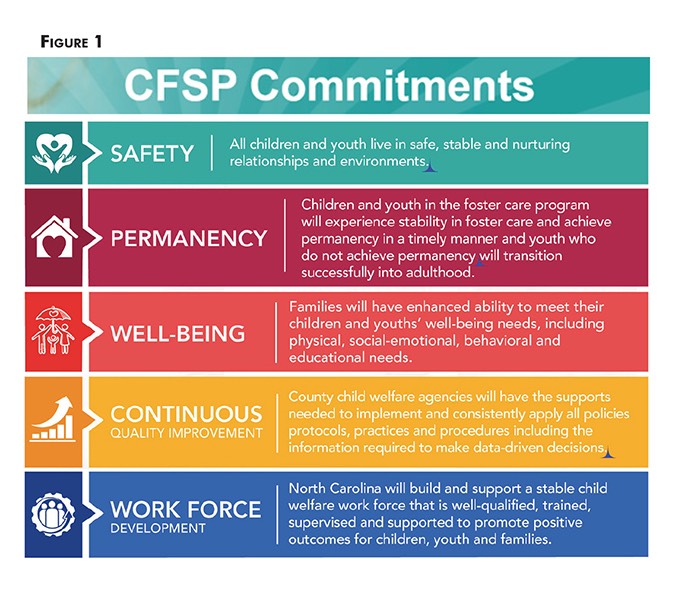
North Carolina’s CFSP framework sets the core benchmarks for safety, permanency, and well-being that local agencies must meet amidst leadership transitions.
(Photo Credit: Children’s Services Practice Notes)
This article focuses on the leadership transition itself and the broader context in which it occurs. It does not suggest wrongdoing in any individual case, but rather examines how leadership changes intersect with ongoing policy discussions at the local, state, and national levels.
As child welfare systems continue to evolve, leadership decisions—both at the county level and beyond—will remain an important part of that conversation.
Make sure to comment below what you think of the leadership changes happening in Charlotte.
(Thumbnail Photo Credit: WSOC TV)
0
0

Comments