(PORTLAND, OR) — Measles is spreading in Oregon. The Oregon Health Authority (OHA) has confirmed five cases of the disease since the beginning of the year.
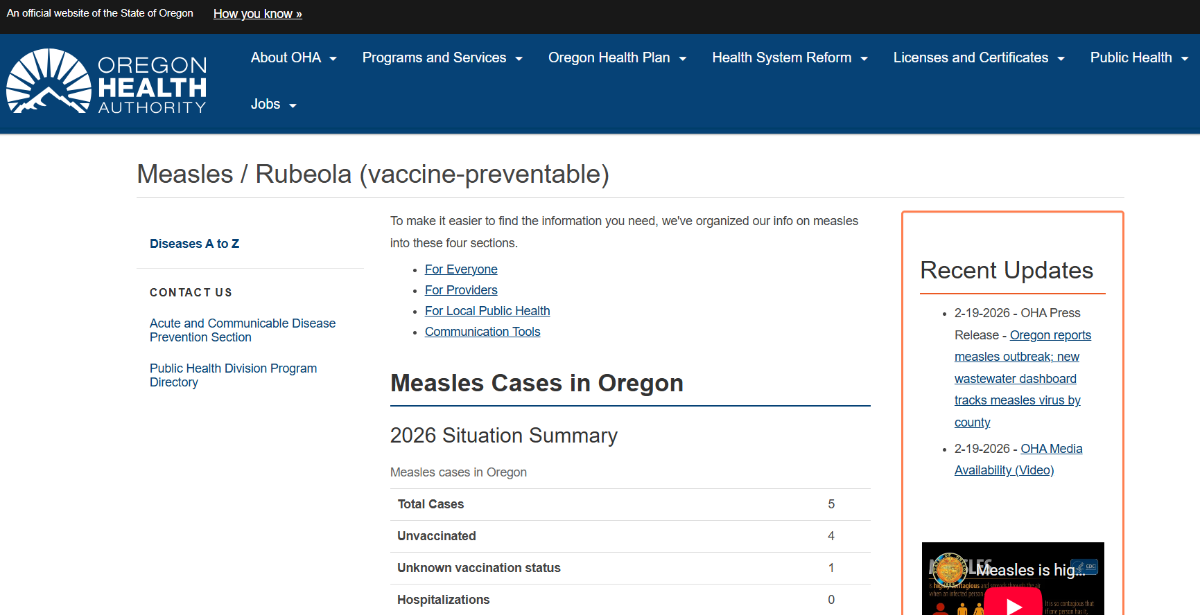
Photo Credit: Oregon Health Authority (OHA)
In an effort to detect measles cases earlier, the OHA has begun monitoring the spread through a wastewater dashboard surveillance system.
“Wastewater surveillance serves as an early warning signal system, which gives communities a headstart to prepare and empowers everyone to make informed decisions about immunization. Wastewater testing looks for the actual measles virus that causes illness in people, so it provides an early signal of community spread,” said Howard Chiou, M.D., Ph.D., medical director for communicable diseases and immunizations at OHA’s Public Health Division.
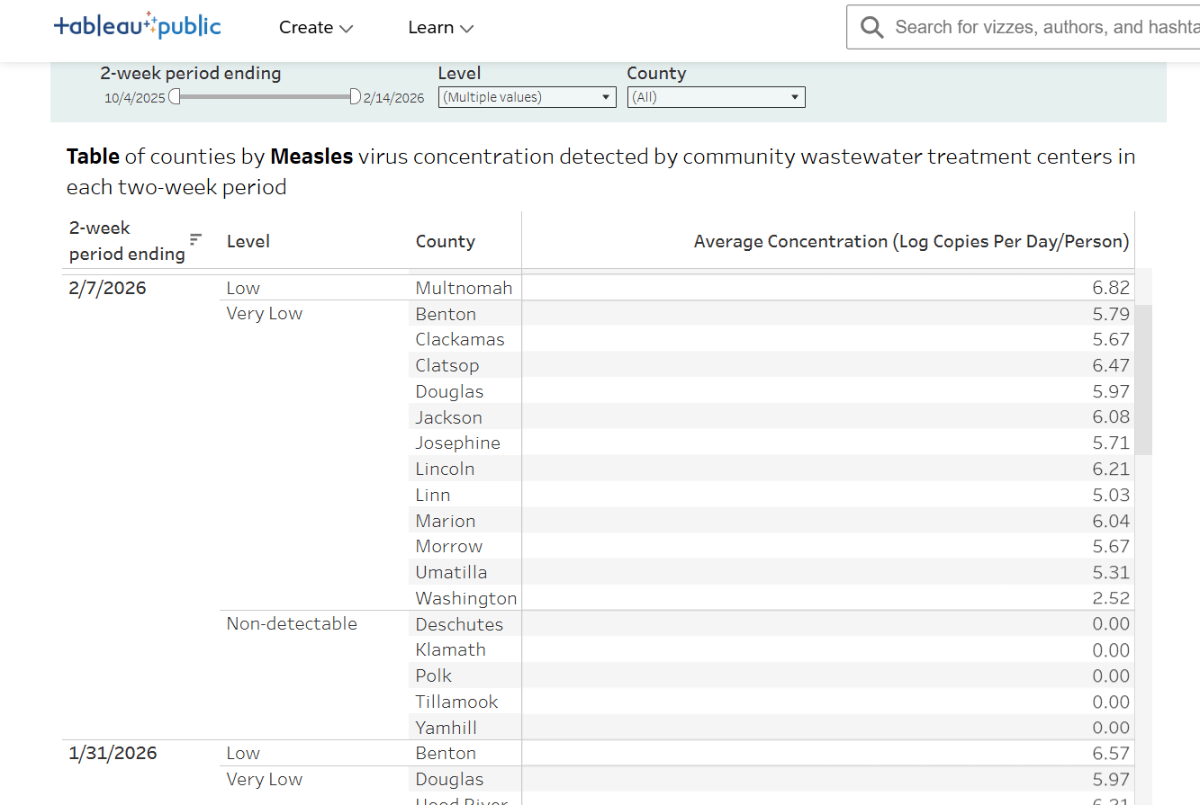
Photo Credit: Tableau Public
There have been confirmed cases in Clackamas and Linn counties in Oregon. According to the wastewater surveillance dashboard low levels of the virus have also been found in several other counties in Oregon, including Multnomah.
Chiou urges vaccination as the best way to protect against the disease.
“Measles is here in Oregon and spreading in the United States and vaccination remains the best way for people to protect themselves. We encourage everyone to talk with a healthcare provider to ensure they and their families are fully protected,” Chiou said.
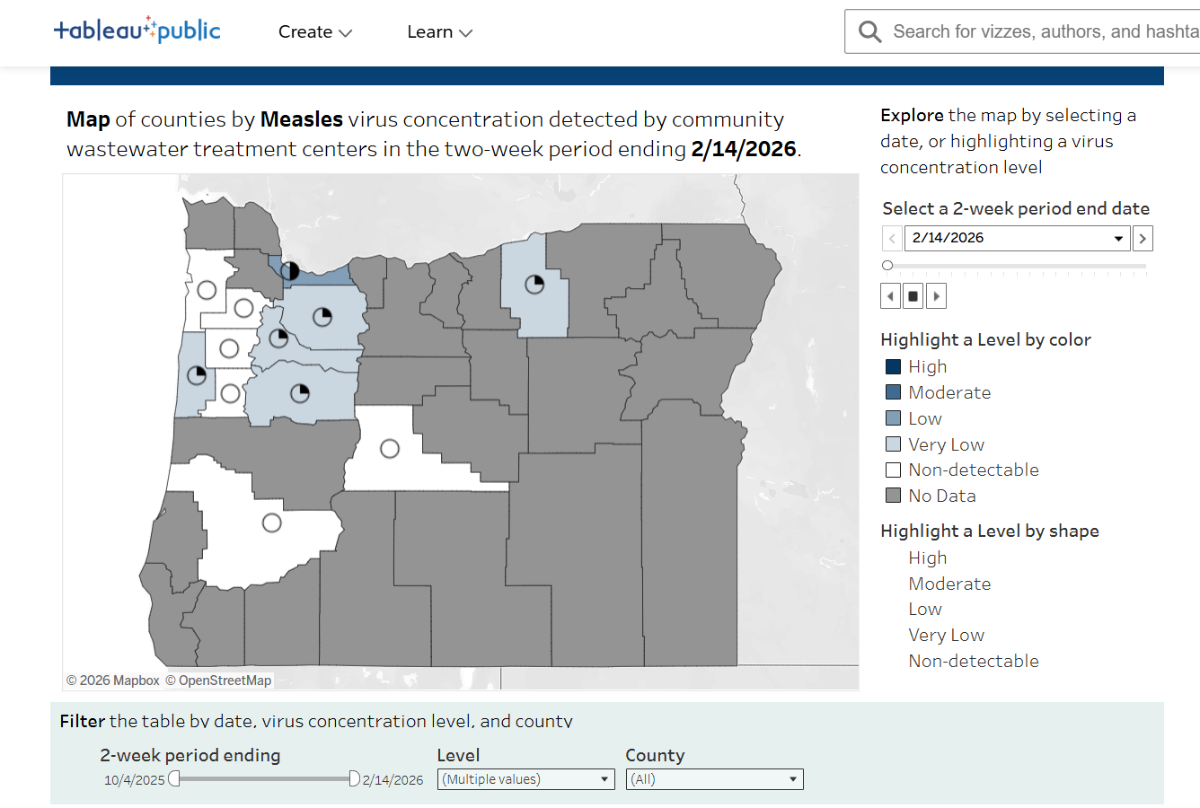
Photo Credit: Tableau Public
The Oregon Health Authority offers the following information and guidance to the public.
Symptoms typically begin seven to 21 days after exposure and include cough, runny nose and conjunctivitis with high fever, followed by a rash that starts on the head or neck and spreads downward. People are contagious from four days before the rash appears until four days afterward.
Health care providers should report suspected cases immediately and consider post-exposure prophylaxis for exposed patients:
MMR vaccine, within 72 hours of exposure.
Immunoglobulin, within six days.
For most vaccine-eligible people 6 months and older, MMR vaccination within 72 hours is recommended.
Anyone not protected against measles is at risk. OHA encourages people to check vaccination status and contact a health care provider if they have questions.
According to the Centers for Disease Control, there have been to date nearly 1,000 cases. The majority of these are among the unvaccinated.
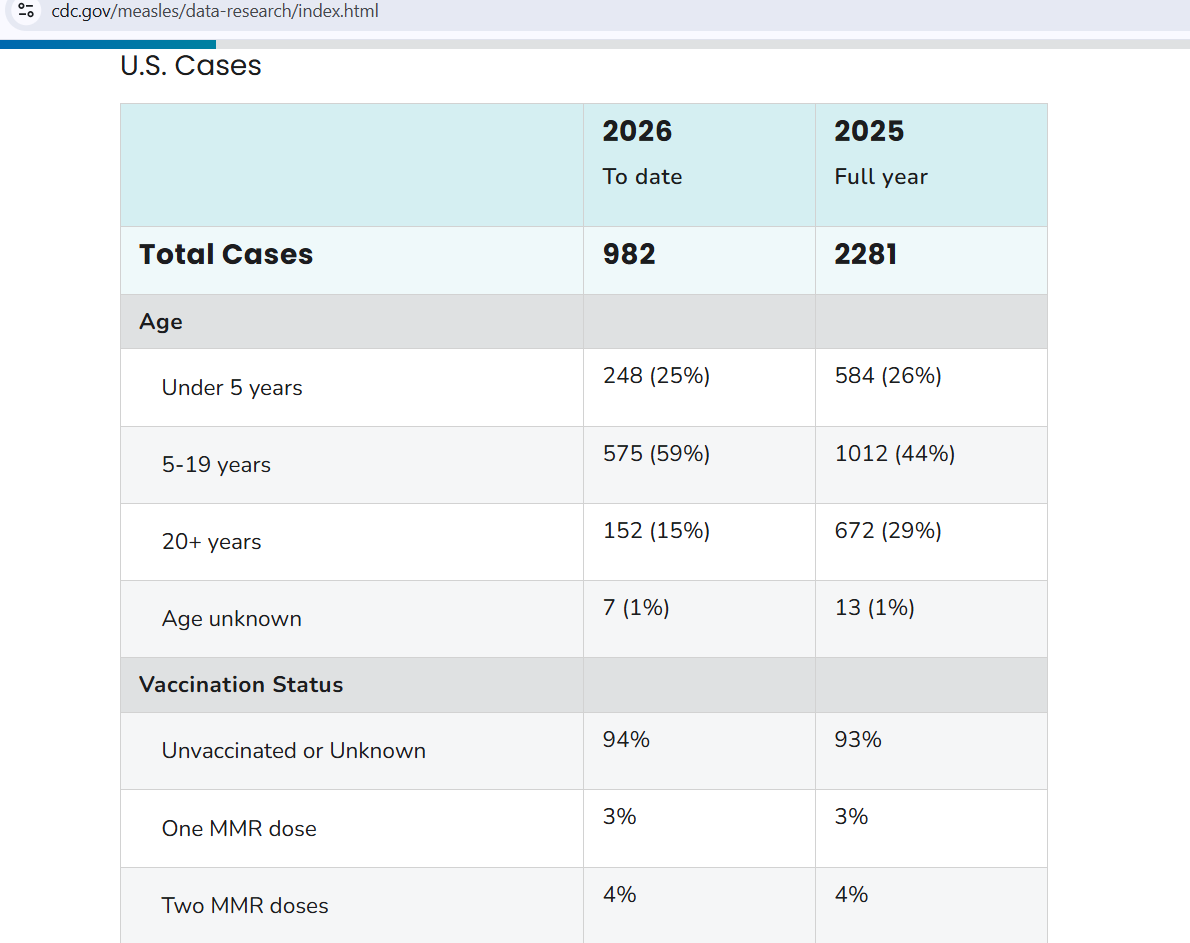
Photo Credit: Centers For Disease Control (CDC)
For more information about measles and how to safeguard against the disease visit the Centers for Disease Control (CDC) website. Additional information on vaccination is available here.
If you would like to comment on or add to this report, please email me at rory.h@lead4earth.org.
0
0

Comments