(CHARLOTTE, NC.) – Mecklenburg County Public Health issued a measles exposure notice this month for several locations in Charlotte as North Carolina continues to report cases tied to a regional outbreak. Health officials say residents should check vaccination records, watch for symptoms and follow public health guidance as monitoring efforts expand across the region.
The exposure notice follows statewide data from the North Carolina Department of Health and Human Services showing measles cases reported since December, including activity affecting counties across the Charlotte metro area. State officials say most recent cases involve individuals who are unvaccinated or whose vaccination status is unknown.
North Carolina health authorities say measles spreads easily through the air when an infected person coughs or sneezes and can remain in the air or on surfaces for up to two hours after exposure. Symptoms typically include fever, cough, runny nose, red eyes and a rash that begins on the face and spreads.
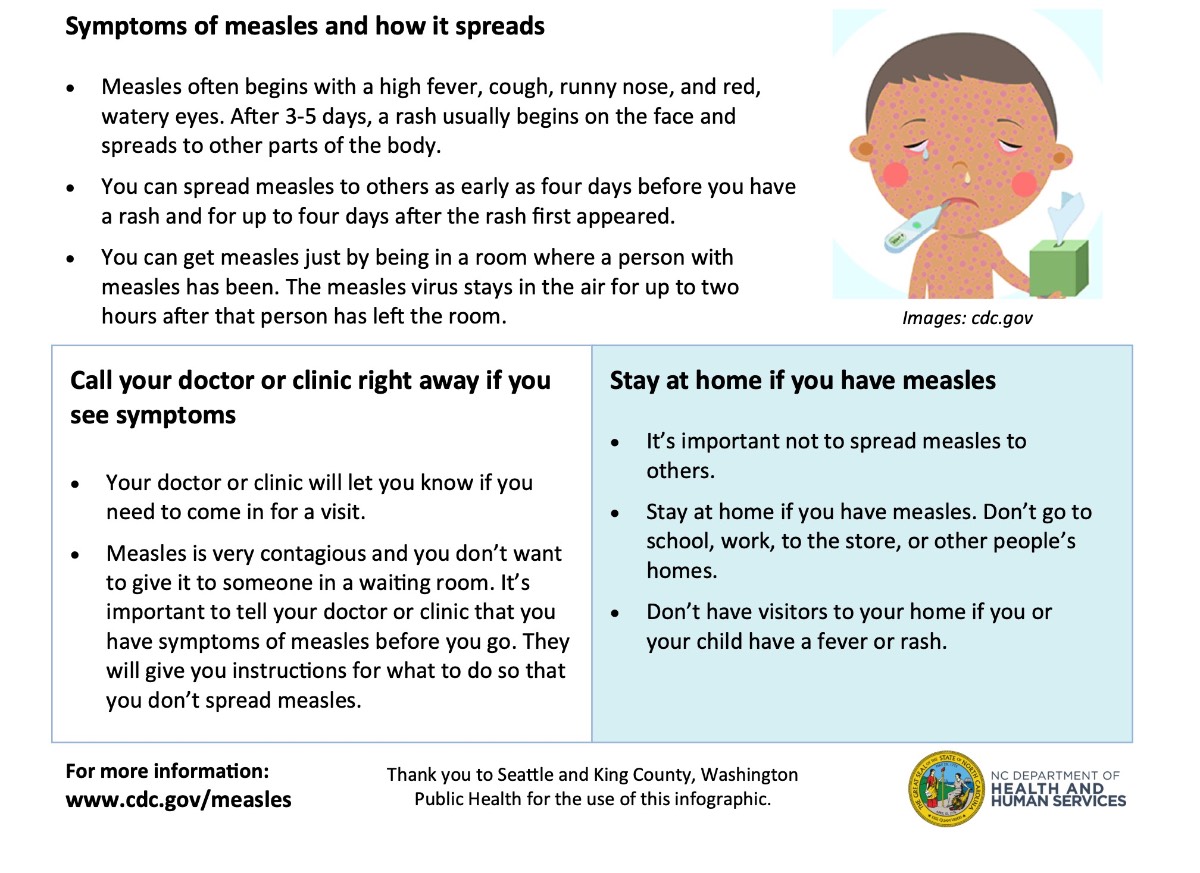
Public health officials emphasize that measles is an airborne virus that can linger in a room for up to two hours. Residents are urged to call ahead to a doctor if they develop a fever or rash to avoid exposing others in waiting rooms.
(Photo Credit: CDC & NCDHHS)
Mecklenburg County officials listed possible exposure locations earlier this month, including healthcare and retail sites in Charlotte. Officials said the locations are now safe to visit but recommended that anyone present during listed times monitor for symptoms and contact a healthcare provider before seeking in-person care if illness develops.
Local schools are reviewing prevention steps as health officials track exposures across the Charlotte area. School nurses are checking immunization records and coordinating with public health partners.
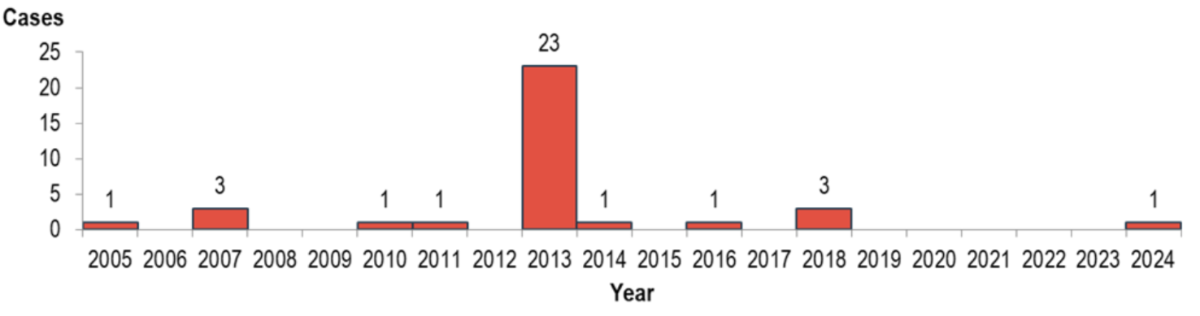
While the state typically sees very few cases annually, previous spikes—such as the 23 cases reported in 2013—serve as a reminder of how quickly the highly contagious virus can take hold in under-vaccinated clusters.
(Photo Credit: NCDHHS)
Assistant Communications Officer Tom Miner said the district is also expanding access to vaccines through school-based clinics.
“CMS is partnering with Mecklenburg County Public Health’s mobile unit to offer immunization clinics at schools, with clinics currently scheduled at 12 campuses,” Miner said.
Officials with Charlotte-Mecklenburg Schools said vaccination access remains a priority as the district works with Mecklenburg County Public Health to support families and staff.
“School health nurses continue to follow up with families who need measles vaccines and encourage staff to confirm their immunization records,” Miner said.
Universities are also sharing guidance. Student Health officials at the University of North Carolina at Charlotte are advising students to review immunization records and confirm they are fully vaccinated. Campus health leaders say shared environments such as classrooms and residence halls can increase exposure risk and recommend contacting a provider before visiting a clinic if symptoms appear.
State health officials have also published a list of confirmed exposure locations across North Carolina that is updated as investigations continue. The list is intended to alert residents who may not have been identified through direct contact tracing.
Nationally, public health agencies have reported measles clusters in recent years tied to travel and declining vaccination coverage. Health experts say outbreaks can spread quickly when vaccination rates drop below recommended levels, making local prevention and communication critical.
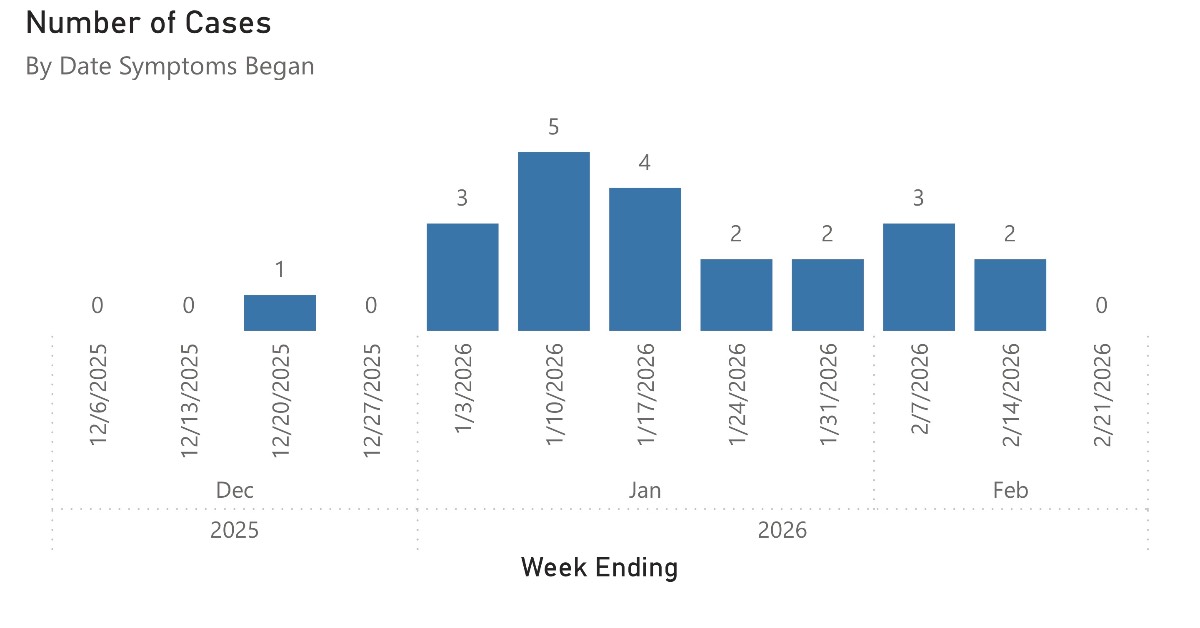
Data from December 2025 through February 2026 shows a peak in new cases during early January. Health agencies continue to track these numbers weekly to determine if local containment and school-based vaccination clinics are successfully slowing the spread.
(Photo Credit: NCDHHS)
OpGov.ai has contracted those entities to track measles-related developments in Charlotte and across North Carolina. The platform continues to monitor public data and official updates while following up with local agencies for additional information.
OpGov.ai has contacted local health officials, schools, and senior care facilities regarding precautions and protocols. At the time of publication, Charlotte-Mecklenburg Schools was the only entity to provide a formal response. Other organizations contacted had not responded.
Residents can view the North Carolina measles dashboard, exposure location updates, and prevention guidance through state and county health websites. OpGov.ai will continue to update this report as more information becomes available.
Make sure to comment below with your thoughts on how Charlotte is doing regarding the measles outbreak.
You can contact Victoria Osborne at victoria.o@lead4earth.org
(Thumbnail Photo Credit: WRAL)
1
0

Comments