
Photo Credit: YouTube / Livermore Vine
(LIVERMORE, Calif.) -- This election season proves slower for Livermore’s city council, where the District 1 and Mayoral seats are running uncontested; that is, except for Livermore’s District 2, where Dr. Narayan Tadimeti is in the running against incumbent Ben Barrientos.
On Tuesday evening, the Livermore Vine hosted an election forum for the two candidates, giving the public a chance to hear from each of them on what they strive to do for the city in their potential seats.
Tuesday’s forum was held over Zoom and moderated by Jeremy Walsh, the associate publisher and editor of Embarcadero Media Foundation’s East Bay Division, and Gina Channel Wilcox, the president and publisher of Embarcadero Media’s East Bay Division.
Both District 2 candidates were given two minutes for opening statements, two minutes to answer questions posed by the moderators and online submissions, two rebuttals, and three minutes for closing statements.
On economic development and regional transit, both Barrientos and Tadimeti expressed the necessity of fostering economic growth in Livermore.
“Economic development is very essential for Livermore’s continued viability without increasing taxes or cutting services,” said Tadimeti, ”It helps maintain the existing infrastructure and helps fund new projects.”
Tadimeti went on to explain the revenue benefits resulting from companies in Livermore paying sales tax and property tax. He emphasized that, to attract businesses to Livermore, business safety needs to be a top priority. He referenced the series of burglaries that happened in San Ramon and Danville last month.
His opponent, Barrientos, argued that the problem for businesses in Livermore is not safety, but rather that the rent price does not coincide with the number of customers coming in, especially in Springtown.
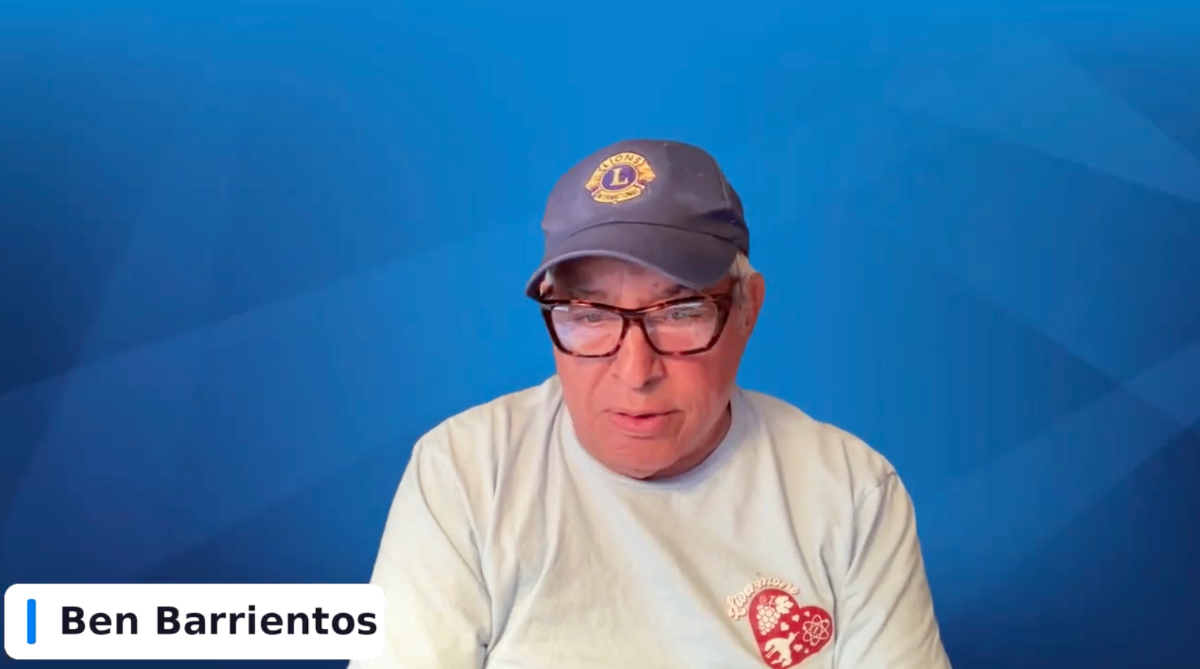
Photo Credit: YouTube / Livermore Vine
He referenced a collaboration with the owner of Calafia Kitchen in Springtown to start a summer festival in the area, bringing in vendors and, ideally, more foot traffic. He stated that he would like to find a way to bring more people into Springtown, suggesting a smaller grocery store to fill the vacant space at Vasco Plaza, previously home to a Rite Aid.
Both candidates were asked whether they support the regional transit tax measure on the November ballot, and their opinions on what the future of public transit in Livermore should look like.
Barrientos began by referencing the $400 million in Measure BB funds that were originally designated for the now-abandoned BART-to-Livermore extension and have been redirected to the Valley Link in Alameda County. He added that he believes the Valley Link will have to be maintained by subsidies “if it’s ever built.”
Tadimeti asserted the necessity for transit to be fiscally responsible, urging that the council needs to look at exactly what the tax is funding, whether there is a clearly defined expenditure plan, and whether Livermore residents are receiving measurable benefits. He expressed support for the Valley Link expansion, and skepticism as to what the extra tax money will do.
Then came the topic of affordable housing and homelessness in Livermore.
“I hate the word affordable housing because they drop it down, but no one can still afford some of these houses,” said Barrientos. He urged that a policy shift would need to come from the federal government.
Tadimeti concurred with this sentiment, explaining that Livermore alone cannot solve the problem of affordable housing, and that it’s a regional and statewide problem. He suggested that perhaps using the city’s discretionary fund, Livermore could look into subsidizing rent by providing vouchers.
Barrientos took the opportunity to rebut this statement, explaining that the city lacks significant discretionary funds to go towards subsidizing rent.
“It’s going to be a problem for a long time where we don’t have a lot of money in the city to go and fix the problem. We can help a bit, but it’s not really the city that builds houses. Homelessness is a complex issue, and there’s no one cause or one solution,” said Tadimeti.
He reasoned that the issue must be addressed through a “cooperative regional approach,” but acknowledged that the city has some resources to address homelessness.
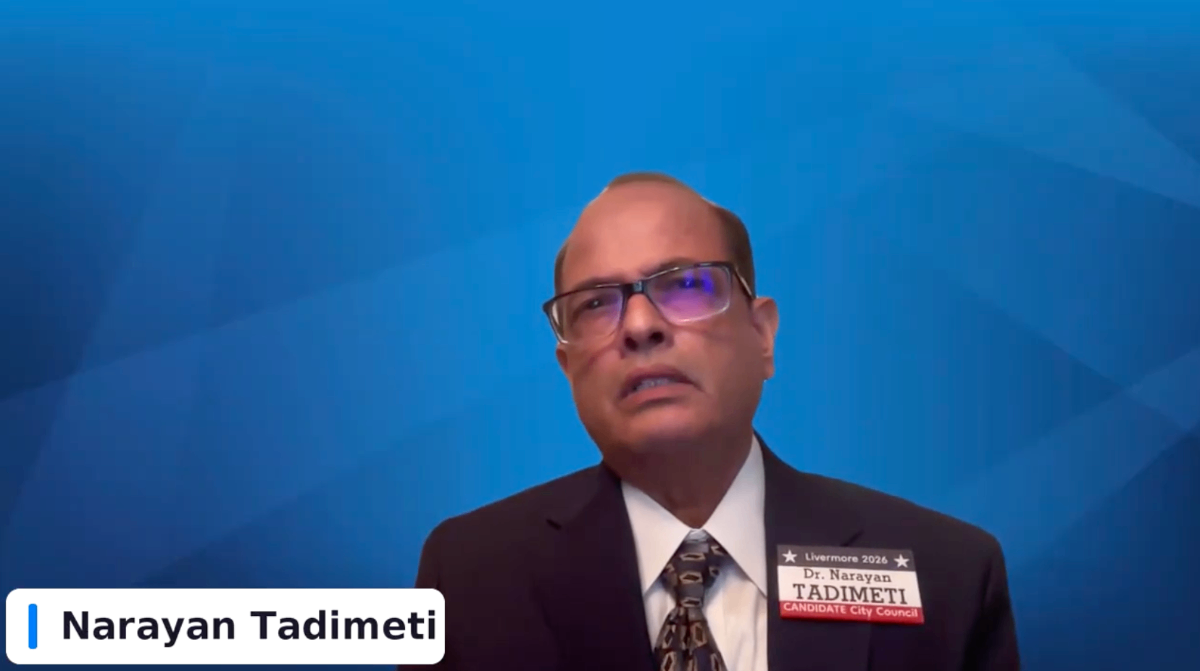
Photo Credit: YouTube / Livermore Vine
He referenced Livermore’s Homelessness Liaison Program, operated by the Livermore Police Department, as well as the city’s continuous collaboration with organizations like CityServe and the Livermore Housing Authority.
Barrientos identified the importance of getting people into shelter first before addressing additional problems like substance abuse or mental health crises.
Both candidates will be on the ballot for Livermore’s District two residents. Mailed ballots must be postmarked on or before November 3, 2026. Additional voting resources for Livermore residents can be found here.
To add to or correct any information in this report, please contact me at macey.w@lead4earth.org,
0
0

Comments