The Livermore City Council unanimously approved cancelling the uncontested elections for mayor and the District 1 council seat, choosing to appoint incumbents John Marchand and Evan Branning to new terms.
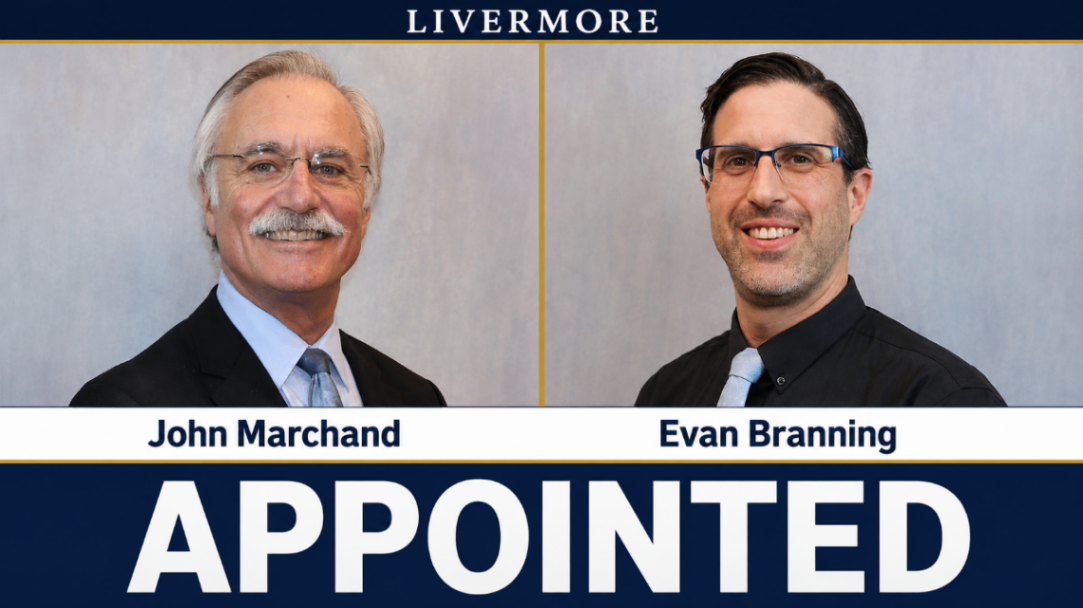
The decision gives Marchand another two-year term as mayor and Branning another four-year term representing District 1. Council members cited approximately $250,000 in savings, with estimates mentioned during the discussion reaching $300,000.

Credit: Narayan Campaign site and LivermoreCA.gov
Only one council member up for election faces an opponent, making the write-in option particularly significant amid limited competition. For the uncontested mayoral and District 1 seats, a qualified write-in candidacy would have provided a remaining route for residents to challenge the incumbents. Cancelling those elections closes that route, leaving voters with a contested race for just one of the city’s leadership positions on this year’s ballot.
Public commenter Jean King urged the council to retain the elections, arguing that their value extends beyond the likelihood of a competitive result.
“Elections are fundamental to our democracy,” King said.
King acknowledged the expense of administering elections across overlapping districts but said residents should still have the opportunity to endorse the incumbents, leave the contests blank or support a write-in candidate.
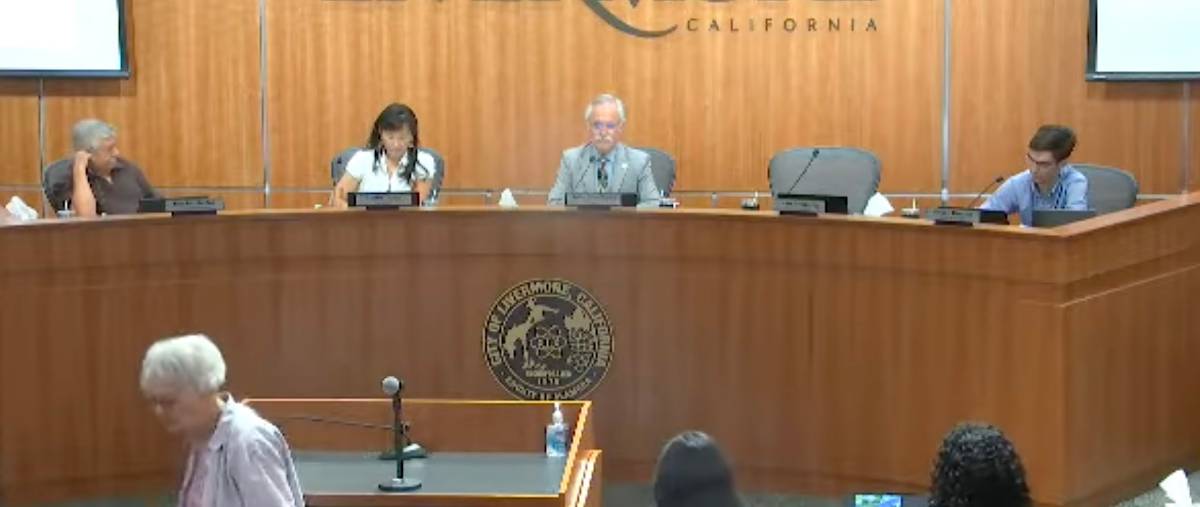
Credit : City of Livermore Youtube Channel
“Everyone has a right not to vote, but the right to vote should not be taken away,” King said.
Marchand: An “Exercise in Egotism”
Marchand rejected the suggestion that voting rights were being taken away, pointing to the opportunity for eligible residents to file as candidates.
“We are all stewards of the public’s money,” he said, arguing that holding an election simply to put his unopposed name before voters would be “an exercise in egotism.”
He compared celebrating an uncontested result to an election in Russia.
“We could be like … an election in Russia and say, ‘Yes, I got 100% of the vote.’ But that’s a meaningless gesture,” Marchand said.
The mayor also offered his interpretation of why he faced no challenger: “I’m running unopposed because people apparently think I’m doing a good job.”
Marchand invoked his experience coming of age during the Vietnam War, recalling young people’s inability to vote for representatives who could send them to war. He said he had never missed an election since turning 18.
He also pointed to Livermore’s switch from odd-year to even-year elections, saying it saved approximately $1 million per election and increased turnout by 30%.
An Expected Outcome Is Not a Guaranteed Outcome
A key exchange concerned whether a candidate running alone could lose.
An initial response to a council member’s question indicated that a sole candidate could win with just one vote. But a subsequent clarification identified an alternative:
“There is a process for write-in candidates, which with the appointment there would be no write-in candidates.”
That distinction went to the heart of King’s concern. With an election, a qualified write-in challenger could potentially emerge. Appointing the incumbents closed that route for these two contests.
When Write-In Campaigns Change the Outcome
Write-in candidacies can provide another route to office when a candidate’s name does not appear on the printed ballot. Two well-known Senate elections demonstrate that the possibility is more than symbolic.
In Alaska in 2010, Lisa Murkowski lost the Republican primary but went on to win the general election through a write-in campaign. Voters returned her to the Senate despite her absence from the printed candidate list. Reuters’ reporting on the election
In South Carolina in 1954, Strom Thurmond won election to the U.S. Senate as a write-in candidate, another longstanding example of voters electing someone whose name was not printed as a ballot choice. U.S. Senate historical biography
Those elections occurred under different state rules and circumstances from Livermore’s. They nevertheless illustrate how write-in campaigns can give voters an additional choice and change an anticipated outcome.
In California, that option requires more than writing an arbitrary name on a ballot. For applicable contests, write-in candidates must meet filing requirements; election officials count votes only for qualified write-in candidates. Santa Cruz County Elections’ explanation
No evidence presented in the supplied discussion established that a write-in challenger was preparing to run in Livermore. But the clarification showed that holding the elections and appointing the incumbents were not identical in their consequences for voter choice.
The council chose the financial savings. King’s objection remained: even when a result appears predictable, residents should have the opportunity to cast their own votes.
0
0

Comments