(SAN FRANCISCO)- Fourteen landmark designations were granted Thursday.
St. Nicolas Cathedral, the Bob Ross House, and the American Indian Historical Society/Chautauqua House are now set apart, as they should be.
Landmark designations protect sites from changes or damage to the property and ensure the preservation of their cultural heritage.
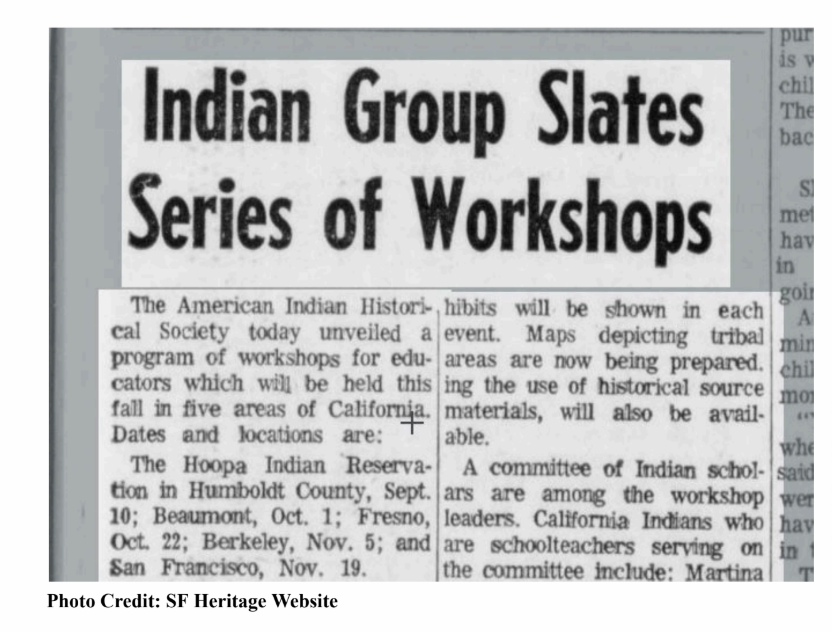
The Chautauqua House designation was one landmark that seemed to receive much appreciation from community members. Chautauqua means “to take fish from waters”, representing the organization's association with traveling lecturers and artists as well as serving to underscore the vast diversity of American Indian culture and history," according to the SF Heritage.
One such SF Heritage speaker, a nonprofit aimed at preserving the architectural and cultural diversity of San Francisco.
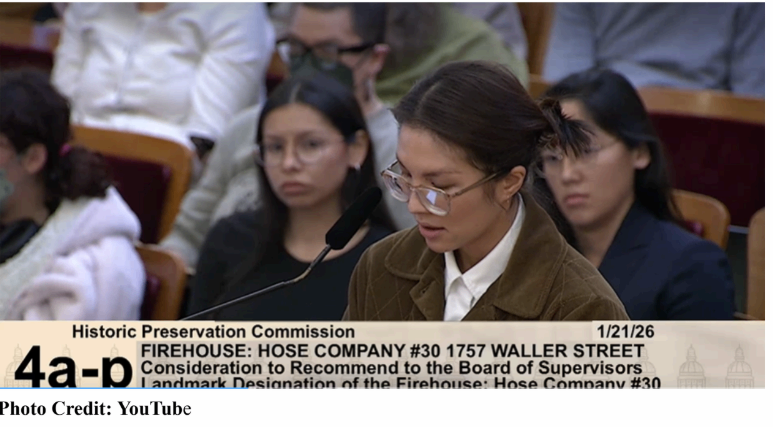
“We’re just really proud that we can contribute to further recognition of the site’s significance as a place that for decades fostered American Indian education, communication, and cultural development," Carrie Young said.
Young also mentions that a designation of the Chautauqua House would constitute it as the “first article 10 landmark specifically associated with American Indian history, which would be an incredible milestone that has been a long time coming and we hope is the first of many more to come."
Since its creation in 1967, members of the American Indian Historical Society have taken on roles beyond the typical “historian”- activism became a key aspect of the Chautauqua House, with particular involvement in the education realm,American Indian Civil Rights, and the 1960s Red Power Movement.
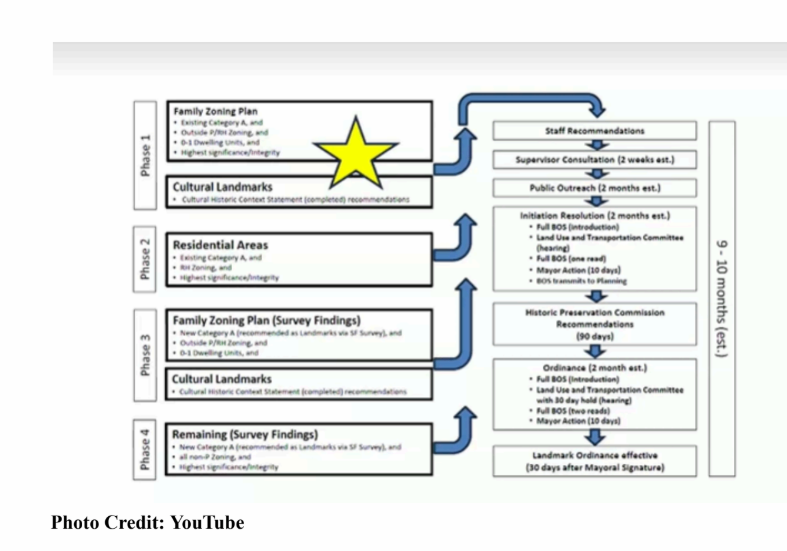
It became evident during the meeting, though, that these landmark designations may not be a result of intentional efforts by the city to protect unique cultural sites. Rather, a possible precipitating factor in making these decisions was the Family Zoning Plan, which poses a risk to unprotected historical landmarks as they may be included in the areas decided upon for demolition or renovation.
The Family Zoning Plan, otherwise known as the Expanding Housing Choice initiative,was created by the city to increase the availability of affordable housing in San Francisco. The leading goal of the plan provides for approximately 36, 200 new housing units, especially in thenorthern and western parts of San Francisco where single-family housing is widespread.
Overall, the aim is “to undo zoning laws that have served to exclude low-income communities andcommunities of color from certain parts of the city," according to a San Francisco Family Zoning
There is a long history of housing discrimination driven by lack of accessibility for people of color in San Francisco.
California identifies certain neighborhoods throughout the state as “high-resourced” and these areas provide “greater economic stability, better access to quality education, and improved long-term health outcomes," according to the zoning report.
The single-family zoning model was a loophole method for maintaining discrimination in these areas under the law, which, coupled with the history of inequitable real-estate practices, explains why the new plan centers around reversal of the exclusion of community members within the city.
With this information, a fact that a planning department representative shared is no surprise- “less than 10% of San Francisco’s landmarks are designated for their cultural associations with
American Indian, African American, Asian and Pacific Islander, Latin-x, or LGBTQ histories."
Housing and landmarking have become increasingly intertwined in San Francisco, and this requires a careful balance between respecting historical sites while also providing adequate housing for the city’s residents.
As we can see in this meeting through the new landmark designations, there is room for ensuring success on both sides within the Family Zoning Plan. However, it will take community members speaking up for their beloved and historically rich sites, alongside acknowledgment by commission members, to make the system work.
Submit comments and story ideas to Enya Niebergall at enya.n@lead4earth.org
1
0

Comments