(FAIRHOPE, Ala.) — On Oct. 16, 2026, I sat down with Jerry Carl, the Republican candidate for Alabama's 1st Congressional District, to discuss why he believes voters should elect him to the U.S. House of Representatives on Nov. 3.there are
Our conversation covered his experience in business and government, his views on proposed data centers and what he hopes to accomplish if elected.
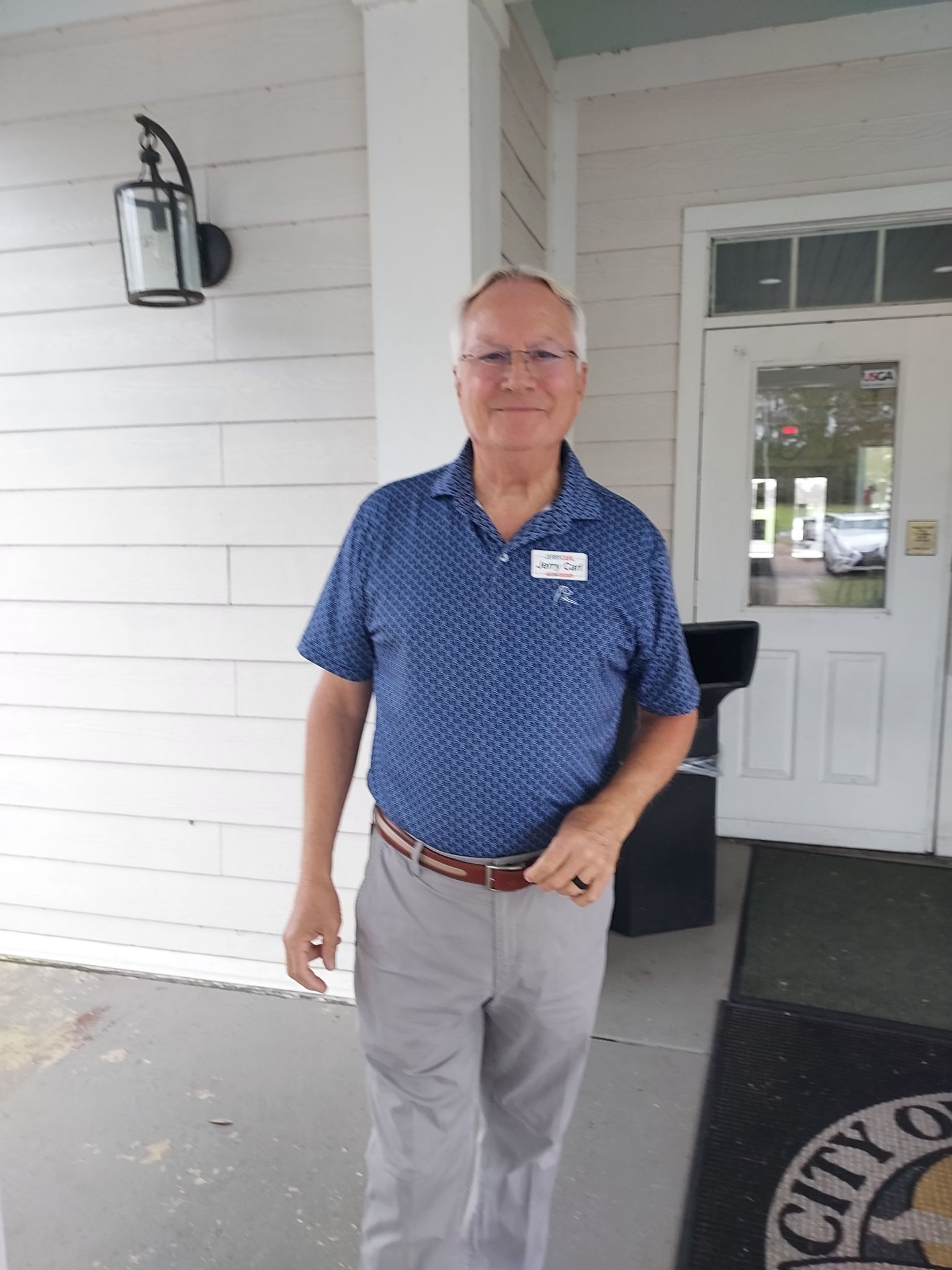
Photo credit: Tracey Gambill
What sets Jerry Carl apart from his opponent?
I began by asking Carl what he believes sets him apart from his Democratic opponent, Clyde Jones, and why voters should choose him.
Carl pointed to his years of experience in business and government.
“I've got experience. I've got 40 years of business myself. I've got eight years in county government and four years in federal government. My opponent has got zero. My opponent has served our country for twenty five years and has been in the military, and I certainly appreciate that, and I've thanked him for his service. But that's about the extent of his service, and we need to send someone to Washington that actually knows how Washington works. Whether you agree with it or not, we still have to work with it and have it to work for us. And I feel like I'm the best candidate for that choice.”
What is his position on data centers?
With data centers becoming a topic of discussion in communities across Alabama, I asked Carl where he stands on their development and whether he believes they would benefit local residents.
Carl said he believes those decisions should begin at the local level.
“I think data centers, first and foremost, need to be a local issue. I think the local people should decide, because when you look at a community like Pritchard, or Creola, or you look at some of those communities that have zero resources to raise tax dollars to fund their infrastructure, they should be very happy to have something like that.”
Carl acknowledged that some residents may not want data centers near their homes. He also discussed concerns about water usage and electricity costs.
“There's a lot of us that don't want, obviously, a data center in our backyard. We don't want a data center in our neighborhood. I've done a lot of research, a deep dive on data centers. The water is one issue. Now they're drawing that water actually coming from what they call shallow wells, so that's not drinkable water. The electrical part, there's a federal law and a state law in place that they cannot pass the cost of that power on to the consumer.”
He continued by describing conversations he has had with power companies and their concerns about investing in new infrastructure.
“And also, I've talked to the power companies. The power companies are very adamant about the fact that they feel like the data centers are a temporary thing. So they're worried that they're going to go build new power plants, which are pretty simple to do these days. We associate power plants with a big dam infrastructure system. But literally now they're big generators that burn natural gas, and they can set those up. We've got several that have been set up in our district, my district, over the last five years, and they're huge generators. So the power I think is an issue that we should always be concerned about and keep an eye on. But it's not what I've heard.”
What about noise and the impact on surrounding communities?
Carl also raised noise as another consideration when evaluating data centers.
“And the third thing is the sound. I have not gotten to a facility to hear the sound, but you've got roughly three thousand computers running at one time, so it's got to make some noise.
“But when you build it in the middle of an 800-acre pine forest, I think that would muffle out sound. So I really can't find a reason to be against them. But I want to physically go and walk and see one before I agree or disagree.”
Carl said he does not want communities to reject potential opportunities without first understanding how the facilities operate.
“I'm not trying to straddle the fence here, but also don't miss an opportunity based on people's opinions because most people's opinions, they've never seen one. They've never heard of the shallow well system. They're unaware there's federal and state laws that prohibit them from doing that. There's just a lot of opinions because all of us, our first opinion is ‘No.’ Do we want China or other countries holding our information? People say, well, we don't want data centers. You like using your cell phone, don't you? Where do you think all that cell phone information goes when you put in your contacts? It literally goes to an AI center where it's stored. So we have to give it more than just a thumbs up or a thumbs down consideration.”
How would his experience in Congress help the district?
I then asked Carl to reflect on his previous four years in Congress and explain how that experience could benefit Alabama's 1st Congressional District if he returns to Washington.
Carl discussed his committee assignments, including his work involving military spending and natural resources.
“I spent four years in Congress; I spent two years of that in the Armed Services Committee, which helps me with understanding the military budget and military background. I served on two committees, an ‘A’ committee and a ‘B’ committee. That's an ‘A’ committee. And during that same two-year period, I served on Natural Resources, which obviously covers all of our natural resources. From a natural resource standpoint, we were constantly trying to defend what is actually going on in the rural areas.”
Carl also discussed his previous work on the House Appropriations Committee and his expectations if elected again.
“My next cycle up there, they will put me on Appropriations. I was on Appropriations for two years, actually putting the federal budget together, and I also stayed on Natural Resources, which probably is the best committee. I love Natural Resources. Should I get elected November third, I should go back on Natural Resources, and I should go back on Appropriations, and I know for a fact I'll keep my seniority. Everything in Washington involves seniority. So I'll keep that four years’ seniority. The average congressman only lasts about six years. So I've still got some good years left in me. I'm planning on being up there for a while and serving this district and doing what needs to be done for our folks.”
Continuing election coverage
Carl's Democratic opponent, Clyde Jones, is scheduled to be interviewed Oct. 28, 2026, as part of OpGov.News' coverage of Alabama's 1st Congressional District race.
Voters will decide the race in the Nov. 3 general election.
Candidate contact: Jerry Carl can be reached at 251-895-1555.
Reporter contact: Readers who have questions, comments, corrections or additional information related to this report may contact Tracey Gambill at tracey.g@lead4earth.org.
0
0

Comments