(OPGOV GLOBAL) - The term ‘post-literate’ has been used abundantly on social media in the past week, with many interpretations offered as well.
The term was coined in a 1962 book by Marshall McLuhan called The Gutenberg Galaxy. Originally, the term was exclusively used to describe a cultural shift away from print media.
McLuhan viewed post-literacy neutrally, noting the positive and negative aspects of the shift.

Photo Credit: Marshall McLuhan
"Print created the individual. Electronic media creates the mass man," he says.
McLuhan's opinion is centered on the sensory details attached to media. While print media leaves plenty of room for imagination and interpretation, electronic media tends to be more precise. Even a radio can allow the audience to perceive emotion and emphasis, which is one less task for the listener.
Conversely, The Gutenberg Galaxy discussed the beauty of the new forms of media created and the ability to better utilize all of our senses. The author and philosopher also noted the new and improved forms of creativity that technology could offer.
YouGov conducted a national survey last year and found that 40% of adults did not read a single book in the past year. A study by Best Writing determined that less than 20% of Americans account for over 80% of books read by the same population.
Many Americans no longer read for pleasure, a shift that coincided with the popularity of cellphones and social media.
McLuhan predicted the rise of electronic media would lead to a more emotional and reactive society. The Gutenberg Galaxy author highlighted both sides of the issue. Instead of reading information days later, current technology allows us to experience events just minutes after they have occurred, bringing more awareness and empathy.
McLuhan also believed the new tech age would decrease privacy and increase anxiety, two prominent social issues today. The average adult spends over four hours a day on their phone, largely on social media.
Though Marshall McLuhan’s ideas existed before modern media, he was able to accurately depict what a post-literate society could look like.
Several other attributes of American society can be attributed to a decrease in reading.
Young adults aged 18-34 have been underrepresented in political elections, and according to the National Association of State Boards of Education(NASBE), 33% of the demographic had no plans to participate in the 2024 presidential election. The NASBE study clarified that the 33% included only participants who intended to completely avoid civic participation, including the 2024 presidential race.
Contrary to McLuhan’s beliefs, reading books has been found to decrease feelings of loneliness. Not only does reading often replace social media use, but studies have found books to be therapeutic.
Chronic loneliness can pose many health threats, and according to Psypost, reading was one of the only non-social activities found to statistically reduce the impacts of solitude-related-stress. Immersive reading, specifically, was found to be more effective than word games or short articles.
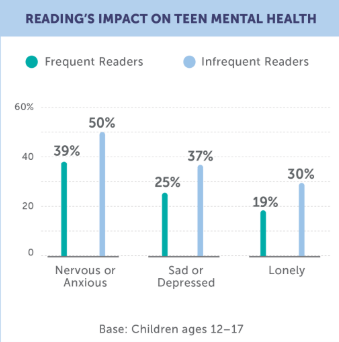
Photo Credit: Scholastic
According to a post-pandemic study, Scholastic found that teens who have frequent reading habits are 10% less likely to report mental instability.
Current American culture fits the description of a post-literate society. Although you may be able to read, you may ask if you are as inclined to read as generations before you.
As we evaluate modern cultural and mental shifts, Americans are feeling both the good and bad effects of post-literacy.
Be sure to comment and email me at jason.f@lead4earth.org for any questions! Let us know if this article inspired you to read more, and let us know your current reading habits.
0
0

Comments