Why Did San Ramon End Remote Public Comments—and Why It Matters
At a recent San Ramon City Council meeting, a critical agenda item resurfaced: whether or not to bring back the ability for residents to participate remotely via Zoom.
This conversation isn’t new. It began on October 9, 2023, when the City abruptly ended remote public comments. The justification at the time? Concerns over antisemitic remarks and potential Zoom bombing. City leaders—including the City Manager, City Attorney, and several councilmembers—cited this as the rationale.
But there's a problem with that claim.
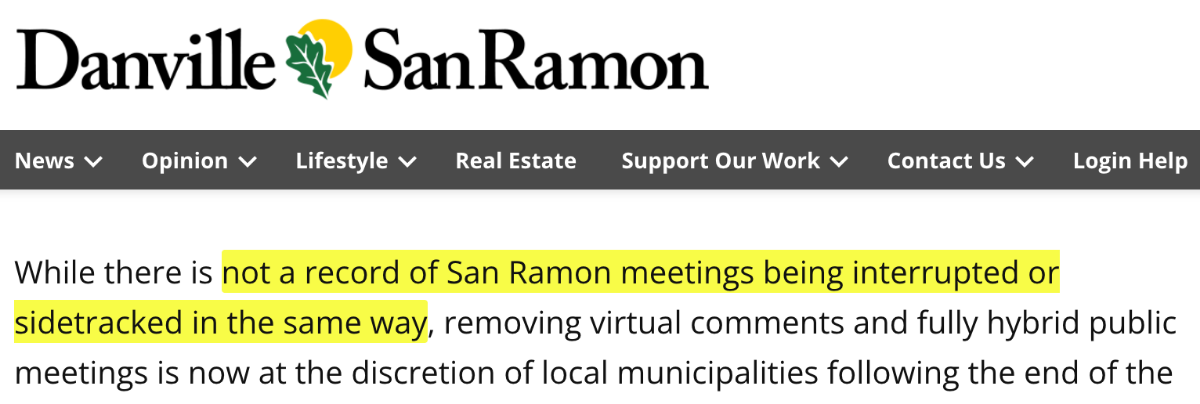
A news report published the same day (DanvilleSanRamon.com) made it clear: there were no documented instances of Zoom bombing, antisemitism, or hate speech during any San Ramon City Council meeting.
Even more concerning: three of the current councilmembers were serving at that time and know this to be true. Yet, they’ve continued to push aggressively against reinstating remote access.
When I participated in the City’s Gov 101 program, we were taught the importance of the Brown Act, which ensures transparency in local governance. The law exists to prevent backroom decisions and guarantees that major policy shifts—especially those affecting public participation—must be discussed in public view.
However, the decision to remove Zoom comments was never publicly debated prior to implementation. If you examine the October 10, 2023 council meeting agenda (View Agenda), you’ll find the change was noted—but it received no discussion during the meeting. It’s hard not to see this as a quiet endorsement or passive compliance by the council.
Naratted by me in a video : https://youtu.be/sEhg9VmXQWg?si=NxWNGQn94926QWum
When questioned, the City Attorney and City Manager responded that since staff initially introduced Zoom during COVID, they had the authority to end it without needing council approval.
This creates two deeply troubling scenarios:
Either the council was informed and quietly agreed—potentially violating the Brown Act,
Or they were uninformed or indifferent to a change that meaningfully reduced public access.
Fast Forward: April 8, 2025
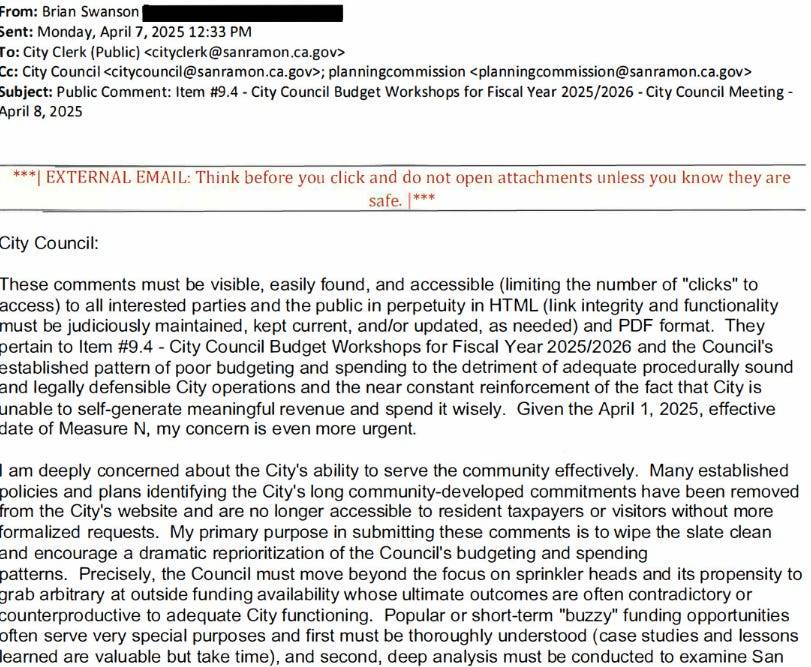
During this year’s budget session, the question of bringing back remote comments was raised again. Three residents voiced their support through public comments—but the entire council unanimously declined to reinstate the option. But this actually gave residents to see what our council thinks about this topic. As previously the decisions happened in back door this was public display of how council chose to label the residents voice as hate filled, anti-semantic, anti-chinese and disruptive where as its factually false and all meetings are recorded and available on youtube. Where as the exactly next city Dublin still allows remote participation.
Let’s be clear: councilmembers themselves still have the option to attend meetings remotely. So this isn’t about technical limitations—it’s about choice.
What’s more troubling is that this trend of discouraging public participation has already had visible consequences. As shared in a previous blog, this shift led to a significant drop in civic e
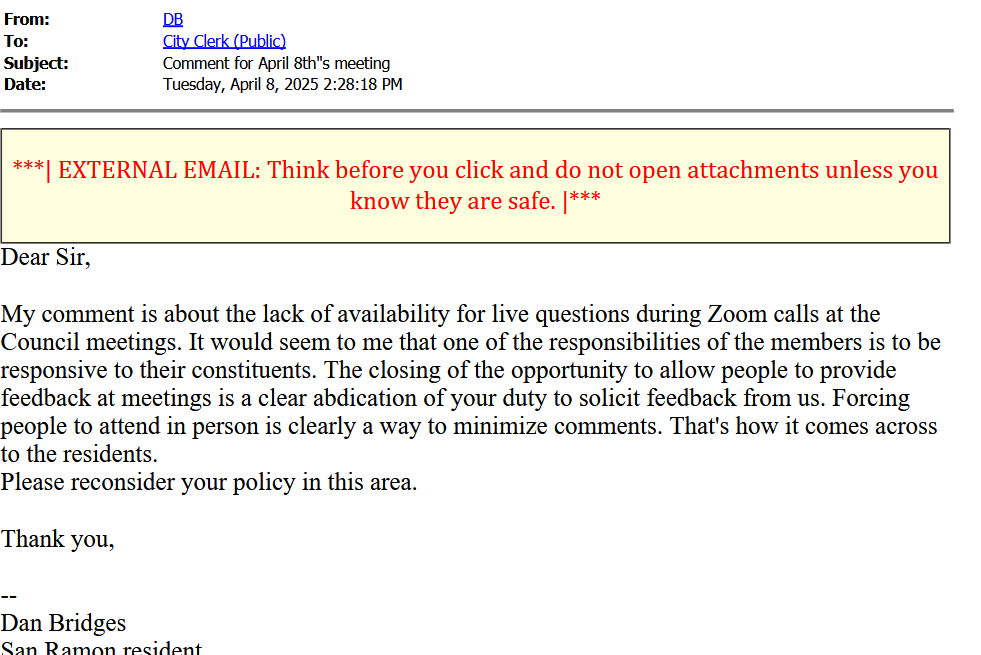
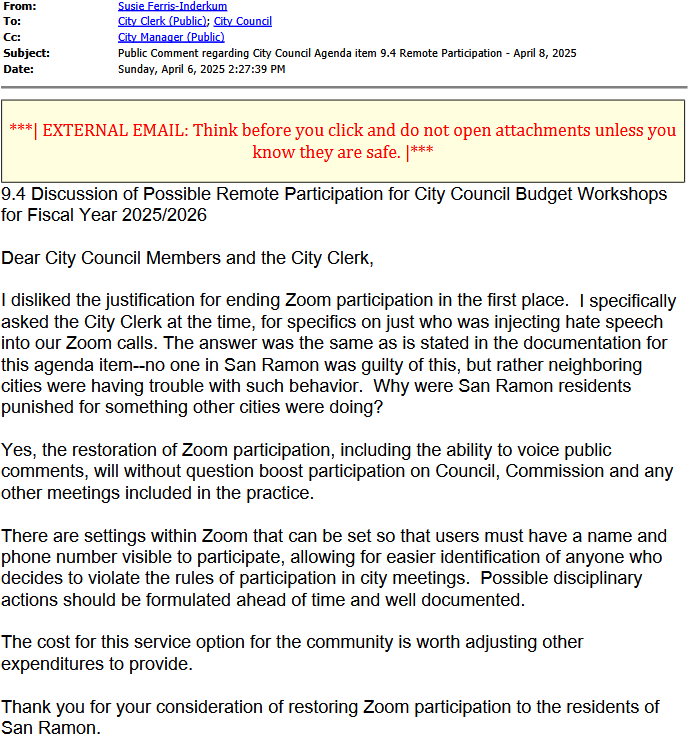
ngagement, including voter turnout and community presence at meetings leading into the 2024 elections.
Below is the just the portion of the meeting when this was discussed and elected leaders showed that they did not intent to hear the residents. Must watch.👇
https://www.youtube.com/embed/7AVAaBeaM0Q
A Question of Values
Our city leaders must ask themselves: What kind of civic culture are we building?
Ending remote comments sends a message that convenience and control take precedence over transparency and inclusion. Rebuilding trust begins with opening the door—not closing it.
Remote access is not just a tool—it’s a lifeline for working parents, seniors, disabled residents, and busy community members who still want to be involved.
The council has the power to change course. The question is: Will they?
0
0

Comments