(TALLAHASSEE, FLOR.) – Leon County was one of only three counties in Florida to have a majority oppose Amendment 3, meaning major changes are coming to Florida.
62% of Floridians voted yes on Amendment 3, crossing the supermajority threshold. Although counties are not separated in amendment votes, only Leon County, Alachua County(Gainesville), and Gadsden County had a majority of voters oppose the bill.
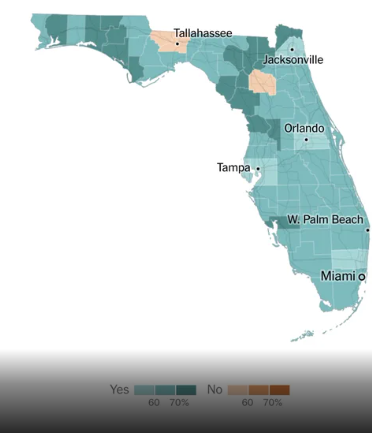
Photo Credit: X (@RonDeSantis)
The three counties house Florida State University and the University of Florida, as well as some of the lowest homeowner rates in the state. Along with a high volume of student voters, Leon and Alachua consistently vote democratic in statewide elections. Both Alachua and Leon counties have high total mill rates, ranking number two and ten in Florida, respectively.
Mill rate depicts the modifier placed on your home's taxable value, meaning Tallahassee’s residents and municipalities will face some of the most dramatic impacts from the tax decrease. Tallahassee’s mill rate is about 17.8, or $17 per $1,000 of taxable value.
The new tax exemption will be staggered, meaning the full $250,000 promised will not show up on your tax sheets until November 2028. New homeowners will have to wait five years after establishing a primary residence in Florida to get access to the full exemption.
Both the City of Tallahassee and Leon County have projected millions of dollars in losses as a result of the tax exemption. As a result, many counties have been speculated to increase their mill rate to make up for their loss.
Even if counties were to increase their mill rate, limitations would prevent them from recovering most of the lost revenue. The Florida Constitution states each municipality’s mill rate cannot exceed 10, and Leon County is already above 8. The city of Tallahassee has a current mill rate of 4 and could theoretically double it over time. However, each municipality would face hurdles to raising its mill rate substantially, requiring either a supermajority vote or a unanimous city commissioners' vote.
Can local governments raise tax rates?
Florida law places limits on property tax rates and establishes voting requirements for local governments seeking to increase them.
Governor Ron DeSantis signed Senate Bill 4-F this past July, strengthening restrictions on how much mill rates can be raised each year.
The previous precedent allowed rates to be raised over 5% without needing a vote. Now, municipalities will rely on a formula that depicts the percent change to the previous mill rate needed to get the same amount of funds for the upcoming year. Factors such as Amendment 3 reducing who will contribute can impact the new “Rolled-Back Rate” quickly. SB 4-F allows municipalities to charge up to 110% of the mill rate without a vote or new legislation, provided the proposed mill rate is under the 10 parts per million set by the state constitution
The new exemption jumps from $50,000 to $250,000 in a year, giving local governments until 2028 to make drastic budget cuts or approve a tax, which antagonizes Amendment 3.
Unfortunately, social services are usually the first to be affected by major deficits in budgets.
If you have any questions or comments, please email jason.f@lead4earth.org for clarification.
0
0

Comments