Editor’s note: This is part two of a two-part series on the Carpenter Creek Restoration Project, featuring sources from the first part, including Sheri Myers, Marshall Mott, and a representative with the Pensacola & Perdido Bays Estuary Program.
Former Councilwoman Sheri Myers said the first step in saving Carpenter’s Creek is to stop developing.
“No more tree removal,” Myers said.
Development got the creek to where it is, with far less life and flow than it should have, according to Myers and property owner and resident Marshall Mott, who said in the last report that Myers is the only official to push hard for its survival.
“I was telling Sheri back behind my house along the creek bed, we have native old growth roses, climbing roses, and the base of the plant is bigger than both of my legs put together,” Mott said, adding that its vines go hundreds of feet up. “That's what they're gonna destroy; they're gonna destroy our native plants that make Florida what it is, and it just breaks my heart.”
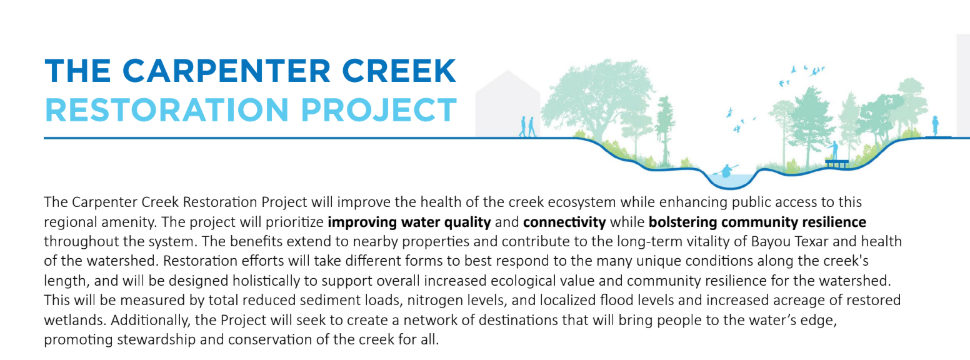
Photo: Pensacola & Perdido Bays Estuary Program Carpenter Creek Restoration Project Sheet
Pensacola & Perdido Bays Estuary Program (PPBEP) Project Coordinator Zach Schang said the restoration of the creek will take different forms to best respond to the many unique conditions along the creek's length and will be designed holistically to support overall increased ecological value and community resilience for the watershed.
“Additionally, the project will seek to reconnect the community to the creek and work to develop public access opportunities to promote stewardship and conservation of the creek for all,” Schang said.
Myers makes one thing clear: officials must “use the tree trust fund to preserve what is left of the creek's urban forest.”
“That means planting native trees on private property along Carpenter Creek should have priority, and purchasing land that is for sale with the city’s tree trust fund,” Myers said.
Schang said one facet of the Carpenter Creek Restoration Project will look at developing solutions to address current stormwater issues and plan for future capacity through infrastructure retrofits, repairs and new treatment facilities.
“These strategies will be paired with hydrological restoration projects to address erosion and flooding issues in the system and downstream,” Schang said.
The project is funded through the Gulf Coast Ecosystem Restore Council, the Florida Department of Environmental Protection, and the National Fish and Wildlife Foundation.
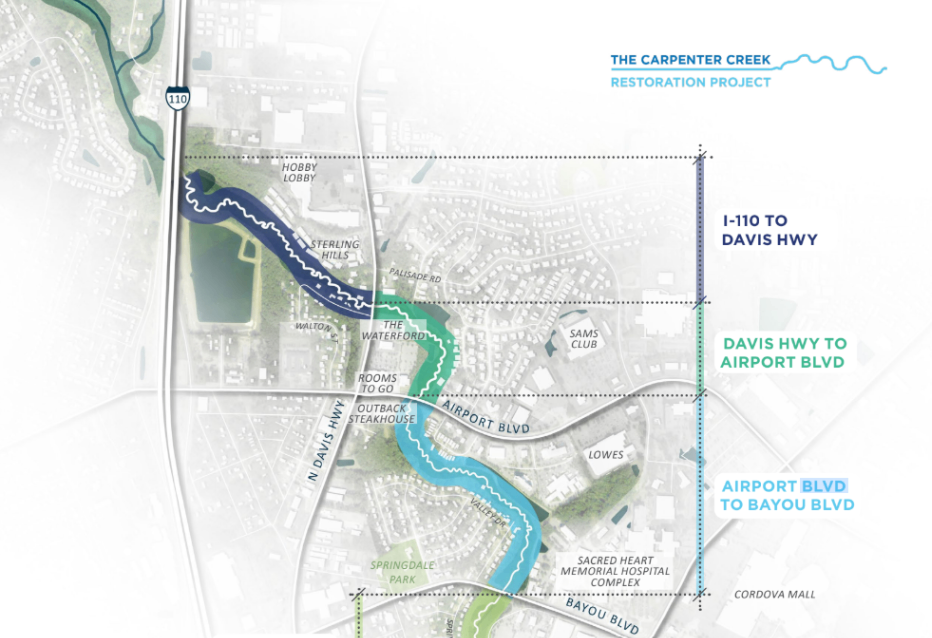
Photo: Pensacola & Perdido Bays Estuary Program Carpenter Creek Restoration Project Map
As of Fall 2026, the Project Team is collecting data to develop conceptual designs for creek restoration and public access.
"The project will seek to reconnect the community to the creek and work to develop public access opportunities to promote stewardship and conservation of the creek for all," Schang said.
Mott said he thinks it is “a very good project, but then again, you worry about people going back in there once they have access and doing more damage.”
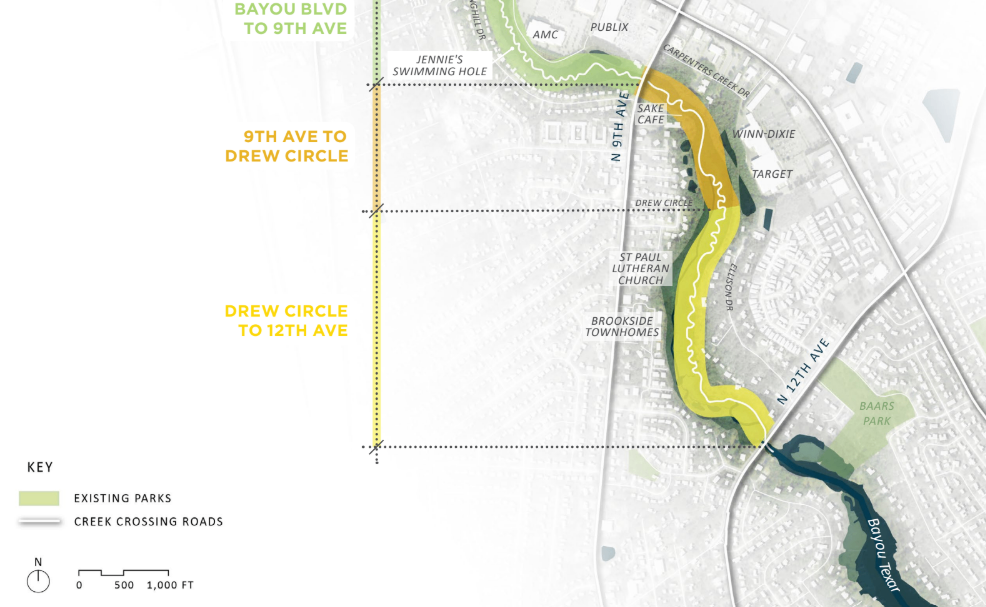
Photo: Pensacola & Perdido Bays Estuary Program Carpenter Creek Restoration Project Map
A Public Access Workshop is currently planned for late October to gather community input on types and extent of recreation and public access. To sign up for updates, visit www.ppbep.org/what-we-do/restoration/carpenter-creek or email us at CarpenterCreek@ppbep.org.
0
0

Comments