(GILBERT) – When a water crisis overwhelms your town, you take action.
Ask questions.
Find answers.
That’s been the sentiment from residents at Gilbert town council meetings this year, and they’ve been extremely vocal about the 75% total increase in water rates since 2024. The town claims these increases are unavoidable, voicing concern over the need to make drastic and expensive improvements to the North Water Treatment Plant in the name of the declining quality and availability of fresh groundwater.

Photo Credit: Teri Tracy
OpGov.ai interviewed Councilman Chuck Bongiovanni to bring more details of the situation to light, bridging the gap between overdue water infrastructure spending and the increasing water rates facing widespread scrutiny.
Several residents who have attended recent council meetings to speak include local heritage farmers, such as Crossroads Farm owner Rachel Jones, who most recently expressed concern over utility bills she states are sometimes 400 percent higher than usual.
Bongiovanni addresses this concern during the interview and in a written statement he provides, stating that the town is currently “exploring a separate tiered system for heritage properties,” including those with legitimate agricultural, livestock, and other farming businesses with higher water needs.
Other resources for low-income families are available on the town’s website, including AZCEND, which provides financial assistance to some and information leading to resources for those in need of serious financial help.
Photo Credit: AZCEND
Though some changes, such as these, are expected in the near future, other residents look to the past to ensure the town and its residents don’t find themselves in the same critical situation in the future.
In reference to the history of the water crisis, Bongiovanni reflects on the first time the council was warned of the looming water shortage, fueled by several contributing factors that converged at once.
“August 2013, Financial Council Meeting,” he says during the interview, “I wasn’t on the council back then, but I can say that they weren’t remiss.”
According to his written statement, the administration at the time was warned that the town’s water infrastructure was failing and that increased investments were necessary to keep it functional in the coming decade.
“They did the best they could with the responsibilities, information, and community expectations they faced at the time,” he writes.
This sentiment echoes in the more recent changes to the Parks and Recreation department, which plans to xeriscape 130,000 square feet of watered turf within five of its parks. This is as close to using outer-departmental budgets on water as the town can get given its current bond restrictions.
When asked about the plentiful accusations of misconstrued data driving up utility bills to exorbitant amounts, Bongiovanni voices his distaste for the way the new billing portal system was implemented, including the transfer of data from the old portal to the new one.
“We could have done a much better job on the transition to the new software,” he reasons, “The biggest thing was, for security purposes, we didn't want to bring over people's credit card information.”
He shared that the sudden switch was due to the discontinuation of support for the old payment portal software. This situation, unfortunately, left many residents unable to view their billing data to verify correct usage, and some with staggering utility bills they didn’t understand.
In a recent email to OpGov.ai from town spokesperson Joanna Guzman, the new portal now includes a “Check Your Usage” menu option that displays complete historical data.
Guzman also shared that the water shutoff moratorium has no official end date, as the ongoing audit to verify the reliability and accuracy of the town’s newest meters is ongoing.
“We will make sure to inform customers ahead of time when service disconnections resume”, she assures.
Of the several imposing factors impacting water infrastructure and availability at once, Bongiovanni reflects the most on the Rodeo Fire of 2002, wherein nearly half a million acres of forest were destroyed, permanently altering hydrologic functioning, or how the ecosystem handles water.
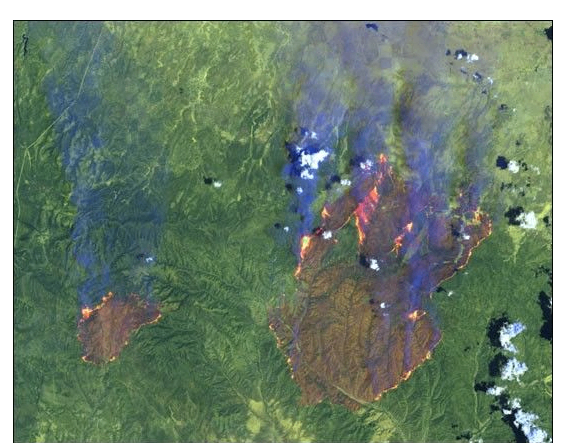
Photo Credit: NASA / Rodeo Fire 2002
In reference to a question regarding what most perpetuates the current drought, Bongiovanni states, “It rains. Those trees are filtering the water, [sending it] into the streams, the Colorado River, the lakes. When that’s gone, it goes straight into the ground.”
“We’re not collecting as much as we did before, when the trees were there. It’s not being filtered, so the water we’re getting right now is the dirtiest water we’ve ever gotten.”
The loss of hundreds of thousands of acres of forest and the subsequent lack of fresh groundwater have led the town to invest in a series of new and existing wells in search of a strong supply of groundwater to replace the ever-narrowing supply from the Colorado River as conditions worsen.
Bongiovanni is grounded in his ideas to seek water from other sources outside the Colorado River.
“I've heard that if they shut off the Colorado tomorrow, we'd have water for nine years. But that doesn't mean anything, you know what I mean? It's great to know that we have it, but we still have to plan for it.”
What’s next on the big problems docket, according to Bongiovanni?
“Roads,” he laments. “We’re going to have road issues in the next eight to ten years. Every original road we have has to be dug down to the dirt and rebuilt again.”
Referring to the way the water crisis has panned out, he adds, “I don’t want people coming back ten years from now and saying, ‘the council was warned ten years ago, and they did nothing about our roads.’”
Bongiovanni expresses his optimism for the future of Gilbert's roads, claiming, “We have a really good roads department.”
All we can hope for is the roads to be less bumpy than the water situation has become.
If you would like to add to or correct anything in this report, please email me at tracy.t@lead4earth.org.
0
0

Comments