(GILBERT, AZ.) – Residents are beginning to feel like broken records at Gilbert’s town council meetings, but does the council really hear the music?
At the Gilbert town council meeting on Feb. 17, residents who are seen time after time at the podium show to repeat themselves until the matter is resolved. Their concern: many residents can’t afford the consistently-rising cost of water due to rate increases.
The council voted unanimously to increase the town’s water rates by 25% again this year, effective in April, rather than settle on a 14% increase over the course of two years.
While the council considered an option that would be less stressful for residents who are on a fixed income with minimal cost-of-living increases, including those relying on social security, it ultimately landed on “Option A”, which directs more immediate revenue to the water budget while impacting residents more severely.
Residents such as Barbara Calvin, a repeat resident speaker who is passionate about fighting back against what the town insists are relevant and needed water rate increases, continue to come and question spending decisions and accountability in the public comment section.
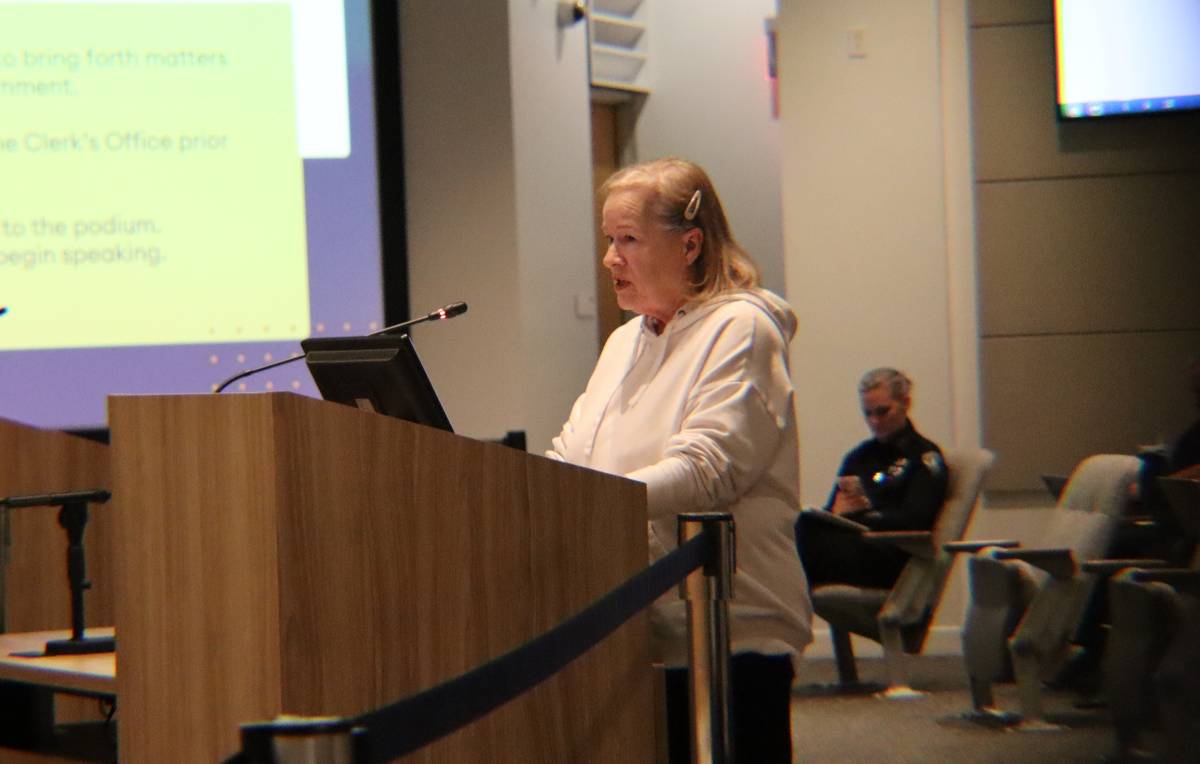
Photo Credit: Teri Tracy
Referencing an email to the council, she states, "My first question was, why did you find it necessary to start three major projects and substantially increase all three levels of utility services at the same time?”
“The flyer you recently sent says you have 46 active capital improvement projects related to water infrastructure. That doesn't sound very good to me,” she continues, “You keep saying a lot of the decisions for what is taking place were from prior councils. This is a shared debacle from all of you.”
Repeat speaker and resident Darrel Grossen approaches the council with his own research to question the council’s policy on keeping spending within its dedicated budget.
Video Credit: YouTube / Town of Gilbert
“You have told the public, ‘I don't have the facts.’ Tonight, I am setting the labels aside. I'm here to talk to you about $70 million, and I have the facts,” he begins, “You have gone so far as to claim that using the general fund to subsidize water costs would be illegal and would destroy our bond rating. But your own records tell a different story.”
Grossen then shares the details: “According to the town of Gilbert's own public records, this council has quietly approved the transfer of $70 million from the general fund to subsidize water systems development fees. costs that are by your own policy the sole responsibility of developers.”
He recites the amounts and dates the funds were allegedly transferred. His request? Transparency.
“I want you to ask the staff tonight before you vote to explain the $70 million in subsidies to the water SDS funds. I request a public presentation that explains the SDFs in detail. I ask that you place an immediate stay on further water rate increases.”
Other residents came forth to lament their increased utility bills as well, citing the unsustainable cost increases that affect them now and will continue to do so in the future as the cost of living continues to rise.
In response and at Councilmember Torgeson’s request, Gilbert Budget Director Kelly Pfost explains that enterprise funds are separate from growth development funds, which she states were used in the transfer Grossen brings to question.
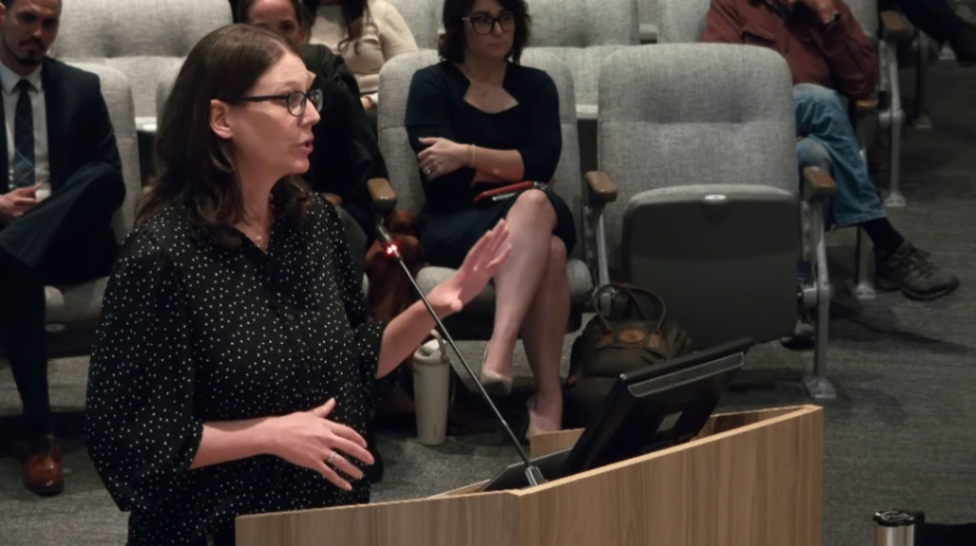
Photo Credit: YouTube
“The system development fees are highly regulated under state statute and the town works to charge the maximum amount allowed that we are, but there are holes in the bucket”, she states.
Pfost addresses “holes in the bucket” as a concern for developers, which she iterates are allowed to be grandfathered in at lower fees for up to 24 months.
While her statement also includes that general fund money was used at that time to fill a gap in the water budget, Councilmember Torgeson asks her to explain why the previous transfer did not affect the town’s bond rating, a commonly expressed issue as to why the town cannot reallocate funds to the water budget instead of increasing water rates.
“Our wastewater fund is a self-contained separate business unit or enterprise fund. System development fees are fees that we collect on a one-time basis for growth to help pay for growth. They are highly regulated under state statute,” Pfost explains.
Essentially, Pfost’s statement explains that those funds were a one-time-use operation, and any further reallocation of funds from either enterprise or development budgets would negatively affect the town’s bond rating.
Councilmember Kenny Buckland offers that a 25% increase now is ultimately cheaper than the long-term option, which would have been two 14% increases over the next few years.
The ultimate question now is: will Gilbert residents be able to sustain this increase, and will it be enough to get Gilbert to a place where it creates the majority of its own water supply?
To add to or correct information in this report, please contact me at tracy.t@lead4earth.org
0
0

Comments