(SAN RAMON) — The Freedom of Information Act (FOIA) is a powerful public tool.
Even the federal government says the same, noting “the basic function” is ensuring informed, which is “vital to the functioning of a democratic society.”
OpGov.ai agrees.
That is why the media outlet filed a FOIA, with officials promptly responding to the request due to the very fact that they have to. This act empowers the public to a degree, revealing elected officials emails.
San Ramon residents have spent months emailing city staff, council members and commissioners to voice concerns about development decisions, transparency practices and how long-term planning aligns with the city’s General Plan.
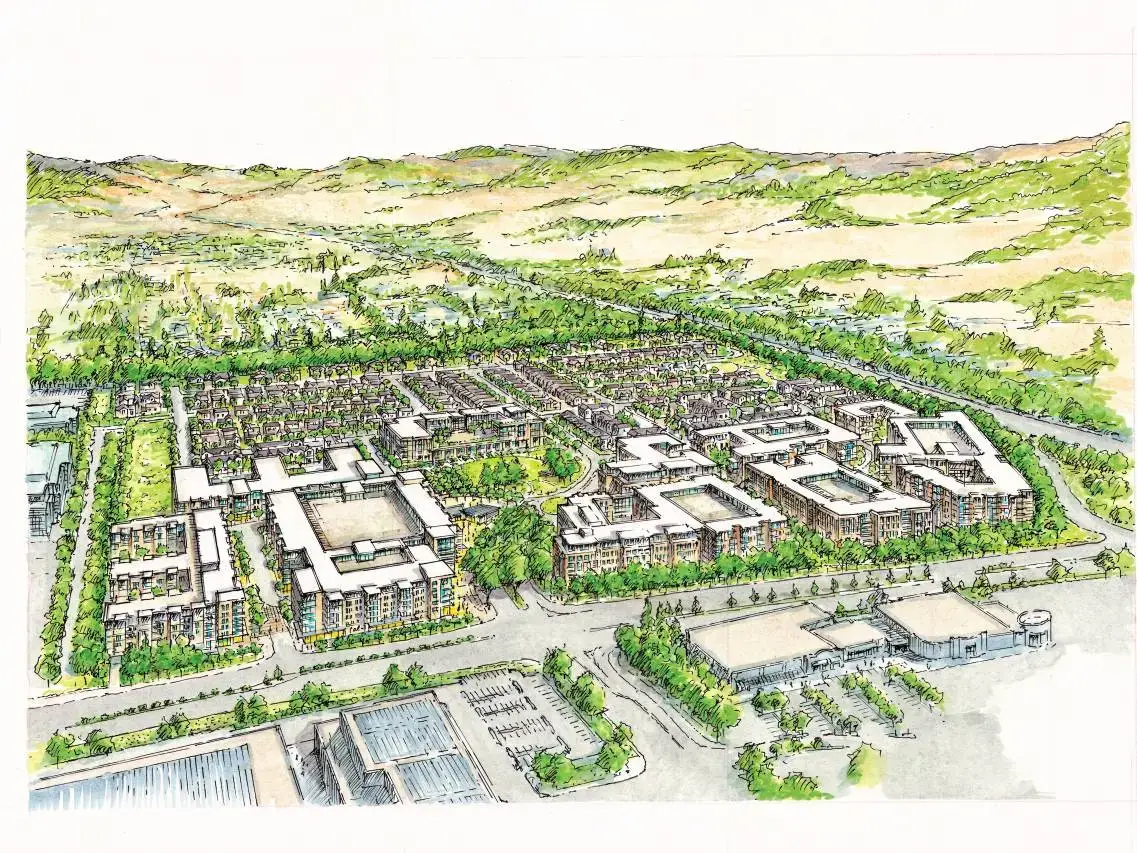
San Ramon Presentation in City Council Meeting
The earliest wave of emails (covered in A City Growing Faster Than its Residents can keep up) focused mainly on the proposed Floor Area Ratio (FAR) and General Plan Amendment for Downtown Mixed Use–North (DMU-N).
Those messages have since expanded into broader discussions about appeal fees, noticing procedures, the budget process and the city’s police annual report. At the center of the earliest email exchanges was the proposal to reduce Floor Area Ratio, or FAR, in the Downtown Mixed Use–North (DMU-N) district.
The newly shared emails provide a clearer picture of why residents continue writing in, what information they believe has been overlooked, and how communication gaps between the city and the public have contributed to ongoing frustration.
First, what is FAR and why did it spark so much debate?
The Floor Area Ratio is a common planning tool used to regulate development intensity. It compares the size of a building to the size of the lot it sits on. For example: A FAR of 1.0 means a building’s total floor space can equal the size of its lot.
A FAR of 0.5 allows only half the floor space. Higher FARs typically support mixed-use districts, transit-oriented development and walkable neighborhoods. To residents who had watched San Ramon’s General Plan 2040 emphasize mixed-use growth and transit hubs, reducing FAR felt like more than a technical adjustment; it raised questions about whether the city was moving away from the long-term vision it had just adopted.
Early emails centered on FAR and procedural questions Concerned citizen and OpGov Founder Chirag Kathrani opens his email expressing concerns:

Email to San Ramon Officials on Floor, Area, Ration regarding density in affordable housing
Additional emails questioned missing documentation.
During Planning Commission deliberations, commissioners had asked whether environmental or traffic impact reports existed for converting mixed-use density to lower-intensity housing, but those materials were not included in the agenda packet.
As Planning Commission and City Council discussions continued through April, resident emails broadened to cover noticing, access and budgeting.
Several residents said required notice for zoning changes did not reach subscribers, raising questions about compliance with the 20-day notice requirement under AB 2904. One wrote:
"The Planning Department did NOT provide separate direct notice of this public hearing to all interested parties," Brian Swanson wrote to the officials. "This failed city process continues to obfuscate the public comment process.”
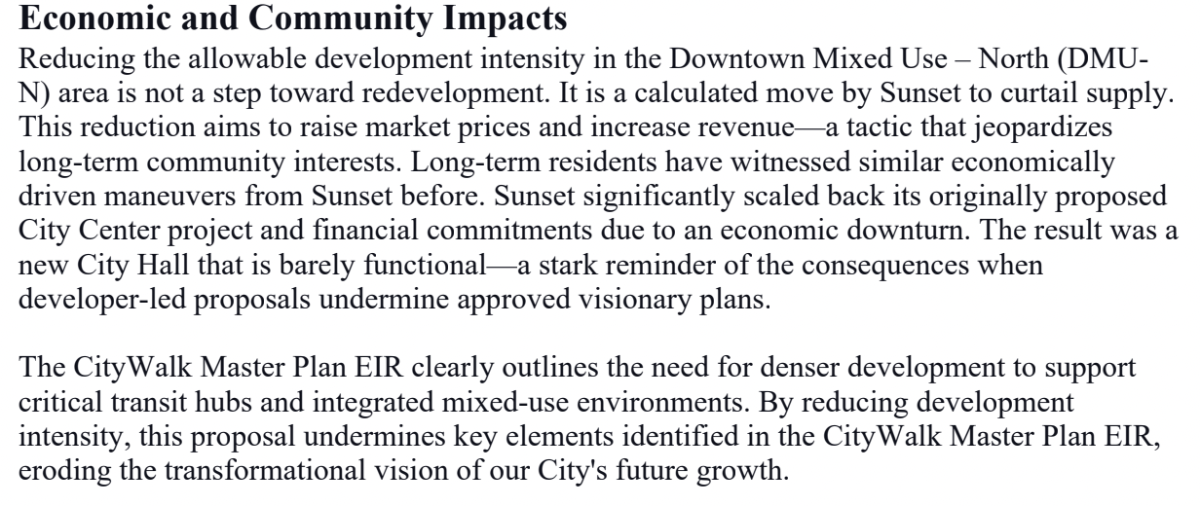
Clarification on the economic and community impact on affordable housing density
In regards to budget transparency. emails submitted before the April 22 meeting noted sharp increases in appeal fees. One wrote:
“In 2023, CAMPAD paid $2,500 to file an appeal… The proposed Master Fee Schedule now represents a $2,000 increase… the Town of Danville charges merely about $311.”
Other residents urged the city to differentiate fees for developers and citizens or rely on standardized regional tools such as MTC’s StreetSaver.
A consistent theme: transparency and documentation
Across dozens of emails, residents repeatedly asked for clearer documentation, more predictable processes and stronger alignment with the General Plan 2040. Several requested that public comments be preserved “in perpetuity” and linked directly to meeting materials for full transparency.
Others cautioned against major planning shifts so soon after adopting the city’s long-term plan.
What the correspondence reveals ia taken together, the emails reflect a community closely tracking development decisions and seeking consistent, accessible information. While the topics range from FAR calculations to appeal fees and online meeting access, the underlying concern across messages is the same: residents want clarity on how decisions are made, how they align with adopted plans and how the public can meaningfully participate.
If you would like to add to this report, reach out to ananya.s@lead4earth.org
1
0

Comments