(FOLSOM, CA.) — The City of Folsom is declining to release records that could show how much taxpayer money has been spent on outside attorneys in a long-running California Voting Rights Act lawsuit, weeks after residents and the plaintiffs' attorney urged city leaders to settle the case rather than continue spending public money on litigation.
The City's Aug. 14 response to a California Public Records Act request from OpGov.News follows a July City Council meeting where several speakers questioned the financial cost of continuing the litigation, particularly since Folsom has already transitioned from at-large to district-based City Council elections.
During public comment, resident Robert Dresser urged council members to consider settling the lawsuit, arguing that the original effort to establish district elections was supported by more than 300 residents and ultimately resulted in the City abandoning its at-large election system.
(Folsom resident Robert Dresser urged council members to consider settling the lawsuit. Credit/Metro Cable 14 YouTube video.)
"The point is that but for the lawsuit ... district elections would not have been approved," Dresser told the council, referring to previous statements by council members when the City adopted district-based elections.
Dresser said the original petition seeking district-based elections was signed by more than 300 people and argued the issue was not partisan. He said the eventual elimination of at-large elections gave Asian minority residents a greater opportunity to elect their preferred representatives while making council members more accessible to residents within individual districts.
Despite the City's transition to district-based elections, Dresser said the parties have yet to reach a settlement over attorneys' fees. He argued that continuing to litigate rather than negotiating a settlement could ultimately cost taxpayers more money.
"Our attorney has not been paid a dime despite the public service he has rendered in persuading the City Council to adopt the by-district elections," Dresser said.
Dresser also estimated the City has already spent more than $1 million on private law firms defending the lawsuit, in addition to costs associated with the City Attorney's Office. He emphasized that the figure was his own estimate based in part on a Public Records Act request made several years ago.
"My guess—and we made a Public Records Act request a couple of years ago—is that the city has paid in excess of a million dollars to private law firms," Dresser said.
He questioned whether continuing to pay outside attorneys made financial sense, particularly given what he described as a deficit facing the city.
"Why pay more to private law firms, which might be hundreds of thousands of dollars by the time this thing is done, rather than approach the attorney and make a reasonable settlement offer?" Dresser asked.
(Attorney Scott Rafferty urged the City to negotiate a settlement. Credit/Metro Cable 14 YouTube video.)
Attorney Scott Rafferty, who told the council he represents the plaintiffs, also urged the City to negotiate a settlement, arguing that the litigation has already continued for six years and that the transition to district elections still has shortcomings that should be addressed.
Rafferty said the current system has not fully achieved the representation goals envisioned when the lawsuit was filed. He argued that the Asian community, whose representation was a central issue in the case, has not consistently had an opportunity to elect a preferred candidate under the current district boundaries and election schedule.
"They (Asian community) have not voted for six years, and that's the opposite of what this was intended to do," Rafferty said. "That should be fixed and can be fixed."
Rafferty was also critical of the boundaries adopted by the City.
"The map is not good," he said, describing districts that stretch across different parts of Folsom. However, he told council members he believed the system could be improved, including through possible independent redistricting following the next census.
"I think it can be better, and I think the model over the long term will work really well for the city," Rafferty said.
Rafferty also made clear that resolving the case would involve a financial settlement, arguing that the length of the litigation has created a significant burden.
"There does have to be a money payment," Rafferty said. "When you drag things out for six years, it's been an enormous burden."
He warned that continuing the litigation could further increase attorneys' fees. Rafferty told the council that when cities continue California Voting Rights Act cases beyond the state's "safe harbor" deadline, fee awards in other cases have reached what he described as the "seven- or eight-digit category."
"We're not there quite yet, so I would try to settle this," Rafferty said.
He concluded by encouraging the City to address both the litigation and what he considers deficiencies in the current district-election system.
"Acting in good faith, I do want you to fix this for your constituents," Rafferty said. "I think it can be better."
Another speaker, Muriel Bronstein, criticized the City's continued litigation over attorneys' fees, arguing taxpayers are bearing unnecessary legal expenses.
The City Council did not respond to the speakers during the meeting, and no discussion occurred because the issue was raised during public comment and was not on the agenda.
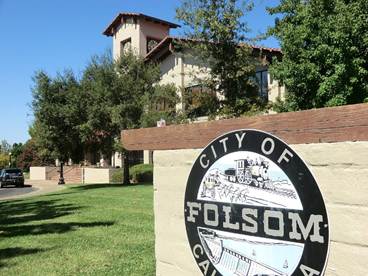
Folsom City Hall, where residents recently urged council members to settle a long-running California Voting Rights Act lawsuit amid concerns over the cost of continued litigation. (Photo Credit: UncleVinny/Wikimedia Commons, CC BY 3.0)
OpGov.News Seeks Records to Verify Legal Costs
Following the meeting, OpGov.News sought to independently determine how much Folsom has spent on outside attorneys rather than relying on estimates presented during public comment.
On July 19, OpGov.News submitted a California Public Records Act request seeking invoices, billing statements, payment records, legal services agreements, budget documents and records showing the total amount paid to outside counsel in connection with the California Voting Rights Act litigation.
The City initially responded that the request was "unclear and overbroad" because it did not identify the names of specific vendors or contracts and asked that the request be clarified and narrowed.
OpGov.News subsequently clarified that the request was limited to records involving any outside law firm or attorney retained by Folsom to represent the City in the voting rights litigation, regardless of the vendor's name.
The revised request sought four categories of records: invoices and payment records from January 2024 through the date of production; contracts or engagement agreements with outside counsel; City Council staff reports, budget documents or fiscal records discussing litigation expenditures; and records showing the total amount paid to outside attorneys.
On Aug. 14, the City declined to produce the requested records.
"All records responsive to your Public Records Act request are exempt from disclosure pursuant to Government Code sections 7927.705 and 7927.200, and Business & Professions Code section 6149," city staff wrote.
As a result, OpGov.News was not provided with the requested invoices, payment records, legal services agreements or financial documents showing the City's total expenditures on outside counsel. The City's response means the more than $1 million figure cited by Dresser during the July meeting remains unverified.
OpGov.News subsequently asked the City whether its position means even the aggregate amount paid to outside counsel is exempt from disclosure and whether the City is withholding the identity of the outside law firm or firms and their engagement agreements in their entirety.
The City was also asked whether entire City Council staff reports, agenda reports and budget documents are being withheld as privileged, including portions that may address only expenditures or budget allocations.
OpGov.News clarified that it is not seeking attorney work product, litigation strategy, legal advice or confidential attorney-client communications and asked whether potentially privileged portions of responsive records could instead be redacted while non-exempt information is released.
Years-Long Dispute Over District Elections
The litigation stems from Folsom's former system of electing all five City Council members citywide.
The City began considering a transition to district-based elections after receiving a 2020 letter alleging its at-large election system potentially violated the California Voting Rights Act.
Folsom ultimately transitioned to five council districts, under which candidates must reside within the district they seek to represent and voters cast ballots for the council seat representing their district.
Despite that transition, the legal dispute has continued, with attorneys' fees and the effectiveness of the City's district map among the issues raised publicly during the July meeting.
How much the City has spent defending the case remains unclear.
The City's Aug. 14 records response establishes that it is withholding the records requested by OpGov.News under cited legal exemptions. It does not independently establish the total amount the City has spent or verify the $1 million-plus estimate presented during public comment.
OpGov.News will update this story if the City provides additional information regarding its legal expenditures or responds to questions asked today about whether non-privileged financial information can be released separately from confidential legal material.
If you'd like to add or correct anything in this report, feel free to reach out or leave a comment below. Have tips or story ideas from around Folsom? Send them to Sarah Denos at sarahkdenos@gmail.com.
0
0

Comments