(PENSACOLA) --- A core group of citizens continues to fight for privacy rights, while WEAR interviews only Police Chief Eric Winstrom over FLOCK.
Last Thursday, the group approached the podium for the fourth consecutive meeting, bringing up the obvious: Mayor D.C. Reeves used Opioid Abatement funds to renew a FLOCK contract.
Two days ago, WEAR reports Winstrom saying there is nothing to fear when it comes to FLOCK. While the media outlet quotes two citizens from the meeting, most of the report is dedicated to defending the system. OpGov.News captured the meeting in full, reporting each citizen's concerns.
But first, the meeting summary.
“A major point of contention was the implementation of Flock Safety cameras, which drew strong criticism from public commenters regarding privacy, alleged security vulnerabilities, and a perceived lack of transparency and public consultation,” according to the platform.

(Photo: OpGov.News summary of FLOCK protestors)
“The use of opioid abatement funds to finance these cameras was particularly scrutinized, with questions raised about the legality and appropriateness of this reallocation,” the platform reports.
What AI did not pick up was the citizen’s tone of voice, particularly Chanson Brummett, who was just as upset last week as the week before.
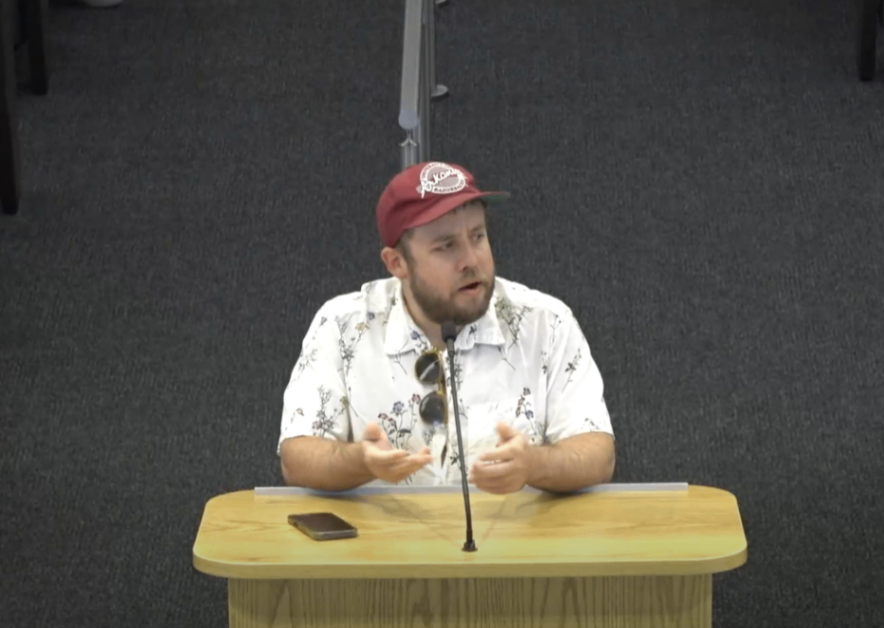
(Photo: Chanson Brummett confronting Mayor D.C. Reeves on FLOCK contract)
“Can you tell us why this money for the opiate opioid abatement fund got spent on this?” Brummet asked, adding. “Tell us why it's legal; tell us what research you did.”
Sam Epstein said FLOCK is “a system that is not secure, that anyone can hack.”
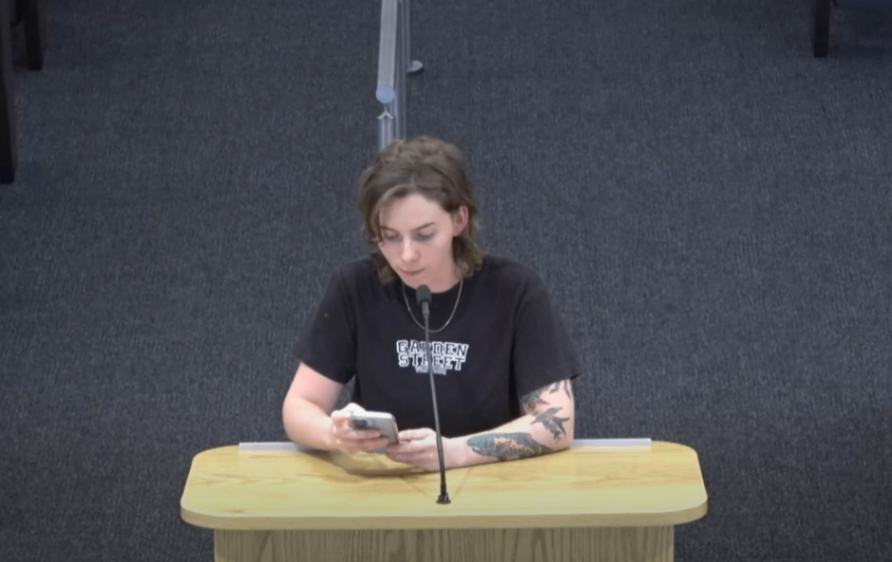
(Photo: Sam Epstein approaches the city council on Thursday, March 26, demanding an end to the FLOCK contract)
“This means that any camera can be accessed within 30 seconds by someone who walks up to it, presses a button sequence, and connects to the default Wi-Fi hotspot,” Epstein said, adding the company denies the same. “Flock acknowledges these findings and claims exploitation requires physical access and intimate knowledge of hardware.”
The denial is a must according to Epstein, adding “the physical access-only defense is also undermined by the 30-plus cameras found accessible remotely by any authentication in Denver.”
Each resident offers the city council research proving they do have a reason to fear, regardless of what Winstrom says.
Emile Sol addressed the questionable use of funds to secure the contract.
“There are a lot of harms that have been done by opioids, and there are a lot of harms that could be avoided if we invest in an infrastructure that we need to to reduce that harm in the future,” Sol said, adding “I think we have a right to question why that decision was made, and why these Flock safety cameras are using opioid abatement money, if that wasn't the primary reason.”
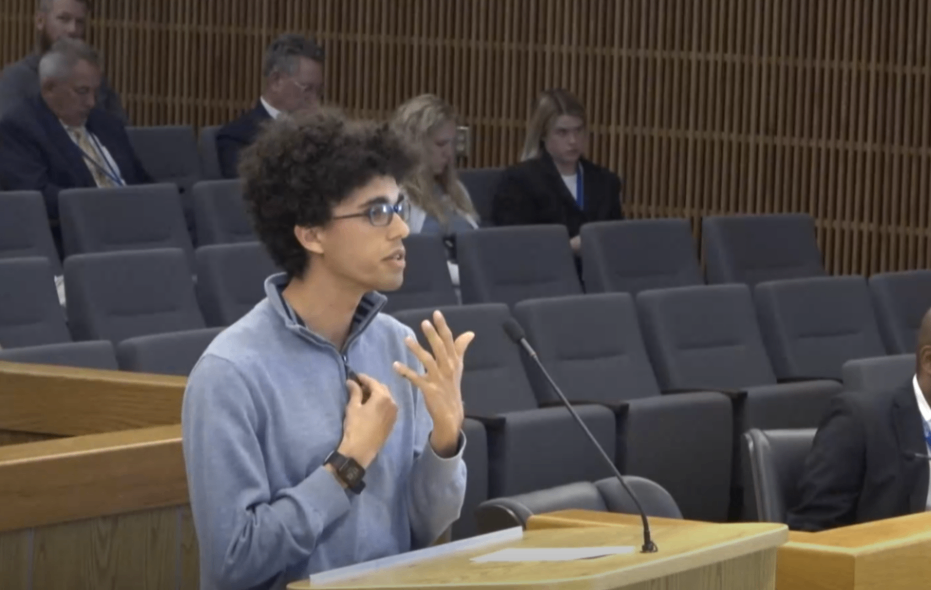
(Photo: Emile Sol questioning how the FLOCK contract was paid for with Opioid Abatement funds)
Councilman Charles Bare had the same question two weeks ago. Bare is the only councilmember to stand up against Reeves regarding FLOCK.
“I would prefer that we had our own system of cameras,” Bare said again, first noting two weeks ago.
“I would feel more comfortable as a citizen having something that was just us and wasn't able to be accessed by a number of different parties,” Bare said.
As for the funding, Bare made it clear, like last time, “I don't like the fact that it was purchased with the opioid funds, but I don't think it was illegal.”
This time, Bare brought up the FLOCK issues and the city charter, saying, “I really personally think we need our own legal representation for council because I think there are times at which our city attorney is put in between the mayor and the council.”
Bare is the only councilmember to stand up to Reeves regarding the funding source.
John Wade began noting “The infrastructure is expanding right in front of us.”
“I found eight more cameras that weren't on the original map,” Wade said.
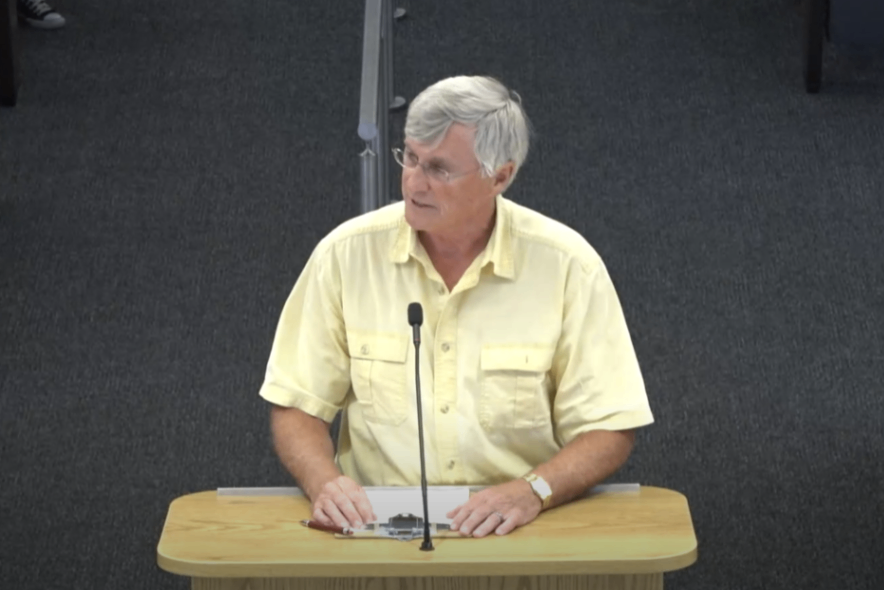
(Photo: John Wade, one of many residents, confronting the city council on the current FLOCK contract)
“Strangely enough, this just might be their (Pensacola Party for Socialism and Liberation), woke moment to conservative principles,” Wade said.
Serigo Alfonso told officials, “It is very possible for the mayor, for this council to end this contract, to terminate this contract. That's been done before, in Santa Cruz, California, and Sedona, Arizona.”
Alfonso cited a recent court case in Norfolk, Virginia, to prove his point.
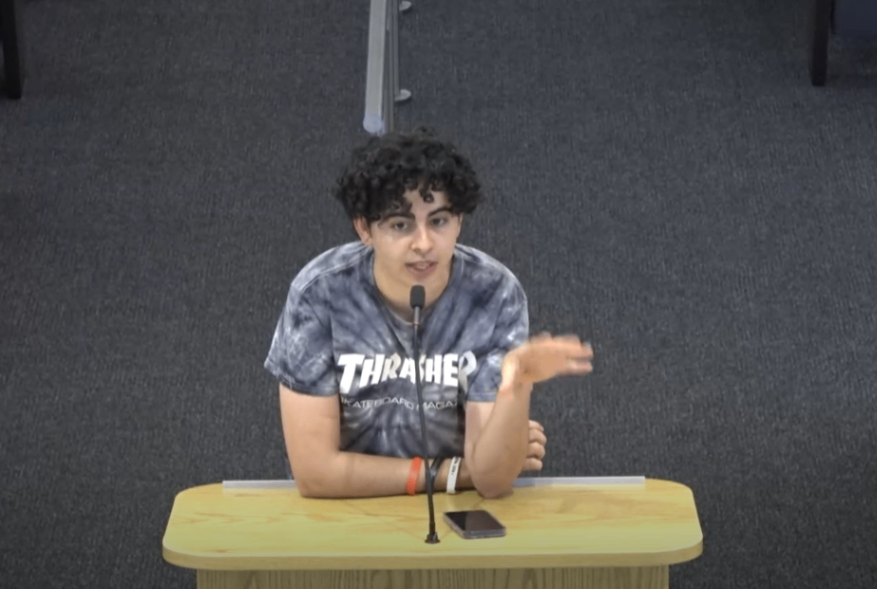
(Photo: Sergio Alfonso refuses to give up demanding the FLOCK contract end)
“They sued Flock, and they won,” Alfonso said. “The judge ruled that the data that these AI-powered cameras collect does not constitute warrantless searches.”
Pepper McQuiffins continually expresses deep concern and outrage about the Flock system at each meeting, "asserting that public safety should not come at the expense of civil liberties."
Like her peers, the platform points out "McQuiffins raised concerns about unreasonable searches and seizures, false identifications, and criticized the city's approach of leveraging fear and misinformation by highlighting arrests before convictions."
Her exact words: "I'm troubled by the city's approach to promoting these systems, highlighting arrests of individuals who haven't been convicted yet."
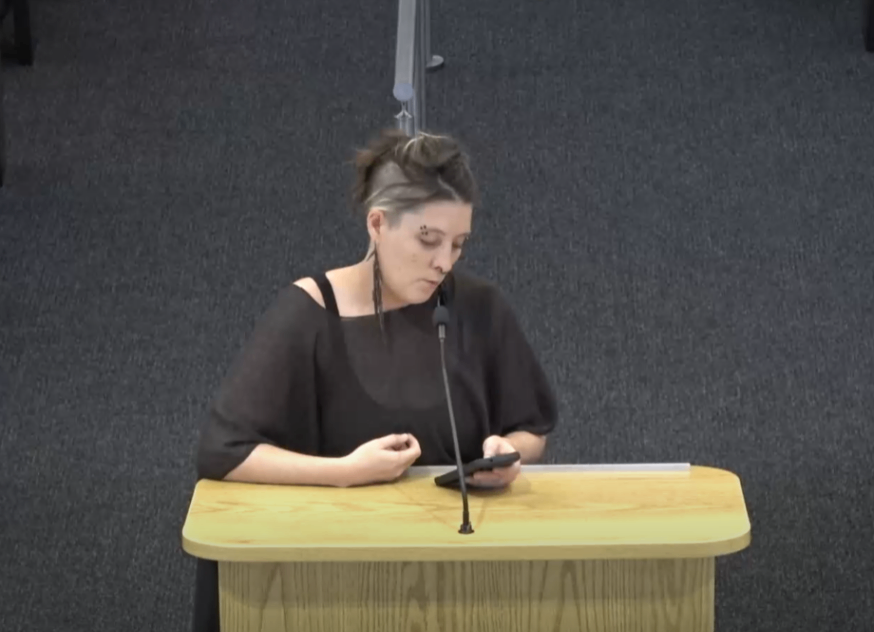
(Photo: Pepper McQuiffins has taken off Thursday evening from work to appear before council)
"This is a clear attempt to sway public opinion by leveraging fear and misinformation," McQuiffins said. "We must recognize that arrests do not equal convictions, and we should not sacrifice our civil liberties for the sake of security."
0
0

Comments