(PENSACOLA) --- It was quite convenient that Mayor D.C. Reeves did not show up at last night's regular council meeting, knowing FLOCK would be shoved in his face as it should be.
Rumor has it, the mayor continued the contract regardless of the council's approval, as posted on Jasime Brown for Mayor's Facebook page. And by the look on the faces of the attending councilmembers last night, minus Jared Moore and Delarian Wiggins, the rumor is true.
Maybe that is why Reeves did not attend the meeting, nor the last for that matter. I never did mention how arrogant it is to appoint a new police chief and not even show when the contract is approved.
But we must remember it is Reeves.

Jasmine Brown for Mayor Facebook post Feb. 23.
The rumor is just that, according to David Stafford, who said, "frankly, some misrepresentation about this contract being improperly executed, as I communicated with you all through the email today through the city attorney, who I'm happy to turn it over to and have him explain as I understand it."
"You're last year, your council staff also looked into the execution of this contract and found that it was above board," Stafford said.
Tell that to the citizens, Stafford.
One after the other got up to the podium to share unprecedented facts, not opinions. Unlike WEAR, WKRG, the Pensacola News Journal, or any other local media outlet has shown up to town hall to report on fears that have continued to haunt residents for at least a month as seen in the first and second reports here.
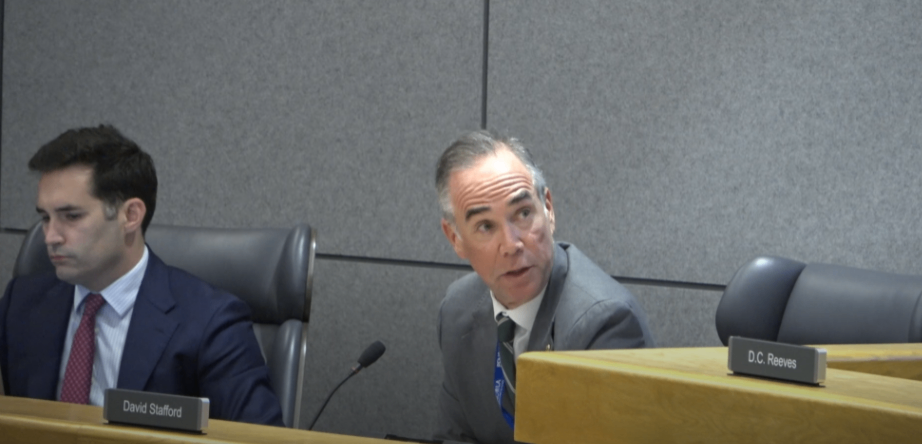
City Administrator David Stafford, with the absent D.C. Reeves seat to the left and City Attorney Adam Cobb to the left at the last Pensacola City Council meeting
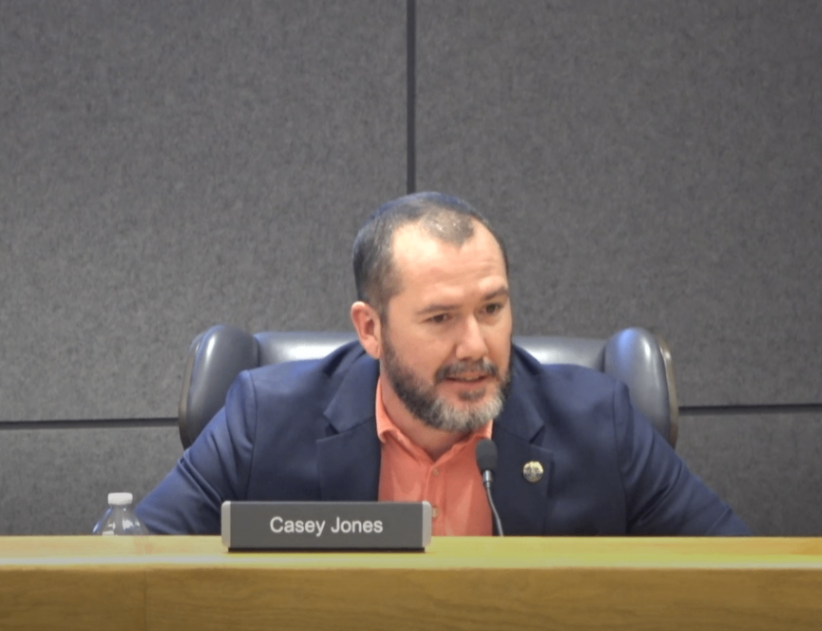
Councilman Casey Jones
Councilman Casey Jones said he wanted to set the record straight.
"At the last meeting, I did not speak at the end of the meeting when I was speaking about the Flock cameras; it was not something that we voted on," Jones said. "In fact, I got it mixed up with another thing that we voted on with surveillance cameras that were part of the federal grant that we received, so that's not something that was ever voted on."
Jones also said, "nor was there an opportunity for public speaking on that."
OpGov.ai reports the same, stating in the summary, "the city council meeting was largely dominated by intense public criticism of the Mayor's unilateral decision to implement Flock surveillance cameras, allegedly using opioid abatement funds without council approval or public input."
Additionally, the platform points out that "many citizens expressed strong concerns about privacy, Fourth Amendment rights, potential for abuse, and the lack of transparency from Reeves and the city administration regarding the contract's execution and funding."

Harper Cummings expressed concern that the Flock contract was never voted on by the council, citing emails and inquiries to the city's public records office, which confirmed that there is no publicly accessible record of any related agenda item or discussion. He noted that a memo from Acting Police Chief Brown to Mayor Reeves finalized the contract on the same day, explaining it was for a trial period and paid for with opioid abatement settlement funds. Highlighted that the opioid funds board never received a request for Flock funds and that the expense doesn't fit the fund's goals. Urged the council to end the 'dirty contract' that was arranged and signed without their, or residents', input.
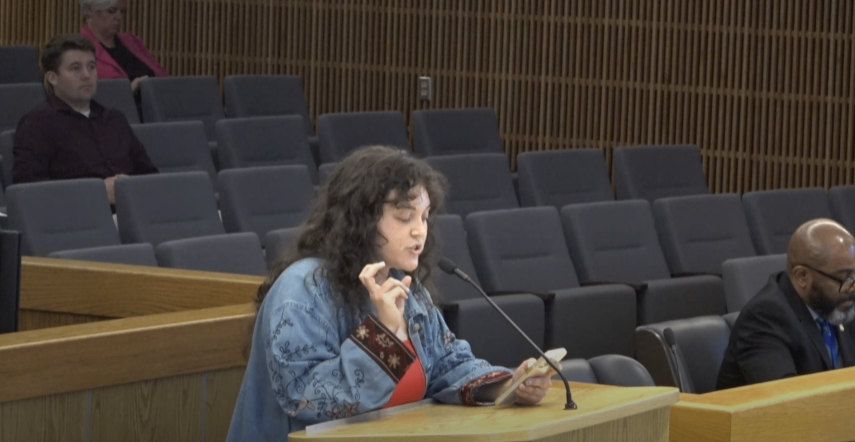
Alexander Ahatley stated that many cities, including Santa Clara, San Francisco, Denver, and South Tucson, have ended Flock contracts due to 4th Amendment violations. She explained that Flock cameras collect and share information with law enforcement and federal agencies, despite claims that data is not shared. She also cited a recent case in Milwaukee in which an officer was charged with misconduct for repeatedly using cameras to search an ex-partner's license plate. Lastly, she noted that 30 Flock cameras are in the county and 18 in the city, and demanded the termination of the contract and removal of all cameras.
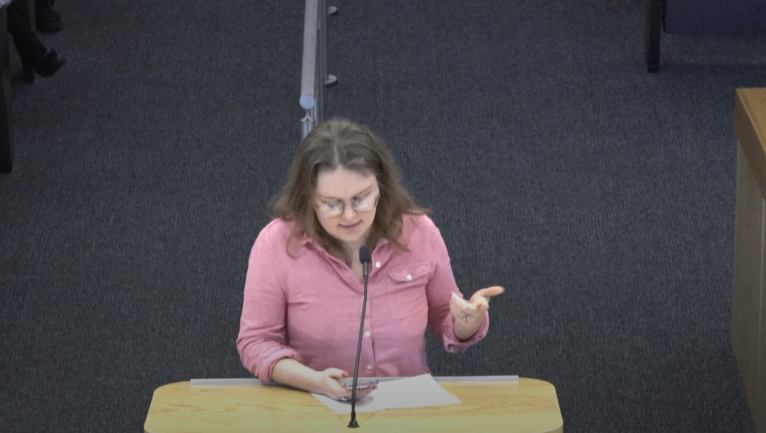
Sarah Brummett stated that many cities, including Santa Clara and San Francisco, Denver, and South Tucson, have ended Flock contracts due to 4th Amendment violations. She explained that Flock cameras collect and share information with law enforcement and federal agencies, despite claims of not selling data. She cited a recent case in Milwaukee in which an officer was charged with misconduct for repeatedly using cameras to search an ex-partner's license plate. Lastly, she noted that 30 Flock cameras are in the county and 18 in the city, and demanded the termination of the contract and removal of all cameras.
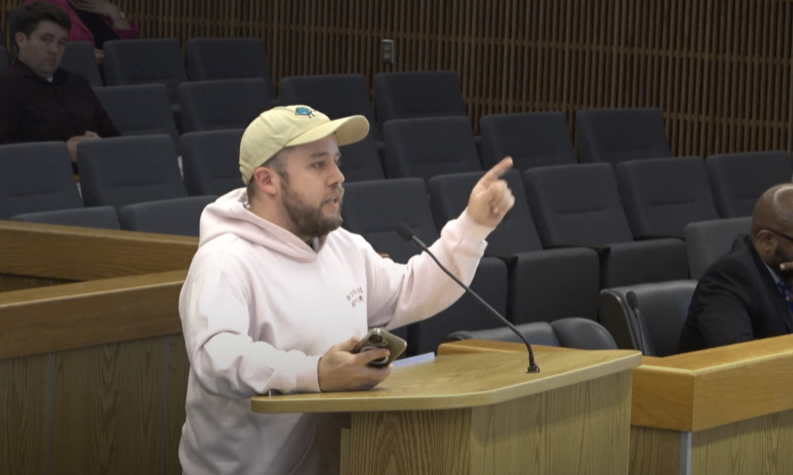
Jansen Brummett called for the termination of the Flock contract, criticizing the council for denying help to a resident in a previous meeting due to "'rules," while the Reeves repeatedly 'is not playing by the rules' regarding the Flock contract. He accused Reeves of using funds allocated for other purposes without disclosure and lying to the public. Lastly, he challenged the council to stand up to the Reeves and end the contract, choosing the people's interests ove "the wealthy and the elite."
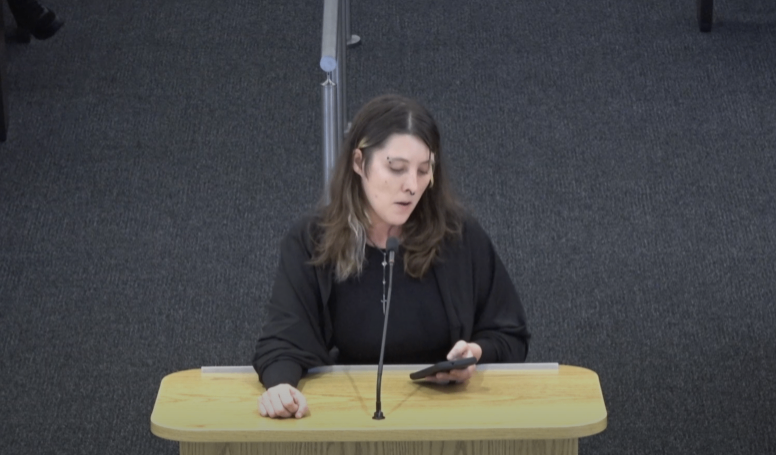
Pepper Weimer, as a citizen, expressed concern about the Pensacola Police Department's Flock contract, citing that the counsels AI-powered surveillance system infringes on Fourth Amendment rights and enables mass surveillance without consent. Accused Mayor Reeves of approving the contract without city council approval and using funds not intended for this purpose, calling it a 'betrayal of public trust.' Lastly, she demanded an immediate investigation and termination of the contract, noting previous council misstatements about a vote and emphasizing the lack of transparency and accountability.
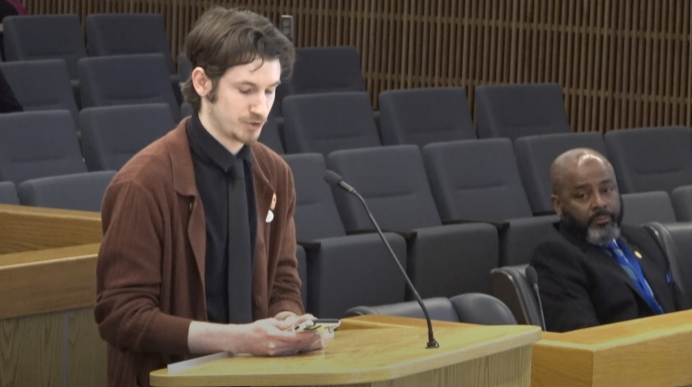
Under one name, Chulin addressed articles dismissing public concerns as "hypotheticals," citing research from the Electronic Frontier Foundation (EFF) on Flock camera misuse. He stated that from December 2024 to October last year, 12 million searches were conducted by 300 agencies, often targeting specific individuals and protests. He cited examples of Delaware State Police using Flock to catalog actions of animal rights activists and Flock's 'convoy' feature targeting groups like the Romani people, contributing to racial profiling. Lastly, he expressed exhaustion and appallment that city, state, and local governments choose 'backroom deals and corporate interests over the safety and livelihoods of our people,' especially given the council was not consulted on the contract.

Sam Epstein requested the termination of the Flock contract, citing concerns about data sharing with ICE, which she linked to incidents like the "kidnapping of loved ones and murdering innocent people," including Renee Nicole Good. He stated that police departments have used Flock data to track individuals who had abortions in Texas, and that the AI system makes mistakes, leading to wrongful arrests in cities like Denver and Seattle. Emphasized the high risks associated with Flock in Pensacola and demanded immediate termination and removal of all cameras.
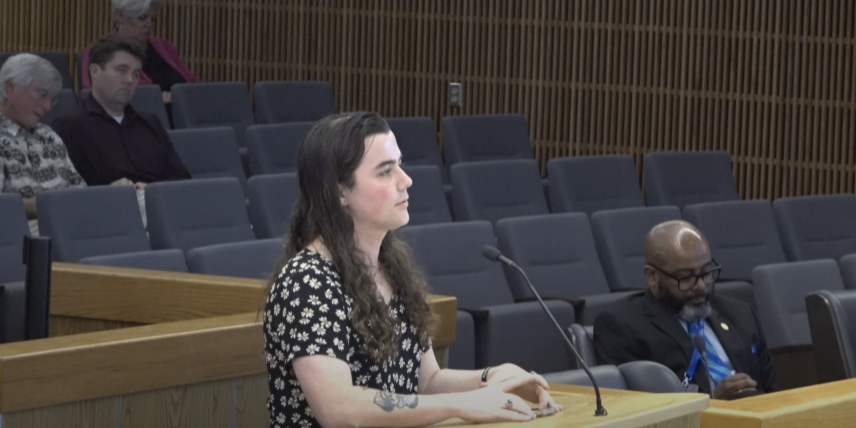
Charlie Dile called for the cancellation of the Flock contract, reiterating that the Pensacola Police Department and Reeves acted without council or public approval, with cameras installed before residents were aware. Dile referenced examples of Flock misuse, including tracking women for abortions in Texas, wrongful arrests in Denver/Kansas, and a police chief stalking an ex-girlfriend. Dile highlighted the system's nature as an easily abused, AI-powered mass surveillance tool accessible to multiple agencies (including ICE/CBP), and argued that such systems typically do not become more precise or less invasive over time. Lastly, Dile urged the council to cancel the contract before further damage occurs, noting its reported cost of $18,000 (likely a specific contract cost, not the total opioid funds mentioned elsewhere) could be better used for other city needs.
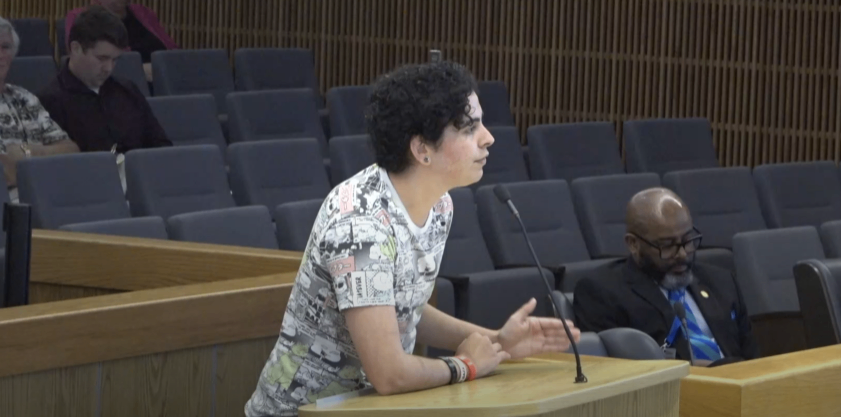
Jerusalem El Phanzon demanded the termination of the Flock contract, vowing to continue speaking until it is done, citing successful contract terminations in Santa Cruz, CA, and South Tucson, AZ. He stressed that Pensacola's situation is unique because the Mayor went behind the council's and the public's back, unlike other cities where contracts were voted on. He compared this to the Mayor's actions with the Malcolm Young demolition. He also asserted that the council should terminate the contract because it was improperly signed and that citizens had to uncover the details themselves. He ended, asking for all cameras to be turned off, uninstalled, and the contract terminated.
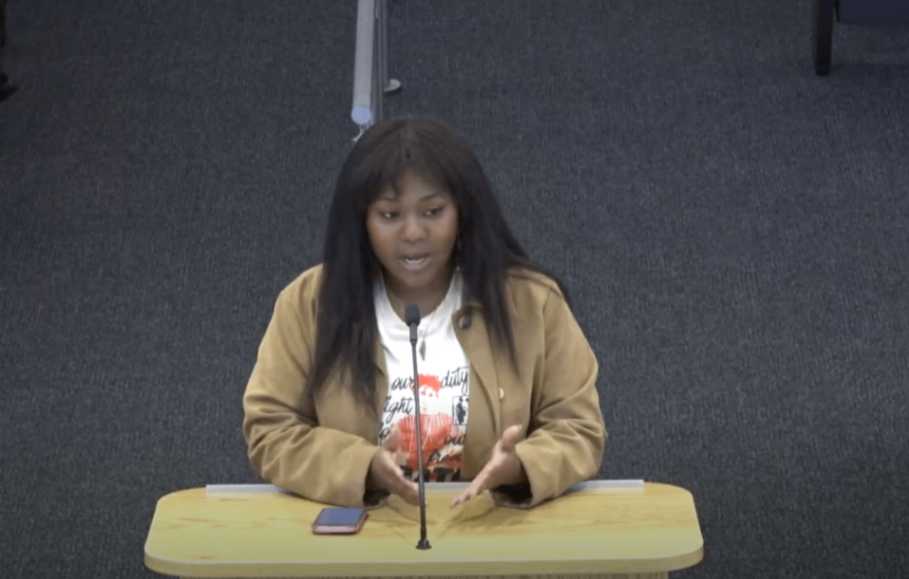
Jasmine Brown spoke against the Flock contract, criticizing local leadership for making major deals without community input or due diligence. She noted that camera locations are readily available online and that surveillance targets vulnerable groups. She contrasted the ease with which law enforcement's requests for expanded surveillance are granted with the difficulty citizens face in demanding action on low-income housing or rent control. Lastly, she warned against setting dangerous precedents and called for a full investigation into the contract's acquisition and its immediate termination.
Along with my collective public outcry, FLOCK reports garnering thousands of hits, the matter draws resident opinions. With some more cordial than others, Michael King brings great insight to the arguments made.
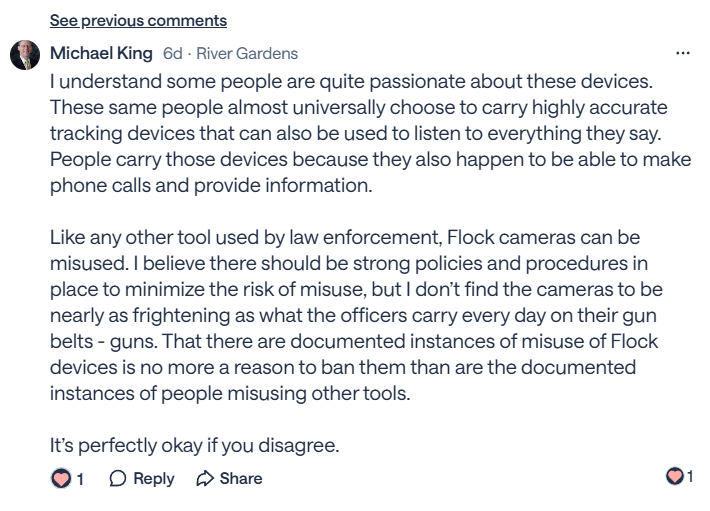
NextDoor comment from Michael King
While noting there are, in fact, documented instances of FLOCK misuse, the cameras are not nearly as frightening as the guns they carry every day.
His last words preface the posts below on NextDoor: "It's perfectly okay if you disagree."
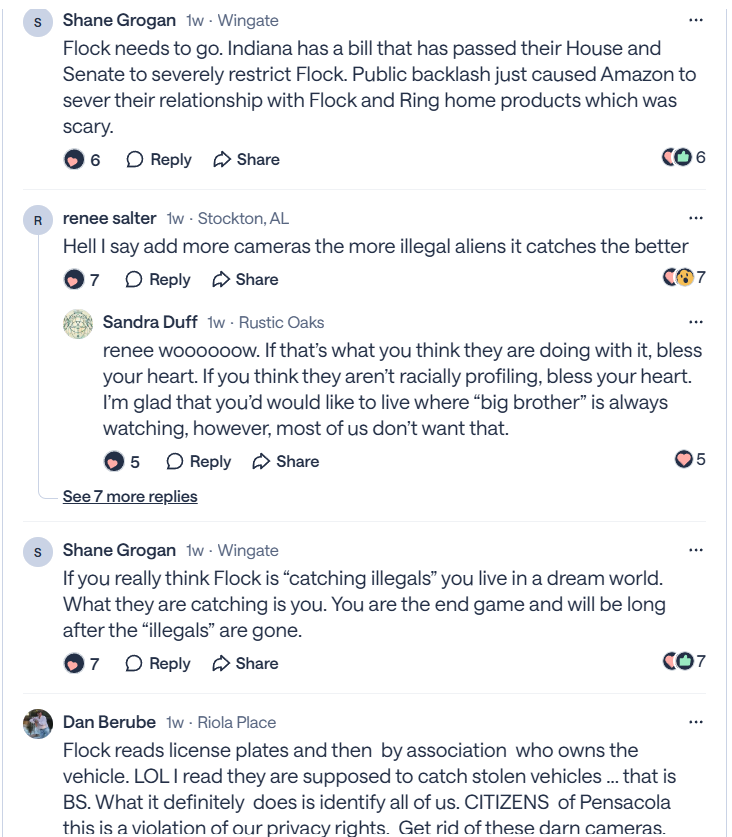
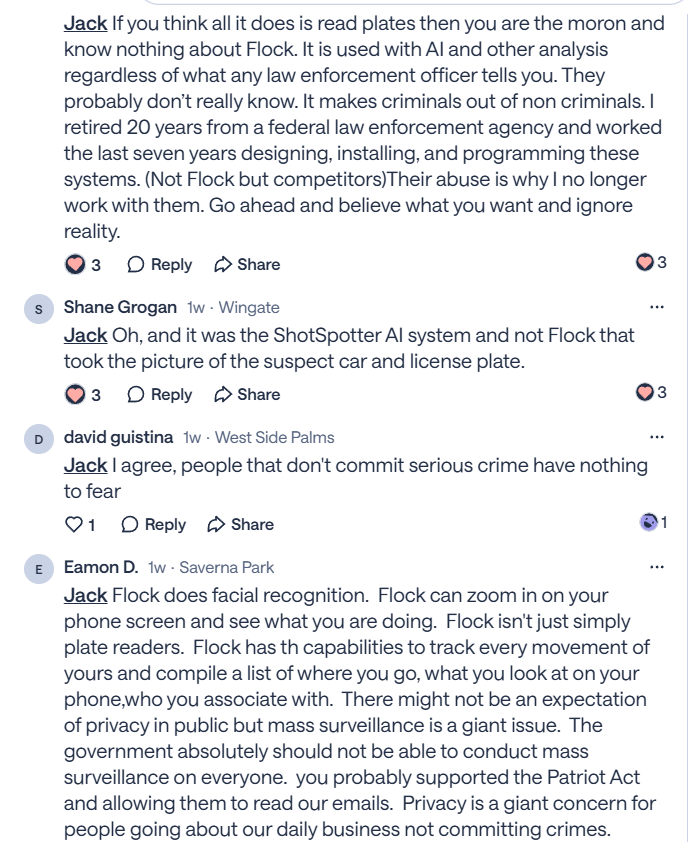
Ongoing NextDoor communication on a FLOCK report I wrote a few weeks ago.
At the end of the discussion, City Attorney Adam Cobb made one thing clear: the only thing that matters is that Reeves is in control, like it or not.
"So under our ordinances, the mayor is empowered without council approval, without council review to enter into that two-year service contract with those allocated funds," Cobb said. "That's exactly what happened."
OpGov.ai says the same thing for those who continue to doubt my AI-assistant, which reports that "while the council acknowledged that they did not vote on the contract, the city attorney and Mayor defended the action by citing the Mayor's authority to approve service contracts using allocated budget funds."
It also notes that the council members expressed their own discomfort and commitment to investigate further, particularly regarding the use of opioid funds and the broader implications of mass surveillance. That discomfort was very obvious on their faces during the public portion of the meeting, which took up nearly half of the more than hour-long meeting.
1
0

Comments