(GILBERT, AZ.) – Flock cameras are the topic of heated debates in city council meetings across the country, and Gilbert is no stranger to strong public opposition, either.
However, the Gilbert Police Department says it has no plans to remove the cameras.
GPD shared a statement with OpGov.ai via email per request explaining the department’s current status with the surveillance equipment.
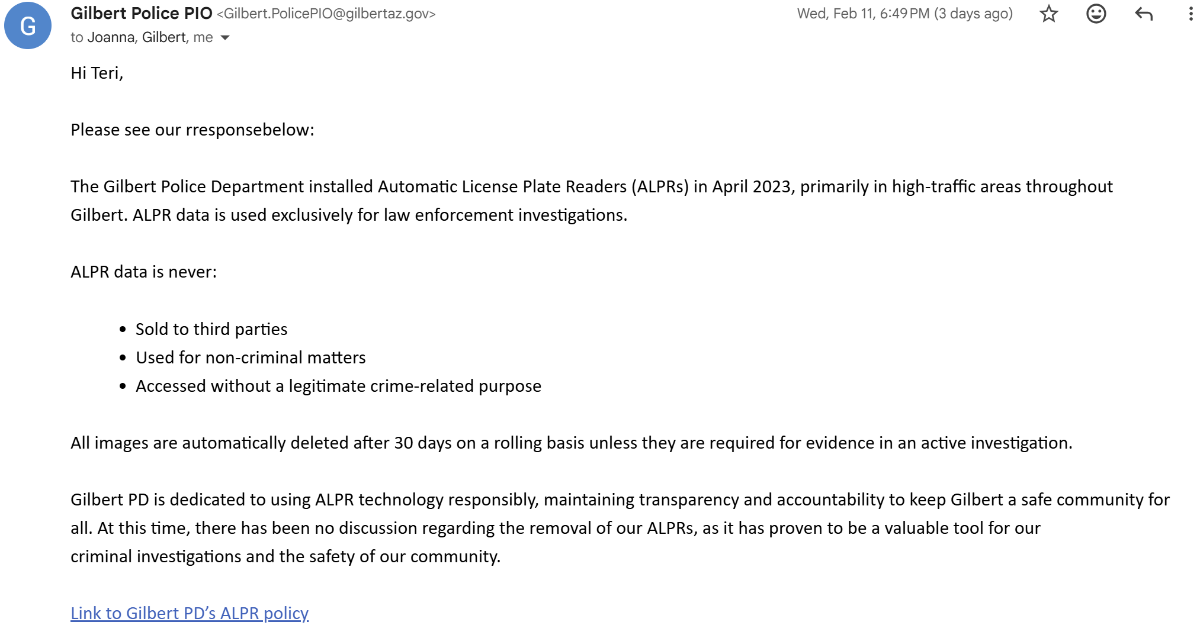
Photo Credit: Gmail / Teri Tracy
“The Gilbert Police Department installed Automatic License Plate Readers (ALPRs) in April 2023, primarily in high-traffic areas throughout Gilbert. ALPR data is used exclusively for law enforcement investigations,” says Gilbert Police Department Public Information Officer Brenda Carrasco.
According to the email, GPD will never “sell data to third parties, use data for non-criminal matters, or be accessed without a legitimate crime-related purpose.”
Carrasco states that the department is dedicated to using the technology responsibly and with transparency and accountability.
“At this time, there has been no discussion regarding the removal of our ALPRs, as it has proven to be a valuable tool for our criminal investigations and the safety of our community,” Carrasco concludes.
According to the company website, Flock Safety LPR (License Plate Reader) systems are a series of interconnected cameras which use infrared technology to scan moving vehicles for license plate numbers, capture an image of the vehicle, and then run that image through a national crime database. If the plate run matches another in the database, the system will alert local law enforcement.
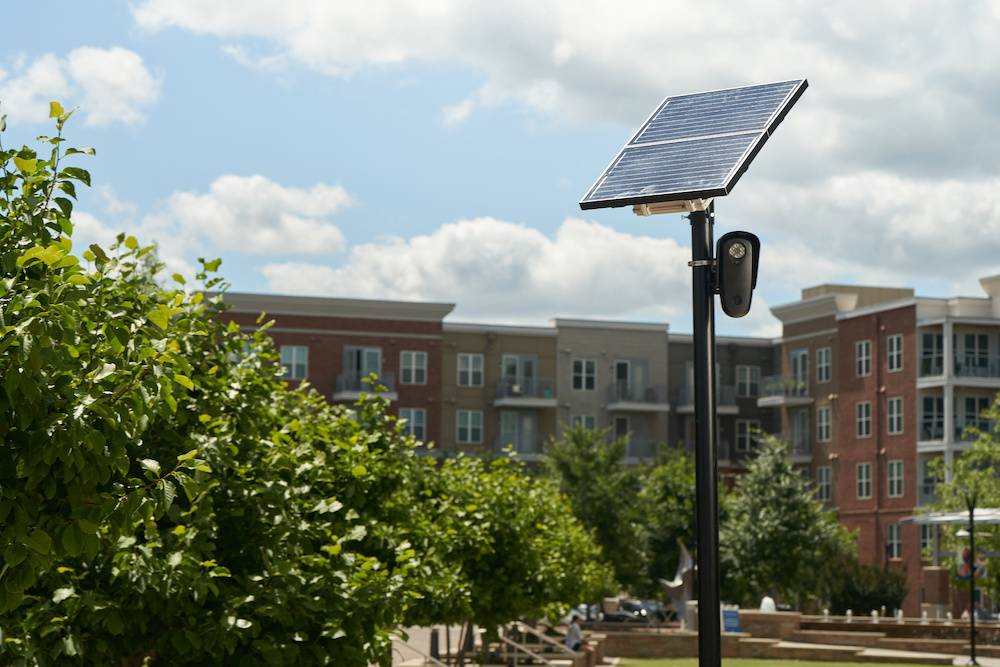
Photo Credit: Flock Safety
Flock states that the system “transmits and stores the images in the cloud, fully encrypted, for a default period of 30 days.”
GPD’s policy states that the data is stored on a web-based cloud service called evidence.com and will be deleted every 30 days on a rolling basis, unless the data is being used in an ongoing investigation.
Though officials insist that Flock cameras are used to improve public safety, some residents feel just the opposite about this form of surveillance.
In a recent town council meeting, Gilbert resident Sharon N. shared her thoughts on the Flock camera system, citing major concerns about safety, efficacy, and privacy.

Photo Credit: YouTube/ Town of Gilbert
“I am here this evening to ask that you reconsider the use of the flock cameras in our city,” she begins, “And let us call it what it is, a massive, intrusive, warrantless surveillance network.”
She references wrongful arrests instigated by the system, which are found to be referenced in a report by National Highway Traffic Safety Administration from 2021.
“Within the last three weeks, Flock's system has been hacked with information being released to the public. These technologies are rife for abuse and misuse by those with access to it.”
Her statement includes concerns for how much taxpayers are sinking into the technology, citing a sizable detriment to the police budget.
Sharon ends her time block with the statement, “I ask the council to please join the growing number of cities that are exhibiting prudence in the cancellation of their flock contracts and the removal of all equipment from our public city streets.”
To add to or correct any information in this report, please contact me at tracy.t@lead4arth.org or leave a comment below with your thoughts.
0
0

Comments