(OPGOV GLOBAL) - Two court rulings issued in 2026 found government collection of digital location data unconstitutional, and the legal reasoning in both decisions raises constitutional questions for license plate reader networks used by law enforcement agencies nationwide.
Mississippi U.S. District Judge Carlton Reeves ruled on August 5, 2026, that “tower dump” warrants violate the Fourth Amendment. A tower dump requires cellphone companies to provide time and location data for every mobile device connected to specific cell towers during a set window.
Reeves found the practice was a general warrant that gave law enforcement access to the cellular records of individuals who were “merely passing by a location at the ‘wrong’ time.”
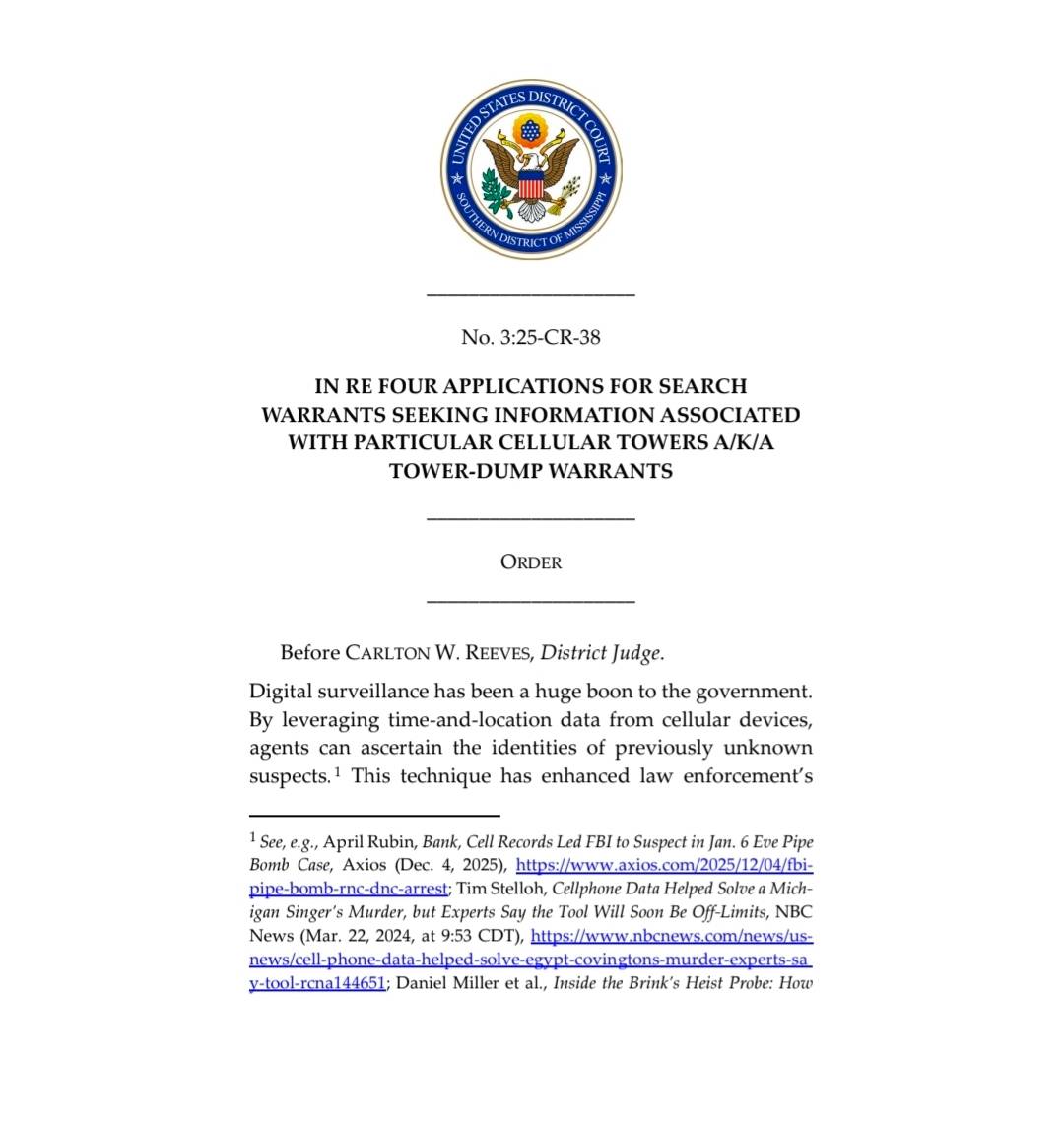
Photo Credit: Storage.courtlister.com
On March 3, 2026, Broward County Judge Steven P. DeLuca dismissed a red-light camera citation after finding the photo-enforcement statute unconstitutionally shifted the burden of proof to the vehicle owner. DeLuca ruled the law required registered owners to prove they were not driving, instead of requiring the state to prove who was behind the wheel. The court found the civil infraction functioned as a “quasi-criminal” proceeding because it carried penalties and a “beyond a reasonable doubt” standard in court.
Judge Reeves’ order referenced the Supreme Court’s June 29, 2026, decision in Chatrie v. United States, which held that geofence warrants constitute a search under the Fourth Amendment and that individuals have a reasonable expectation of privacy in cellular location data. The order also referenced the U.S. Court of Appeals for the 5th Circuit’s decision in United States v. Smith, which found that geofence searches are indeed Fourth Amendment searches requiring a warrant.
The broader implications center on two legal doctrines the courts applied. The first is that mass collection of location data on non-suspects is a Fourth Amendment search. Judge Reeves wrote in a 30 page court order that tower dumps exposed the whereabouts of “countless individuals” not connected to any crime. Chatrie and Smith established that people have a reasonable expectation of privacy in detailed records of movement created by digital devices.
License plate reader networks, including Flock Safety systems, capture license plate images, vehicle characteristics, and location data from fixed and mobile cameras to be stored and searched at law enforcement's discretion. The data is stored in centralized databases and can be searched without a warrant. The systems log every vehicle that passes a camera, not just those suspected of a crime, and allow searches by time, location, and vehicle type.
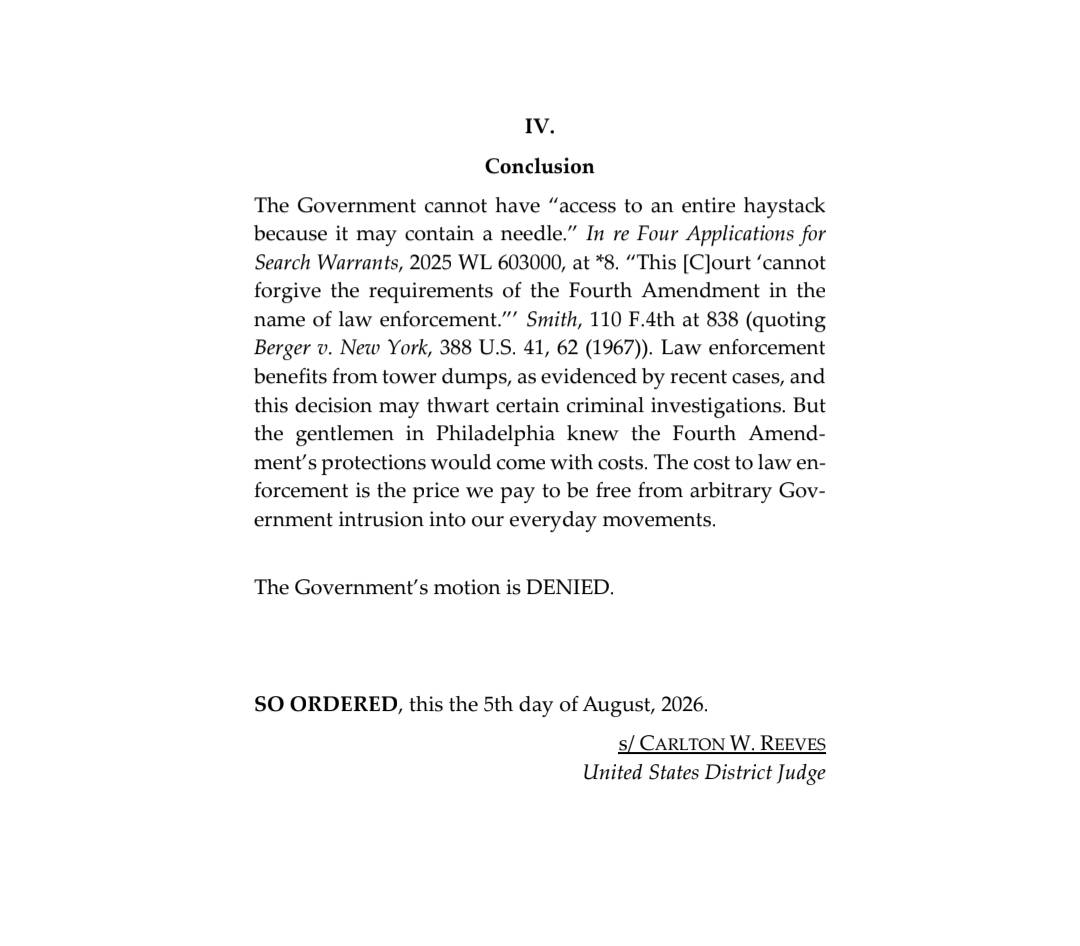
Photo Credit: Storage.courtlister.com
Judge DeLuca found the photo-enforcement statute required registered owners to submit a sworn affidavit identifying another driver to avoid liability. In DeLuca’s order, he states that enforcement actions cannot presume guilt or shift the burden of proof to the accused. DeLuca’s reasoning on presumed guilt and quasi-criminal penalties addressed procedures that require the vehicle owner to disprove involvement.
Chatrie addressed geofence warrants served on Google. Smith addressed geofence warrants generally. Both held that they are searches requiring probable cause and a warrant. Judge Reeves said Carpenter, Chatrie, and Smith provided guidance for lower courts on digital surveillance.
The Mississippi decision applied only to the Southern District of Mississippi. The Broward order applied only to the case before that court. Agencies in multiple states have installed thousands of Flock cameras since 2022. Municipalities cite public safety and case clearance rates as reasons for adoption.
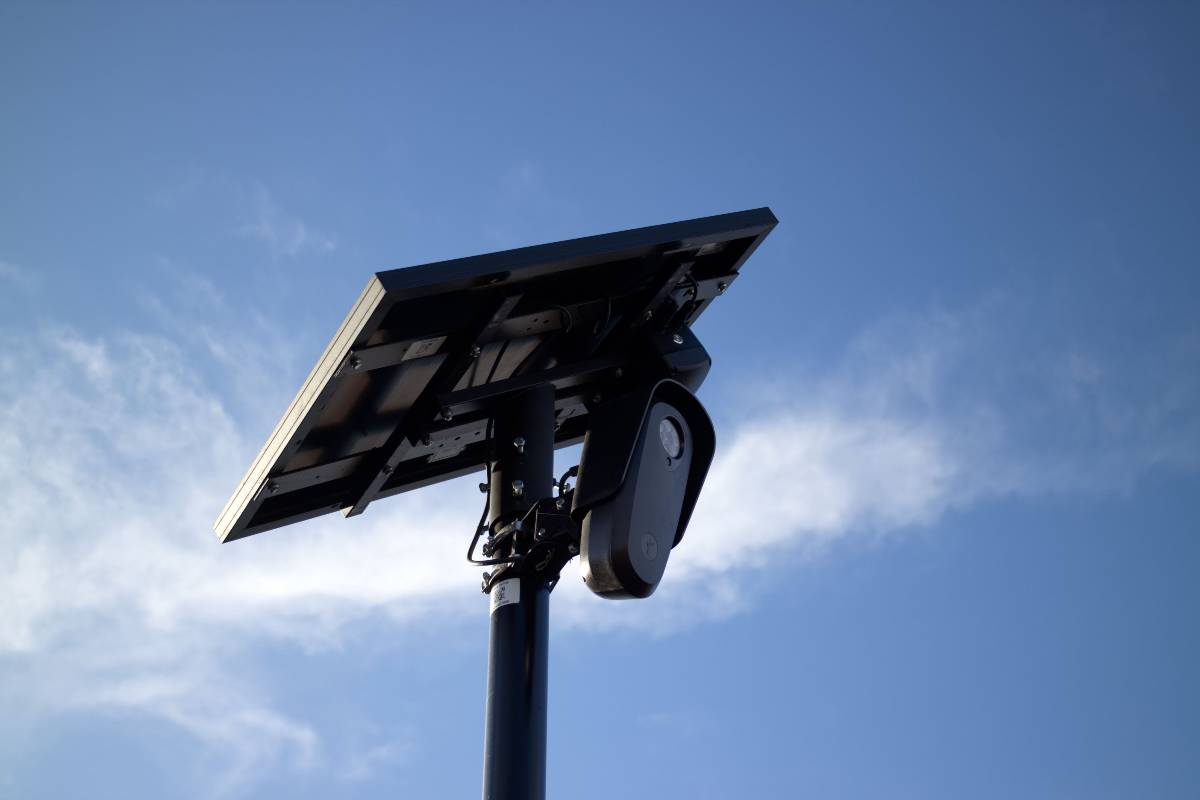
Photo Credit: Will Freeman: Pexels.com
The two rulings did not create new law on license plate readers. However, by holding that bulk location collection is a Fourth Amendment search, and that burden-shifting in automated enforcement violates due process, the courts addressed legal standards that apply to any system that collects location data on the public and presumes a link between a vehicle and its registered owner.
To add to or correct any information in this report, please contact me at pepper.w@lead4earth.org
0
0

Comments