(ESCAMBIA COUNTY, FL.) --- The National Alliance on Mental Illness (NAMI) has a Back-to-School Resources webpage for a reason.
The first day of school is not just one day; it is the beginning of 178 days in the Escambia County School District (ECSD). Between active shooter drills, remembering a new schedule, meeting new teachers and more, the first few weeks of school entail extra energy and focus.
NAMI reports “as students, families, and educators prepare for a new school year, navigating the challenges of academics, social dynamics, and personal growth can be overwhelming.” ECSD Public Information Officer Cody Strother said officials prepared for the school’s start a few weeks ago to ensure a smooth transition during the first week of September. Stroder said during the first week of school, teachers generally practice daily routines with students to help them remember the day's schedule.
“In the lower elementary grades, the teacher shows students where the cafeteria, media center, and special area classes are located,” Strother said. “They also ensure that students know how they go home, whether it is by car, walker, or on the bus.”
However, the end of the school day does not necessarily end when children step off the bus, according to Strother, who noted that “connecting with your child on their terms” is important when they walk in the door.
“We understand you want to check in and hear about your student’s school day as soon as you see your child,” Stroder said. “However, asking them detailed questions immediately after school may cause an exhausted child to shut down or simply say their day was ‘good’ or ‘fine.’”
Rather than just saying “I’m so glad to see you,” follow up with having a snack together or having your child help you prepare dinner,” Stroder suggested, adding even listening to music together offers the opportunity to talk about their day the first few weeks of school’s start.
“When parents register students for Voluntary Pre-Kindergarten Education (VPK), tips on school readiness skills are shared,” Stroder said. “Establishing daily routines helps to make the transition to school easier, and parents are encouraged to practice these routines before school begins, including going to bed on time, dressing themselves, and following simple instructions.”
Additionally, Pre-Kindergarten families are also given a book with tips for helping their child learn to read, emphasizing the importance of reading to children every day. Studies show daily routines ensure a successful attendance record, which is why Stroder said it’s important to communicate with families early in the school year.
“Schools set the expectation that student attendance is important and schools lay the groundwork for improved student attendance resulting in better student engagement, well-being and academic success during the year,” Stroder said. “It’s easy to forget that just a few absences add up to lost instructional time over the course of a school year.”

Photo Credit: Escambia County School District website
There are four quarters in the ECSD with 42 days in the first quarter, 43 in the second, 47 in the third, and 46 in the last quarter. In that time, students see five federal holidays and a Fall, Thanksgiving, Christmas, and Spring break.
Stroder broke down what one school day represents. Missing 2 days a month results in missing 20 days per year, which equals anywhere from 7,500 to 8,000 minutes of instructional time, according to Stroder.
“That’s equal to 125 to 133 hours or 1 month of school,” he added. “At 20 days, students have missed 10% of the school year and are considered chronically absent, which can lead to the court system getting involved.”
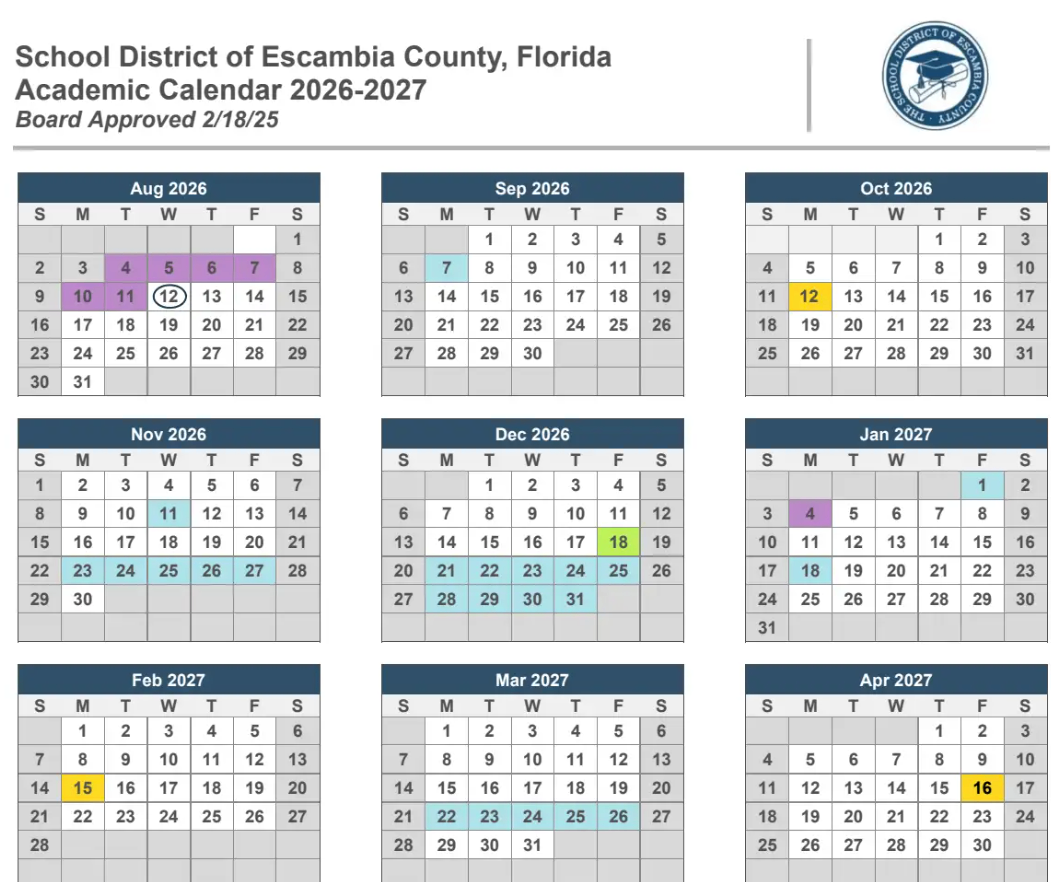
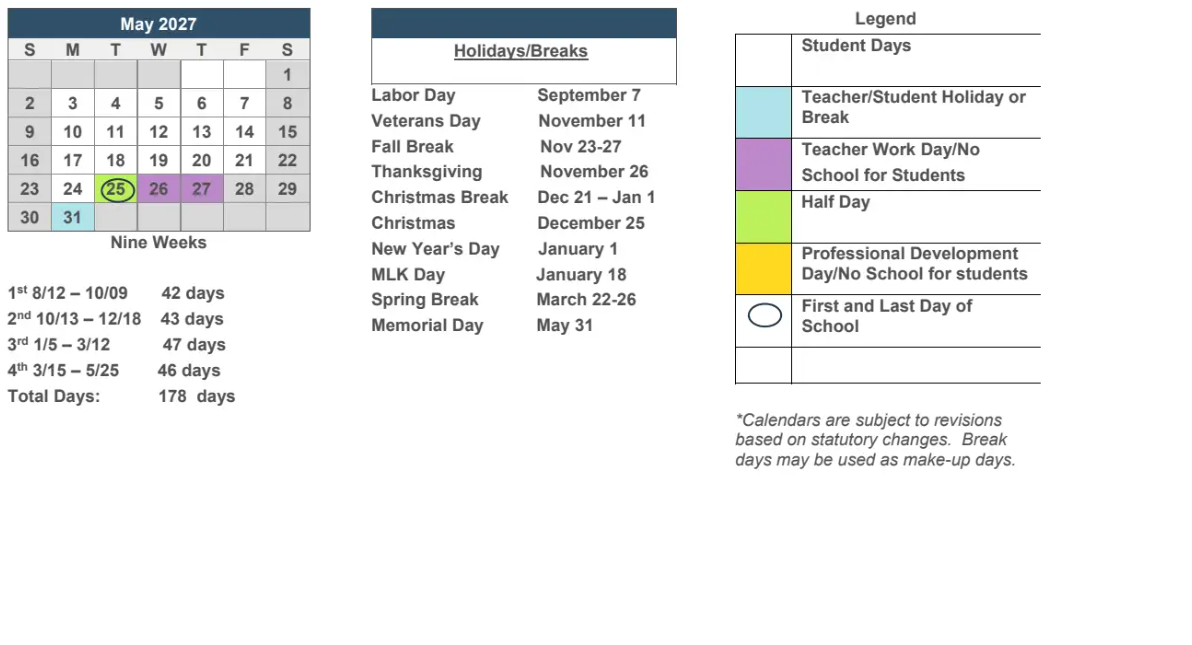
Photo Credit: Escambia County School District School Year 2026-2027 calendar
It gets worse based on the subject, according to Stroder, who said for students receiving math and reading interventions, this results in lost time for tiered supports.
“Additionally, until the 3rd grade, students are learning to read,” Stroder said. “Missed instruction puts students at risk of falling behind as they transition to more difficult subjects where they must be ‘reading to learn.’”
Too many missed days could lead to being held back.
“Retained students are at greater risk of dropping out of school, may display poor social adjustment, exhibit problem behaviors and miss even more school as a result,” Stroder said.
While school counselors are available to assist students during the day, “shifting from the freedom and flexible routines of summer to early morning alarms is a significant adjustment for kids,” according to Stroder.
“Disruption and pushback are normal,” he said, offering some suggestions, including earlier bedtimes at the beginning of the year to adjust to the schedule. “Swap screen time for reading or listening to calming music before bedtime.”
Creating visual routines for the morning and night are also helpful, including using checklists for older students and visual charts for younger students.
“These tools allow them to track their morning and nighttime tasks independently without constant reminders from an adult,” Stroder said.
Packing up school materials, getting dressed, washing face, brushing hair and teeth, putting on proper shoes are all checklist notes to help students before school.
And at the end of the day, allow students to decompress after school.
“Understand that children spend six to eight hours continuously regulating their emotions, controlling their impulses, and adhering to classroom rules,” Stroder said. “Give your child space and time to recharge before expecting them to tackle homework, chores, or extracurricular activities.”
To add any information in this report, or to share tips please contact me at reporterangelaunderwood@gmail.com.
Thumbnail Photo Credit: Pexels/Sole Gomez
0
0

Comments