(PENSACOLA, F.L.) --- An Environmental Advisory Board (EAB) matter failed due to a technical failure in a recusal rule.
EAB official Kelly Hagan shared with officials at the early August meeting why she recused herself on a previous tree canopy matter that “technically failed” despite the full board’s vote.
“I'm just hearing conflicting information about what would count as the law,” Hagen said. “Looking at it, it looks like it states that there has to be a financial gain or loss.”
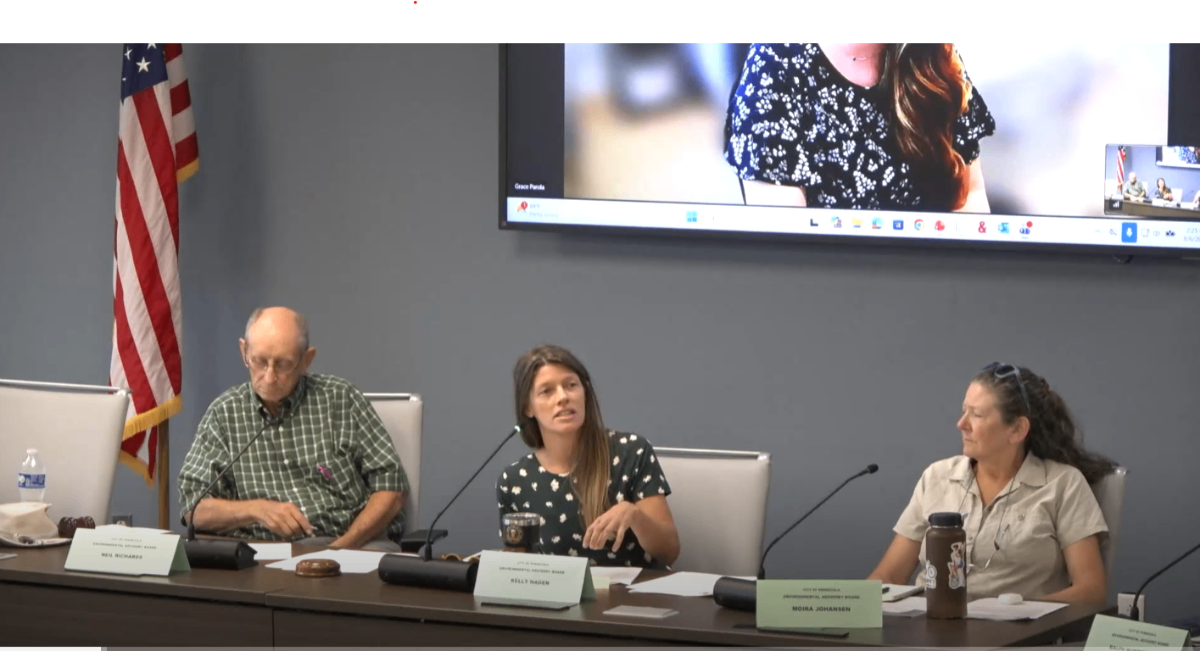
(Photo: Environmental Advisory Board member Kelly Hagen, center, expresses confusion over recusal rules)
After Assistant City Attorney Grace Perola broke down Florida's Sunshine Law and Public Records Act in a lengthy PowerPoint via Zoom, Hagan made it clear she did not want to make the same mistake twice.
“There's something we'll be voting on today that I'm directly involved with,” Hagan said. “My understanding of the law is that I would have to vote unless there were gain or loss, so can you clarify?”
But Perola had no answer.
“I'm happy to do that research for you, but I don't want to give you an answer that I'm not a hundred percent sure of,” Perola said.
However, Council Executive Don Kraher did explain the process and exactly what went wrong with the technical failure, noting "this one just kind of fell through the cracks when staff was working on it."
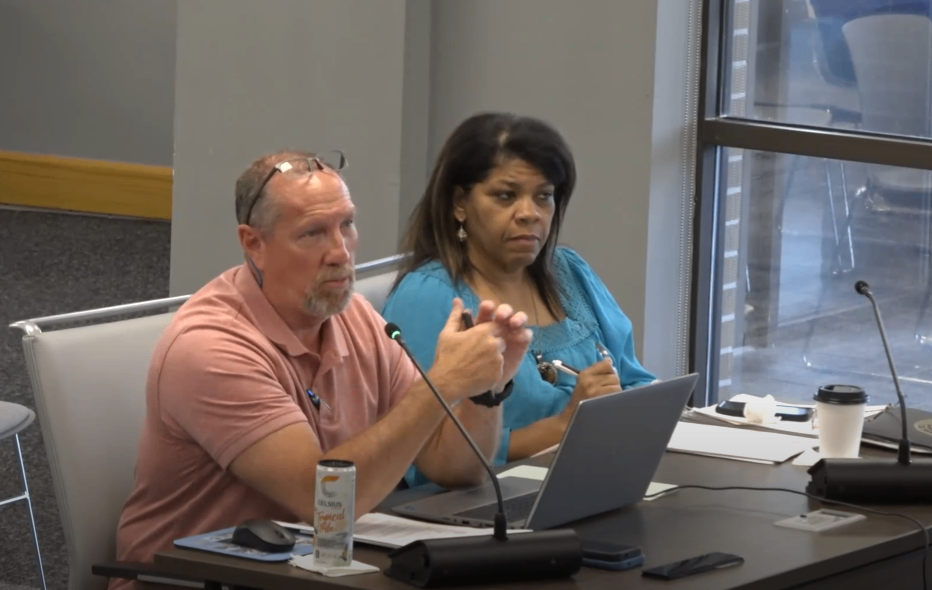
(Photo: Council Executive Don Kraher explains technical failure regarding recusal vote to the Environmental Advisory Board members)
It went down like this, according to Kraher.
“We had five members present with four vacancies, and Kelly is on the board, if you will, of the Tree Canopy Restoration, so she necessarily needs to recuse herself from that vote,” Kraher said. “That meant we had only four members, and for this board, for an item to pass, it has to have five affirmative votes, and it has to have a majority of the board, not those present, but of the entire board.”
Kraher continued, noting “when we sent it to city council, we notified them that at the EAB it technically failed because it didn't get five votes because of having four openings and only five members present, one of whom had to recuse themselves.”
“Obviously, if Kelly were able to vote, she would have voted in favor of it,” Kraher said.
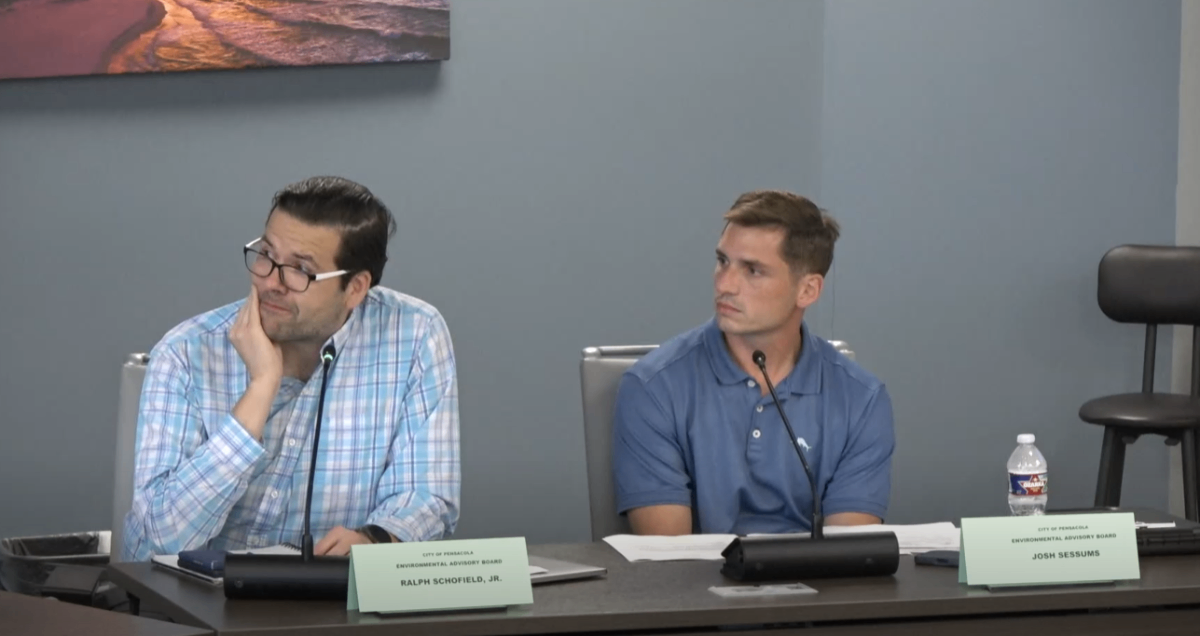
(Photo: Environmental Board Vice Chair Ralph Schofield, left, and Jost Sessumus, right, at the August 6 meeting)
After Perola gave a critical overview of the procedures, newly elected Vice Chair Ralph Schofield Jr. wanted to ensure previous meeting minutes were on the up and up.
“Something that came up at the last meeting, and I don't know if it's properly recorded, and maybe you could provide some advice on that, or at least take note of it in case it needs to be researched,” Schofield said.
The issue: tree canopy.
“It was put into the minutes as a recusal because of an interest in the organization and then indicated that it technically failed, and so I didn't know whether that was the appropriate way to do that," Schofield said.
Though Perola was directed to research certain information, the attorney did make it clear the “Sunshine Law applies to any gathering of two or more members of the same board to discuss some matter which will foreseeably come before the board for action.”
“I include this just to remind you all that this is beyond just live conversations that you're having with another board member,” Perola said. “This includes written correspondence. and it also includes private phone conversations.”
Schofield wanted further confirmation members were not disobeying the law, with Kraher noting “I distribute it (information) out to avoid any potential going back and forth between board members.”
“We don't function as a conduit between board members,” Kraher said.
It’s not just written communication, according to the Perola.
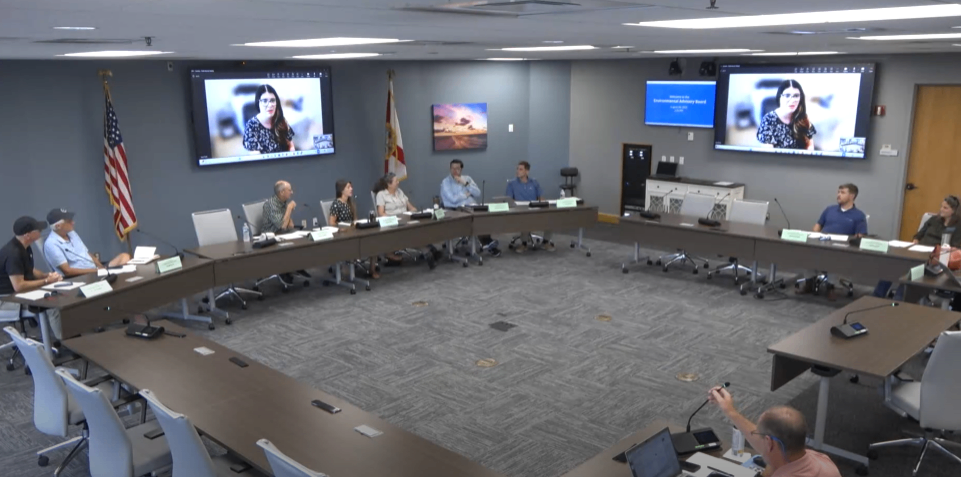
(Photo: Environmental Advisory Board meeting focused on board members understanding the state law regarding the Sunshine Law, Public Records Act)
“It can include photographs, it can include maps, anything, any type of document, regardless of its physical form, whether it's a hard copy on the computer, a calendar; these are all public records,” Perola said.
Speaking of records, if a person is denied the right to inspect or copy public records, they may sue the city or the agency, according to Perola.
“A public officer who knowingly violates the provisions of the Public Records Act is subject to criminal penalties and fines,” Perola said.
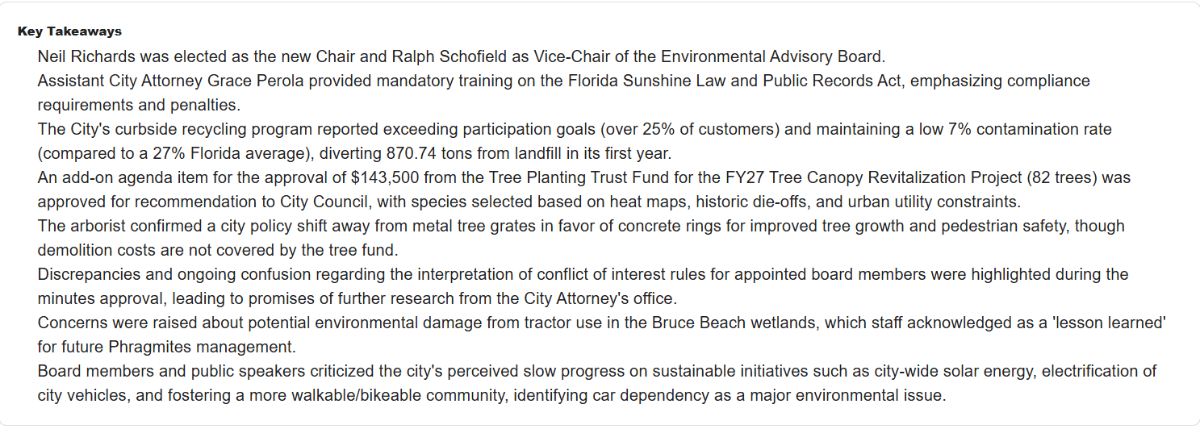
(Photo: OpGov.News Key Takeaways from the August 6 EAB meeting)
The OpGov.News platform also picked up other Key Takeaways from the meeting, offering a summary and comments here. Some matters include a city arborist policy decision and more electric city vehicles.
0
0

Comments