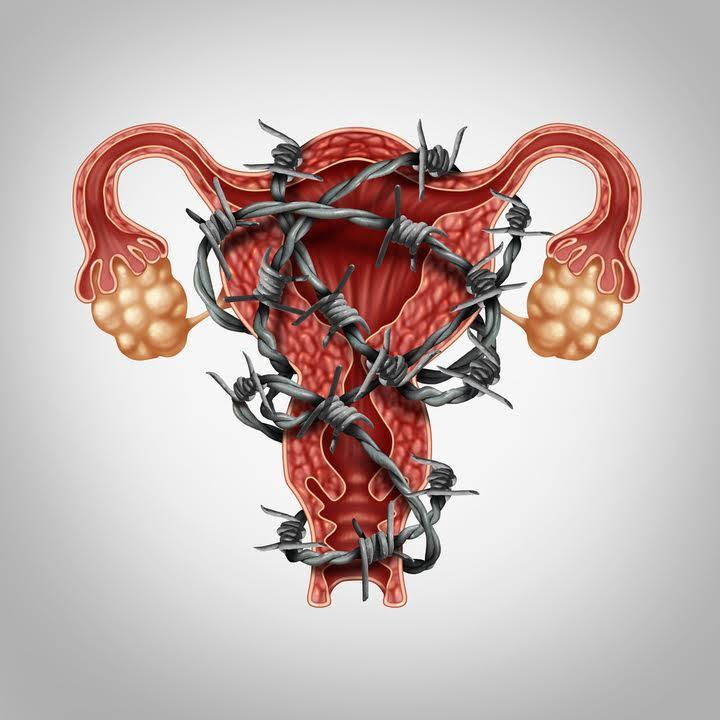
Photo Credit: Advanced Endometriosis Center
(OPGOV GLOBAL) – Extraordinary leaps are finally happening in women’s health, but mainstream media isn’t concerned with the 18% of women who are battling endometriosis.
That’s right: nearly two in ten women (that we know of) are fighting a disease that is so far incurable, and has historically been treated with off-label-use medications such as birth control hormone pills, medications that cause chemically-induced menopause, and even invasive surgery.
Endometriosis is characterised by the growth of endometrial tissue from the endometrium (inside the uterus) forming lesions and growing outside the uterus in other parts of the body. These lesions behave the same as the endometrium in the uterus: swelling and shedding.
The result? Symptoms can include mild to severe pelvic and abdominal pain, headaches, nausea, dizziness, infertility, and many, many more that likely haven’t been catalogued yet. These lesions can even overgrow vital organs.
Recently, though, studies are ramping up on how to help affected women and prevent onset in patients with a genetic predisposition to endometriosis.
Historically, testing for endometriosis has been extremely limited due to the necessity for laparoscopic, exploratory surgery to properly diagnose it, since lesions typically aren’t as visible on typical imaging scans including MRI, CAT, and pelvic ultrasound.
Late last year, a study from Yale set out to identify specific biomarkers that would help identify high-risk patients. It’s the very first study of its kind in identifying endometriosis via non-invasive microRNAs, and it was fruitful.
The study analysed 63 adolescent and young adult women between the ages of 13 to 26 who were already undergoing gynecological procedures over a five-year period. All the involved women reported associated pelvic pain.
Blood serum was collected from each patient before their scheduled surgery, and RNA was further extracted from those samples. These samples were then tested for 859 microRNAs, which presented significant differentiations leading to promising test results:
“Among 859 microRNAs detected, 468 microRNAs were increased while 391 were decreased compared to controls. Of these most showed small differences in abundance with considerable overlap between groups,” cited the study.
These blatant differences show excellent potential for the diagnoses of women with endometriosis, which, the researchers hope, will help to drastically improve the time it takes to confirm a diagnosis, which currently averages about ten years.

Photo Credit: PubMed / doi:10.1186/s12958-025-01502-z
The same researchers also mentioned in the study that targeted gene treatment of the specific microRNAs showed promise as a potential future treatment, but research on that topic remains ongoing.
However, other treatments are showing future potential as well. Researchers at the First Affiliated Hospital of Guangzhou Medical University in China have discovered a pathogen that is linked directly to endometriosis through trials involving fecal samples from patients with endometriosis and implantation into mice.
This unique cause-and-effect experiment revealed that, when implanted with fecal samples from women with confirmed endometriosis, the mice grew endometriotic lesions as a direct result of the procedure. This means that microbes in the gut have a much bigger impact on endometriosis cases than previously studied.
The pathogenic bacteria in question, Ruminococcus and Pseudomonas in informal terms, correlated with increases in NETs formation, which acted as a pathogen-fighting mechanism that led to increased inflammation. This is a much closer look at the causes and exacerbation of endometriosis than previously gleaned.
The study ultimately concluded that targeting specific microbes disrupting the peritoneal microbiome could potentially offer a treatment option in the future, though the current research is limited to mice.
While it may seem like the entire biomedical research community is more focused on male balding than any aspect of women’s health, these studies show that researchers are actively searching for clues about what causes endometriosis for certain, and how it can be cured.
For those of us still suffering, it helps to know that someone is trying.
To add to or correct any information in this report, please contact me at tracy.t@lead4earth.org.
0
2

Comments