(Elk Grove, CA) — As homelessness continues to rise across Sacramento County, Elk Grove is taking decisive steps to address the crisis locally. Earlier this month, city officials identified three potential sites for a permanent homeless shelter—one of the city’s most consequential decisions in 2026.
OpGov.ai reports the city's proposed shelter would provide temporary housing, mental health support, and pathways to permanent housing for individuals experiencing homelessness. City leaders say the initiative is about more than shelter—it’s about restoring dignity and stability for residents who have fallen on hard times.
City Manager Jason Behrmann underscored the importance of public input during the January 14 City Council meeting: “We really want to hear from our community about their concerns, their questions, and get those questions answered,” Behrmann said. He announced two community forums scheduled for January 21 and January 27, each offering afternoon and evening sessions to accommodate residents’ schedules. Feedback gathered from these sessions will be presented to the council on February 11. An online survey is also available for those unable to attend in person.
After reviewing more than 130 potential sites, the City of Elk Grove has narrowed its search for a permanent homeless shelter to three locations: 9296 East Stockton Blvd; the intersection of Survey Road and East Stockton Blvd; and Dwight Road, just north of Laguna Blvd.
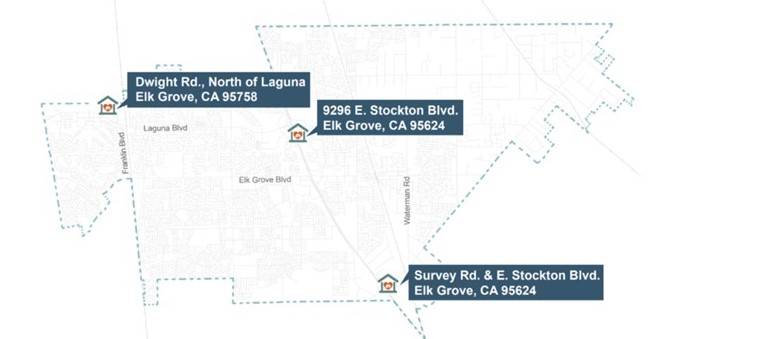
Image from city of Elk Grove website.)
Public comment during the meeting revealed a mix of optimism and apprehension. Longtime Elk Grove resident and volunteer Lynn Wheat spoke passionately about the need for compassion:
“I believe that we are a compassionate city, and that we are a city for all—a welcoming city for all,” Wheat said. “What I really don’t want to do is see that we’re only welcoming as long as it doesn’t affect our home property values or the fear-based thinking we have around this population that would be living in a permanent shelter.”
Wheat, who volunteers at the city’s existing shelter, stressed the importance of location:
“Do I want to be located in a location where there are absolutely no services, or do I want to be a mile and a half from a store, a mile from a store, or two blocks from where I’m going to receive my mental health services? Do I want to try to depend upon our transportation that doesn’t exist? Please think about those things…”
Her remarks echoed a broader theme: balancing neighborhood concerns with the practical needs of unhoused residents.
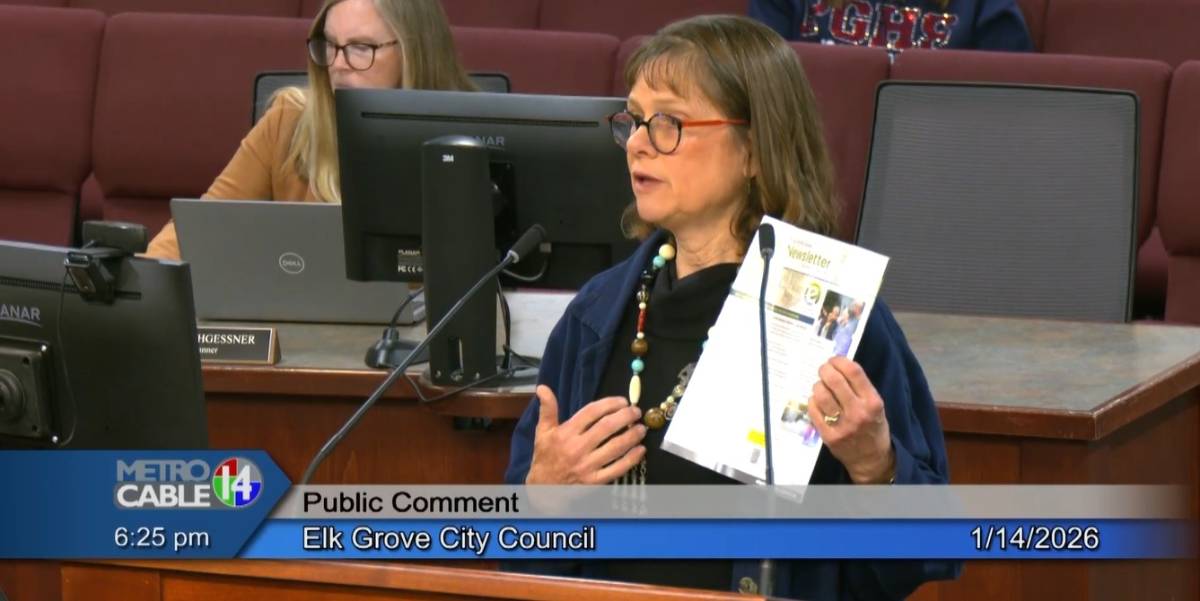
(Photo of Lynn Wheat from Metro 14 Youtube.com.)
Elk Grove’s efforts align with Sacramento County’s broader strategy to expand shelter options and reduce encampments. Recent state accountability data shows progress: Sacramento City and County reported a 40.8 percent drop in unsheltered homelessness and a 28.7 percent overall decrease between 2023 and 2024. Still, the picture remains complex. The Homeless Management Information System recorded nearly 9,000 individuals engaged with services by late 2025, an uptick that reflects both increased program connections and improved tracking—underscoring that the crisis is far from over.
Regardless of the data numbers, one fact remains clear: the urgency for permanent solutions is growing. Advocates argue that permanent shelters are a cornerstone of the response, offering stability and access to critical services that help residents transition out of homelessness. Critics, however, raise concerns about property values and neighborhood safety—issues city leaders say they are committed to addressing through transparent communication and robust security measures.
For Elk Grove, the shelter decision is more than a policy choice—it’s a reflection of the city’s values. As Wheat reminded the council: “These are residents. They were housed. They lost their housing for one reason or another. I’m not here to judge, and I’d like us all not to judge. That we could be them, too.”
What Happens Next?
Community Forums: The City will conduct four meetings to solicit feedback from the community on their preferred location. All meetings will cover the same content and take place at District 56 on January 21 and 27, with sessions from 3 – 4:45 p.m. and 6 –7:45 p.m. The sentiment from these meetings will be shared with the City Council during their deliberations on the project expected to happen in February. There will be an online survey option available for individuals unable to attend an in-person meeting.
To learn more about the project or to receive project updates, visit http://www.elkgrove.gov/futureshelter
Council Decision: February 11 meeting to prioritize site selection. Residents can also access detailed FAQs and site information on the city’s website.
0
0

Comments