(DUBLIN) --One concerned citizen will tell you Dublin Boulevard, the Crosby property, and Measure II are all interconnected.
Tom Evans claims with self-made graphs, pro-con lists, and additional evidence. And he is not the only one. The matter has been discussed six times at the 2025 Dublin City Council meetings.
Jan. 14, the OpGov.ai platform reports that "discussions around the Dublin Boulevard Extension project further underscored complex funding challenges and underlying public skepticism about large-scale infrastructure, with a resident explicitly mentioning pending litigation related to Measure II." Three months later, on April 1, OpGov.ai reports more discussion noting a key takeway in the meeting was "a town meeting request for the Dublin Boulevard extension was acknowledged, with its timing linked to ongoing litigation."

Dublin government's depiction of the proposed extension that will cost $100 million per mile
As meetings passed, Evans became more concerned as seen in the May 20 meeting, where "despite initial routine approvals, the session quickly turned contentious during public comments on the costly Dublin Boulevard Extension, where residents voiced significant financial and transparency concerns, advocating for more public dialogue," the platform reports. OpGov.ai further reports during discussions arose "hghlighting potential future reliance on general funds and the complexities of public funding mechanisms."
Speaking of funds, Evans explains that the chart below shows the road will be paid from the East Dublin Traffic Impact Fee (EDTIF) fund, City of Dublin. This illustration from the City of Dublin’s website doesn’t show all the development along the road that would occur if the Crosby property were developed.
When Evans spoke at the May meeting, he reiterated his concerns with resident Janine Gillergenten.
"I asked for a town hall meeting because there are a lot of people in Dublin who have concerns," Gillergenten said, adding the total cost is approaching $160 million. "Our concerns deserve to be addressed."
The platform adds, "she questioned the use of $63 million from general fund reserves for the project, which she believed were for specific goals, citing a $9 million withdrawal from the Dublin Crossing Fund for infrastructure."
What the platform did not pick up was the tone of her voice when she said, "We call for transparency, integrity, and honesty."
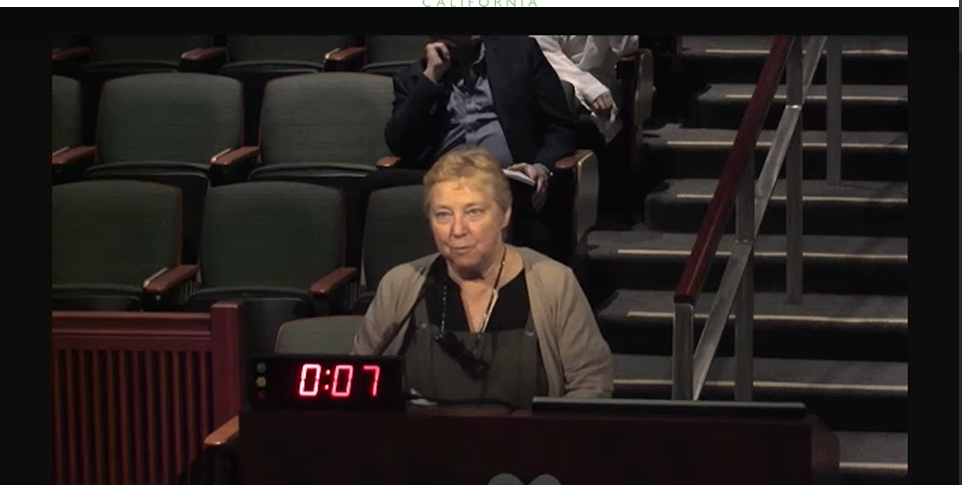
Resident Janine Gillergenten, who is opposed to the Dublin extension
Evans also notes the biggest issue with the road is its cost - $100 million per mile.
Think about that. A mile and a half at the cost of $153M.
One can see from the funding chart that most of the money for this road is either borrowed or doesn’t exist.
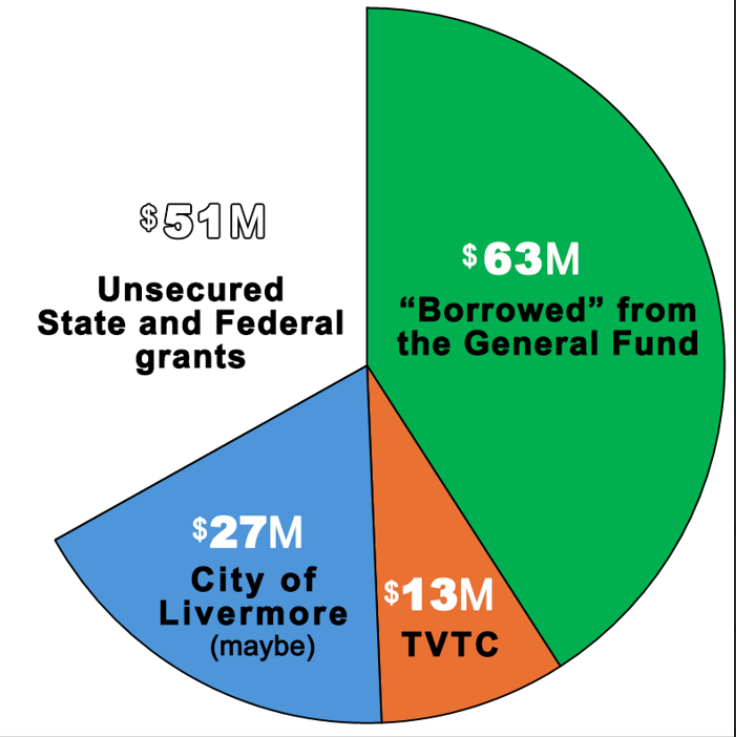
Tom Evans graph of proposed extension funding
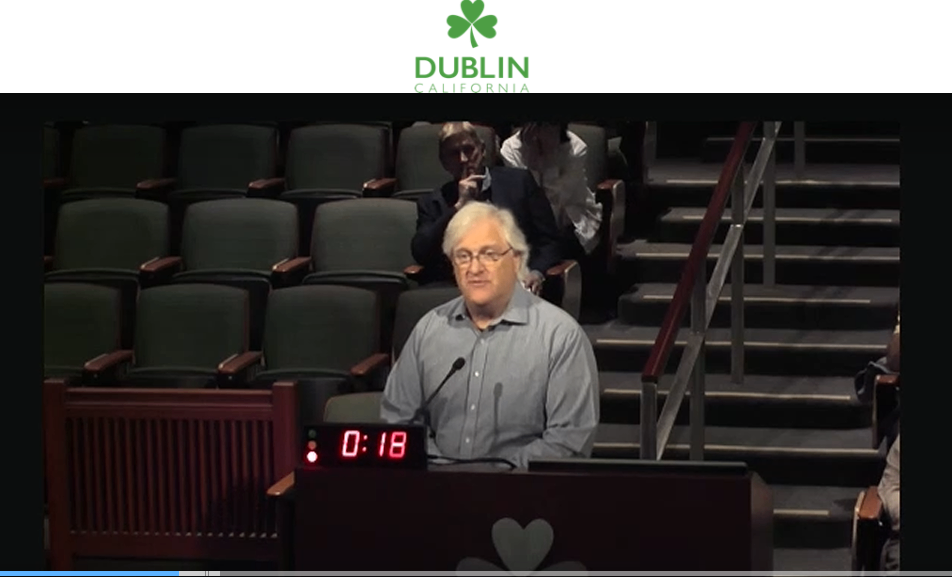
Tom Evans at the May 2 meeting
The $63 million borrowed from the general funds is assigned to the Eastern Dublin Traffic Impact Fee (EDTIF) fund, which is intended to cover the cost of the road. The chart below shows the income in green and expenses in orange for the last nine years for EDTIF, with the average income after costs at less than $0.50 million per year. Lastly, the city council agreed to loan the EDTIF $63 million – the staff claims that EDTIF will repay the loan within 10 years. According to Evans, the City plans to increase the EDTIF fees to cover the cost, but he’s still worried it won’t be enough.
"It doesn’t seem possible – even if you triple the net income," Evans said.

The second Dublin Extension Tension report continues here.
0
0

Comments