(DUBLIN, CA.) – An item may appear on Dublin’s Nov. 3 ballot regarding the Transient Occupancy Tax (TOT).
On Feb. 17, Dublin’s city council received a report given by Economic Development Manager Felicia Escover regarding Dublin’s TOT.
The TOT is a tax paid only by people who book a room in a hotel. The funds from this tax go toward Dublin’s general fund. Its current TOT is 8%, which is very similar to the rates in surrounding cities. Escover and city staff are proposing an increase of this to 12%.
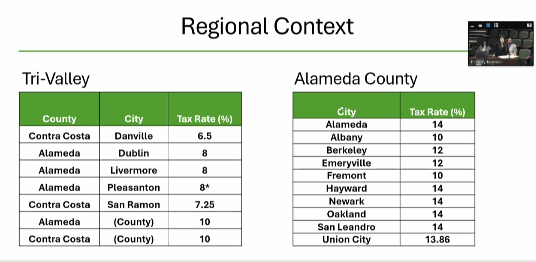
Photo Credit: dublinca.new.swagit.com / TOT Rates
There are six hotels in Dublin, one of them being the army hotel at Camp Parks. This hotel is typically not open to the public.
At the time of the presentation, city staff spoke with the management of five out of six of the hotels in Dublin. Escover reports that none of the hotels expressed strong opposition to the idea of increasing Dublin’s TOT.
Management at Camp Parks explained to staff that most of their guests are at the hotel on orders, meaning they are exempt from the TOT. Due to this, management is not concerned about the tax affecting their guests.
Additionally, a 2025 community survey reports that 52% of Dublin residents support a potential TOT increase, 35% oppose it and 13% are undecided.
Though the public and hotel management seem to be generally in favor or impartial to this proposal, Escover mentions that some concerns have come up regarding the jump from 8% to 12%.
Escover concludes the presentation by officially proposing increasing Dublin’s TOT to 12%.
"This approach is in alignment with [...] the city council's request to identify budget balancing strategies,” she explains.
Following Escover’s presentation, the council and public are free to comment on the topic.
Council member John Morada is particularly concerned about how an increase in Dublin’s TOT might affect the military families staying in the hotel at Camp Parks. He goes on to share a story regarding his grandfather, who is an army veteran, making the point that military families often do not make a ton of money.
“Even a 2% increase could mean the difference between medicine or food because their pay isn't great, but they squeak by,” he explains.
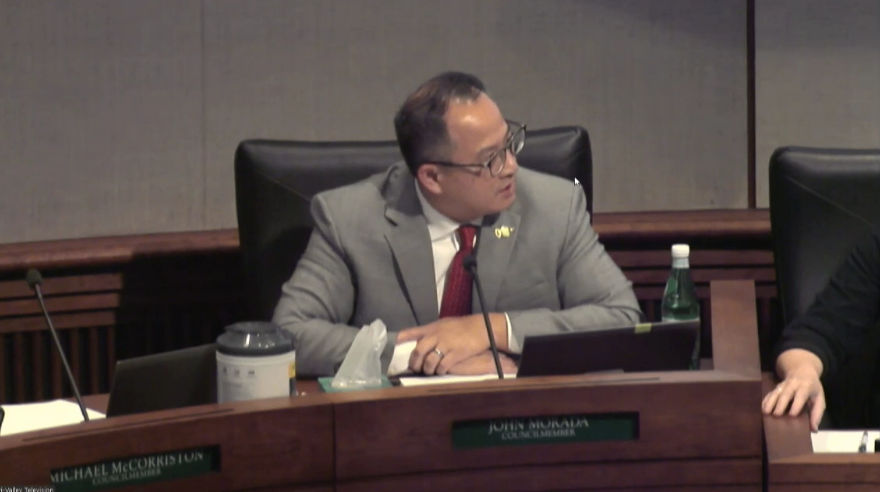
Photo Credit: dublinca.new.swagit.com / John Morada
Morada’s concerns are somewhat addressed throughout the meeting, with Escover mentioning previously that hotel management at Camp Parks are not concerned about a potential TOT increase. City Manager Colleen Tribby also brings up the fact that rates at this hotel are already much lower than the average rates of hotels in the area.
Another major concern the council has is whether or not increasing Dublin’s TOT will affect the business hotels get.
Although first brought up by Council member Michael McCorriston, Mayor Sherry Hu is particularly concerned about this.
"I feel like we do want to be very sensitive, especially to the hotel business,” she says. “The hotel businesses are struggling, right? Especially after covid.
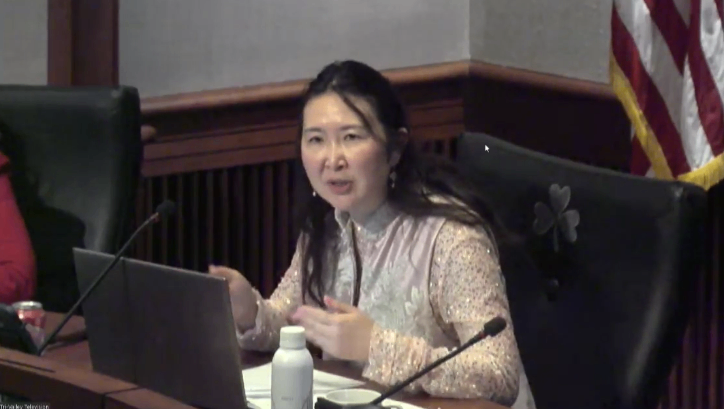
Photo Credit: dublinca.new.swagit.com / Sherry Hu
In addition to expressing her concern, Hu inquires whether or not city staff has examined other cities that have increased their TOT and how it affected their business. Upon discovering that city staff has not yet gathered any specific data regarding this, Hu stresses that she wants staff to look into it before the council considers any further action on the topic.
City staff also lacks the information needed to answer McCorriston’s inquiry regarding the type of guests Dublin’s hotels most frequently serve.
Overall, the council expresses that they are generally supportive of the proposal. However, they wish to implement potential changes gradually. This approach is very similar to a neighboring city that recently increased their TOT, Pleasanton, CA.
If this proposal is approved at a later date, it will appear on the Nov. 3 ballot for residents of Dublin to vote on.
Other cities, such as Pensacola, FL., are not experiencing the same positivity as Dublin in their communities regarding fiscal matters.
If you have any questions, please email me at madison.v@lead4earth.org or comment below.
0
0

Comments