(BAKERSFIELD, Calif.) — Dolores Huerta, the pioneering labor leader and civil rights activist who helped transform farmworker rights in California and became a nationally recognized advocate for social justice, died Wednesday, Oct. 28, at age 96, her family announced.
Huerta died at home in Bakersfield surrounded by close family, according to an obituary provided by her representatives.
“We are sad to announce that our beloved mother, Dolores Huerta, has passed away today at the age of 96,” her family said in a statement. “As you can imagine, this is an incredibly difficult time for us, and we ask for privacy as we grieve this incredible loss to our family.”
The family said it would share plans to recognize and celebrate Huerta’s life and legacy.
For more than six decades, Huerta organized farmworkers, advocated for labor protections and fought for greater political representation for women and underserved communities. Her rallying cry, “¡Sí, se puede!” — commonly translated as “Yes, we can” — became a lasting slogan for movements seeking social and political change.
From the classroom to the farmworker movement
Born April 10, 1930, Huerta grew up in Stockton, where she witnessed the challenges facing agricultural workers and their families. She began her career as a teacher, but seeing children arrive at school hungry and without adequate clothing helped motivate her to pursue community organizing.
Huerta joined the Community Service Organization, where she worked on voter registration, challenged discrimination and advocated for economic opportunity. Her work eventually brought her into California politics, where she lobbied for legislation addressing the needs of farmworkers and low-income families.
In 1960, she helped establish the Agricultural Workers Association. Two years later, she joined César Chávez in building the National Farm Workers Association, which later became the United Farm Workers.
Huerta became a key organizer and negotiator during the farmworker movement, helping turn labor disputes in California’s agricultural fields into a national campaign for better wages and working conditions.
The movement gained national attention during the Delano grape strike, which began in September 1965 when Filipino farmworkers organized through the Agricultural Workers Organizing Committee walked off the job. Huerta and the National Farm Workers Association joined the strike, and the organizations merged in 1966.
The resulting grape boycott drew support from consumers, labor unions, religious organizations and civil rights groups across the country. Huerta helped organize the campaign and negotiate agreements that improved conditions for agricultural workers.
A lasting impact on California law
Huerta’s influence extended beyond labor organizing to legislative advocacy. She helped push for policies intended to expand protections for agricultural workers and low-income families.
One of the movement’s major achievements came in 1975, when California enacted the Agricultural Labor Relations Act. The law established collective bargaining rights for agricultural workers, providing a framework for farmworkers to organize and negotiate with employers.
Huerta also advocated for protections against pesticide exposure, safer working conditions and improved access to health care and retirement benefits.
Her activism reflected a broader understanding of farmworker rights that included environmental health, education, immigration policy and political participation.
Huerta also became a prominent advocate for women’s leadership. She challenged sexism within the labor movement and encouraged women, particularly Latinas and other women of color, to seek elected office and become involved in civic life.
Her work included voter registration, immigration reform advocacy and campaigns for civil rights. She continued speaking at rallies and encouraging political participation into her 90s.
Building the next generation of organizers
In 2003, Huerta and three of her daughters — Camila Chávez, Lori de León and Alicia Huerta — established the Dolores Huerta Foundation in California’s Central Valley.
The organization focuses on community organizing and leadership development, helping residents advocate for improvements in education, environmental conditions, public safety and government accountability.
The foundation’s work reflects Huerta’s belief that people closest to a problem should have the power to help solve it. Through training and organizing, the organization has supported residents, including farmworker families and young people, in advocating for changes in their communities.
Huerta received numerous honors for her activism. In 1998, President Bill Clinton presented her with the Eleanor Roosevelt Award for Human Rights. In 2012, President Barack Obama awarded her the Presidential Medal of Freedom, the nation’s highest civilian honor.
Her legacy also includes the slogan “¡Sí, se puede!,” which became associated with labor organizing and later gained wider recognition in American political life.
Huerta’s work helped reshape the role of women in labor activism and brought national attention to the experiences of agricultural workers, whose labor is central to California’s economy.
Her family said it would provide further information about plans to honor her life and legacy. Visit doloreshuerta.org for more information.
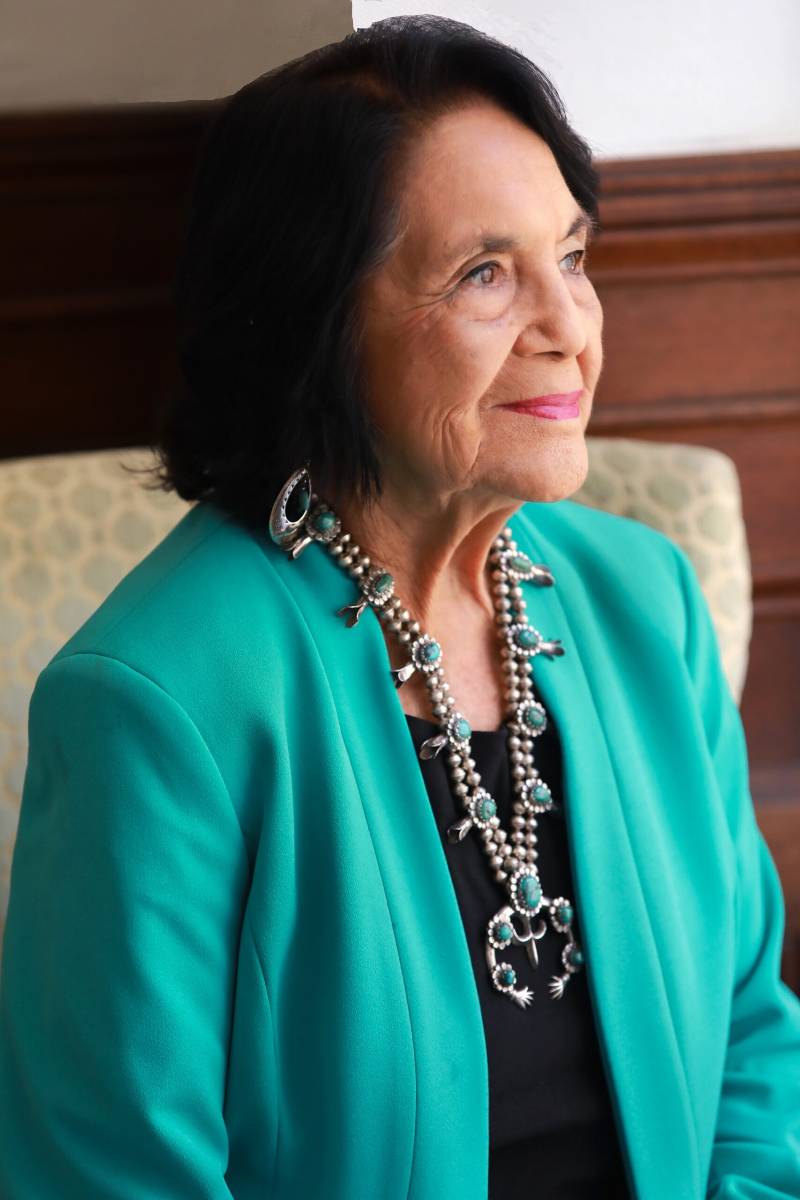
(Photo credit: Angela L. Torres)
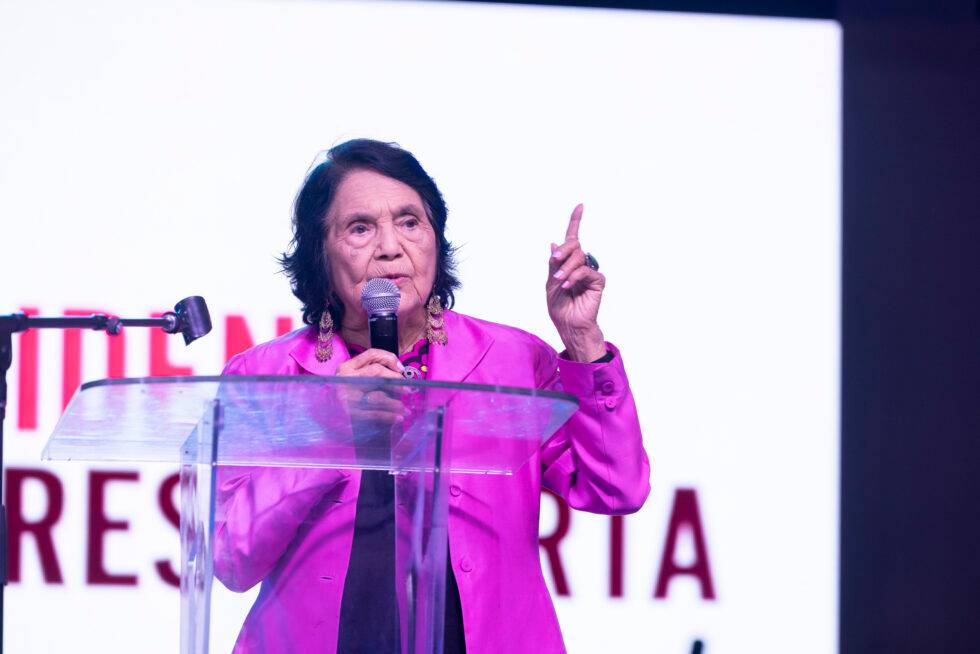
(Photo credit: Dolores Huerta’s Family)
If you’d like to add or correct anything in this report, feel free to reach out to me or leave a comment below. Submit Sacramento County tips and story ideas to Sarah Denos at sarahkdenos@gmail.com.
0
0

Comments