(ESCAMBIA COUNTY, F.L.) --– A proposed ban on large-scale data centers drew hours of public comment at the August 6 Escambia County Commissioners meeting, with residents demanding stronger language, Land Development Code updates, and a moratorium before any projects move forward.
The commissioners voted 4-1 in favor of the ban on all 50-megawatt data centers. But speakers said the ordinance is not ready and fails to protect residents from the power, water, and land use impacts of AI facilities.
Dr. Gloria Horning told commissioners the ordinance “needs to be very specific, and I don’t want to hear 50 megawatts.”
“Our water and our environment are important to these data centers, and they will destroy what Florida is," Horning said.
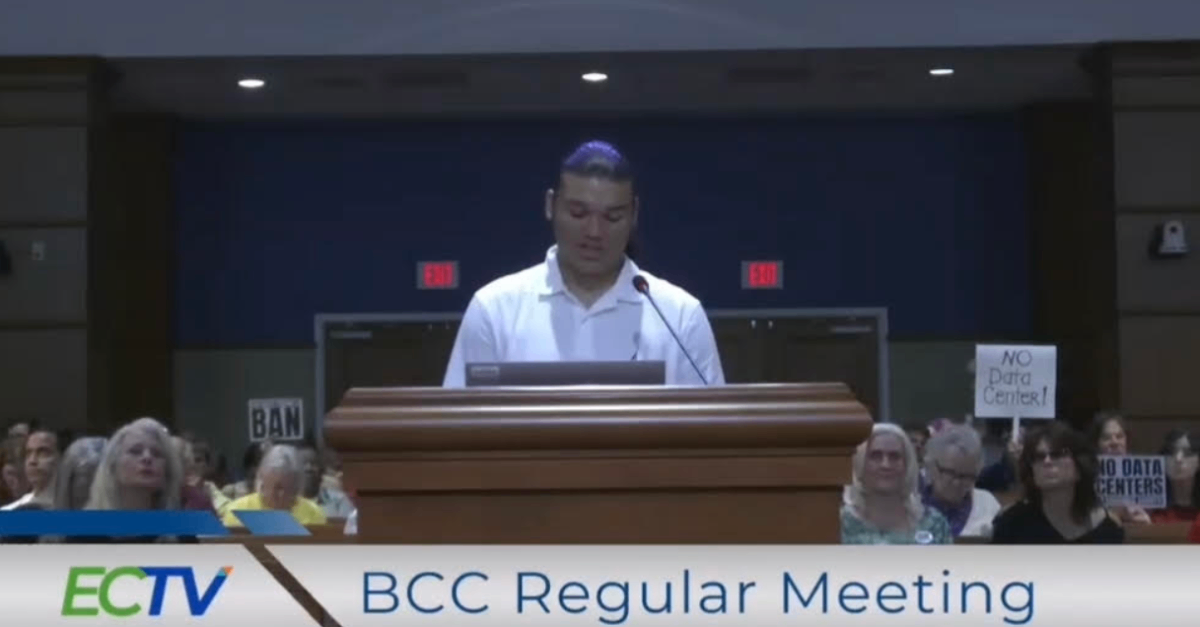
(Photo: Elijah Lewis differentiates the power use of a server room compared to a data center)
Several speakers asked for Land Development Code changes for real protection.
Desha Frank wished she was at the dais thanking the county for completing an amendment to the land development code along with putting a moratorium on all AI data centers regardless of size, “but to our disappointment, our requests were not honored.”
Brandy Johnson said said "we are all quite disappointed with this ordinance; it has not been tweaked as previously committed by commissioners.”
“The words AI and any and all were not added, and it does not include good protections for our county," Johnson said.
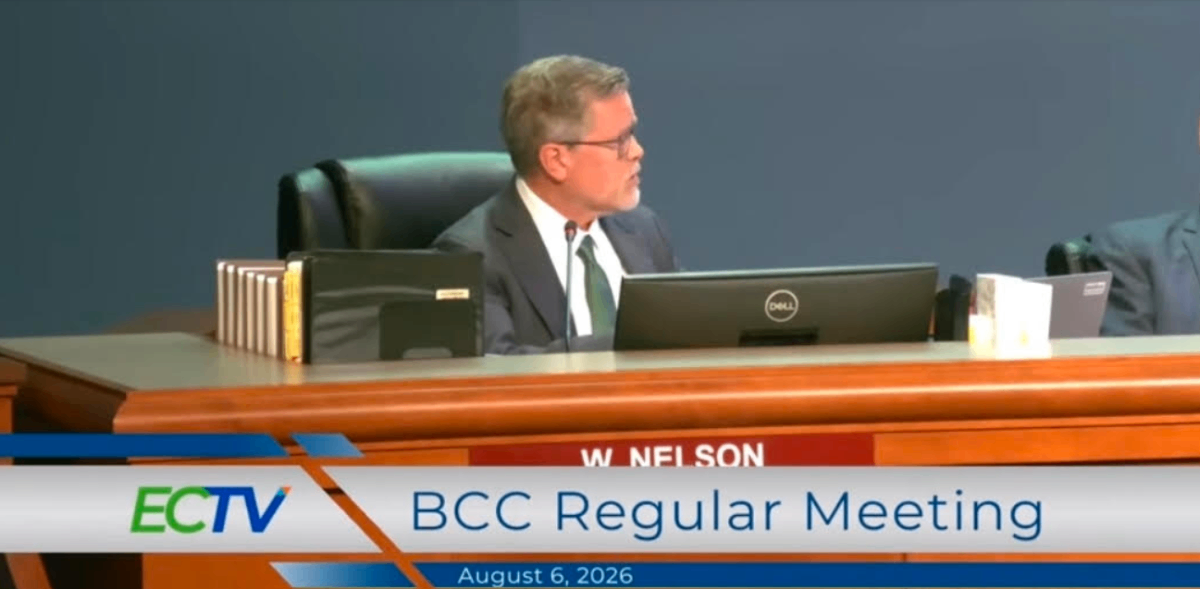
(Photo: Will Nelson, Interim Escambia County Attorney, at the August 6 BCC Data Center Public Hearing)
Krisy Rosen told the board one way to ban data centers was “to prohibit all AI data centers, and define them.” Rosen also told the commissioners that she wrote definitions and emailed them to all the commissioners, as well as County Attorney Alison Rogers.
Christine Rodgers said, “Data centers take massive quantities of electricity and water, both of which we cannot afford to lose or waste; our electric bills are already out of sight.”
Elijah Lewis explained the difference between AI data centers and server rooms.
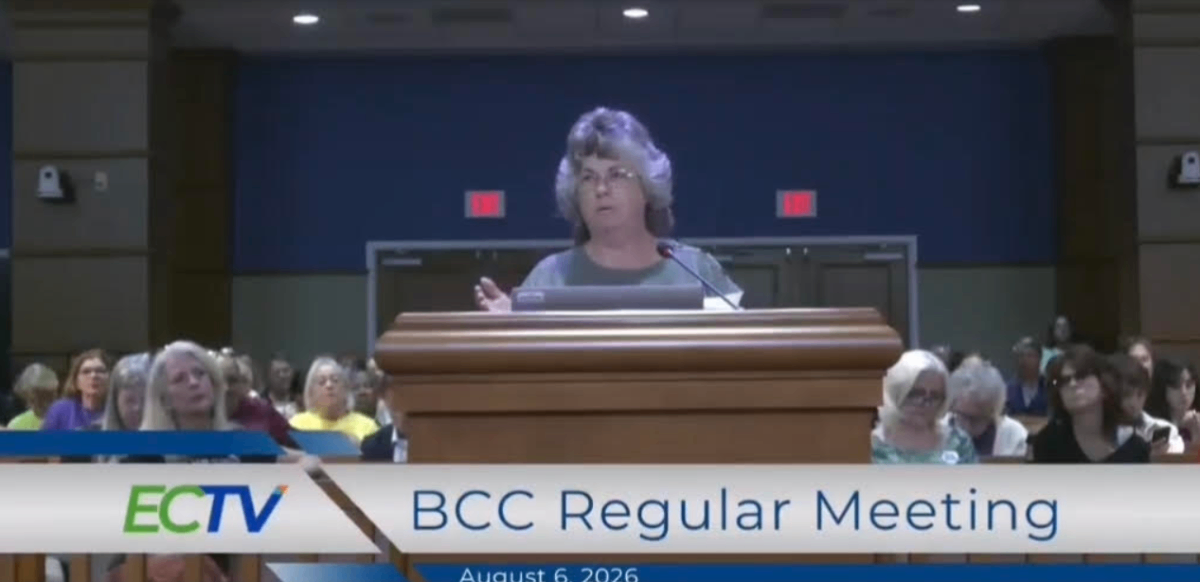
(Photo: Christine Rodgers speaks on the affordability aspect of data center devastation)
“They require minimal electricity and use 5 to 10 kilowatts per rack,” Lewis said. “Server rooms are cooled by basic air conditioning, while data centers are massive industrial facilities that require enormous amounts of energy.”
Chris Curb of Flood Defenders talked about rainfall data.
“If you’re using 1979 rainfall data that your code still allows you to use, you’re not allowing accommodation for rain where you would build a data center," Curb said.
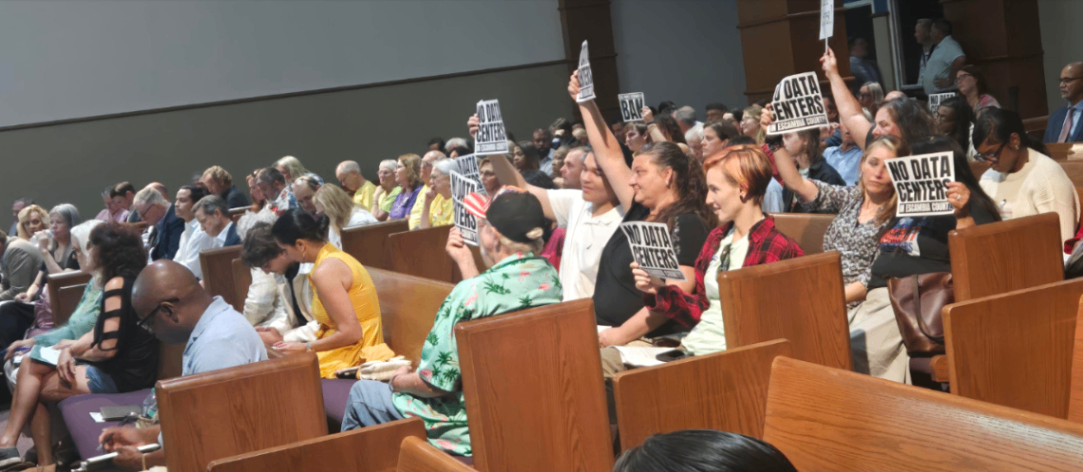
(Photo: BCC August 6 Data Center Public Hearing packs out room in protest)
Sarah Blankenship talked about the lack of protection that a 50 megawatt ban gives.
“This doesn’t protect us from the smaller data centers that have inquired here,” Blankenship said. “We need AI data centers of all sizes to be prohibited.” Blankenship said, “People feel unprotected with the rapidly advancing AI data center industry destroying people’s quality of life.”
Timothy Stall said he just moved here a couple of months ago from Lowndes County to escape the acres of data centers there.
“The data centers have personally affected my family’s vineyard,” Stall said. “I come from a place that used to be lush farmland friendly; now it’s a blight. With air pollution from generators,” Stall said, “and when things go wrong, when there’s an emergency, the data center is taken care of first.”
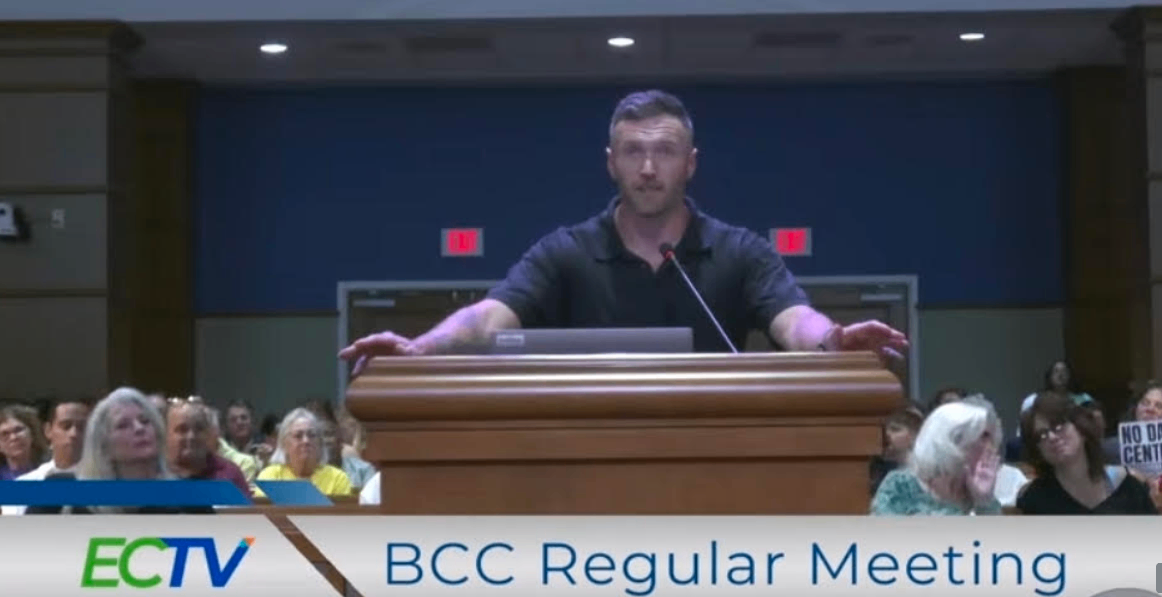
(Photo: Timothy Stall offers a unique perspective on data centers as a newcomer to Escambia from Virginia)
County Attorney Alison Rogers was not there; instead, her upcoming replacement, who will be taking her seat in January, was there: Will Nelson.
The legal debate centered on definitions and process. Interim Escambia County Attorney Will Nelson said, “If you put together a prohibition, it’s void when you pass it.” Commissioner Steve Stroberger said, “If we start to try to define this ourselves, then we’re gonna have problems.” Interim Attorney Will Nelson agreed.
Commissioner Mike Kohler said he was fine with the ordinance, but he wants a moratorium and that we should listen to what these people say. Commissioner Steve Barry, Ashley Hofberger, Lumon May and Stroberger also supported the additional moratorium.
Although the LDC was an issue for many speakers, Commissioner Lumon May said, “they’re clearly banned” in the LDC. Commissioner Steve Stroberger also reiterated that not permitted is the same as prohibited.
Attorney Nelson said the moratorium would require two hearings, which can’t be started tonight. Commissioner Hofberger clarified that at the next meeting a notice would be put out for two public hearings for a moratorium.
To add to or correct any information in this report, please get in touch with me at pepper.w@lead4earth.org.
0
0

Comments