(PENSACOLA) --- The fight against customary beach use in Perdido Key will not let up.
The Gary Sansing Public Forum early this evening was par for the course, with Perdido Key homeowners pleading their case before the Escambia County Board of Commissioners on why their beachfront should remain private.
Ironically, unlike most recent public forums, the Save Our Beach activists were not present. The activists, always clad in yellow T-shirts, normally take to the podium to counterbalance private owner concerns.
At the last meeting on March 28, a 3-2 vote by the commissioners initiated a task for staff to gather public evidence of customary use, giving activists 90 days to provide proof of why the beach should be made public.
But Tony Hobbs says 90 days is not enough.
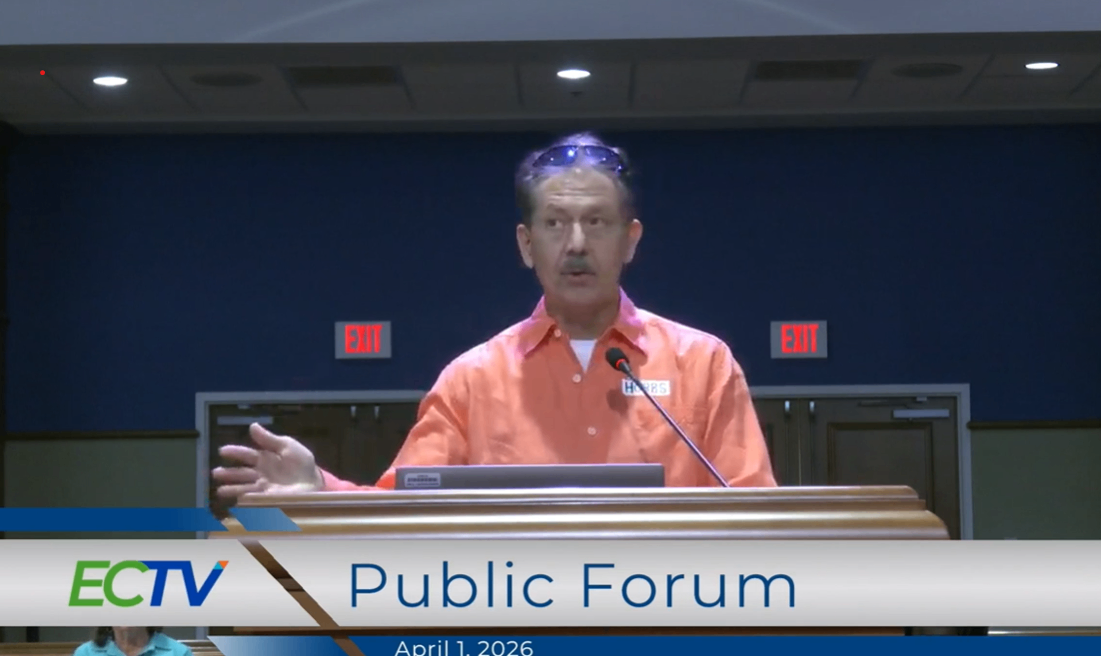
(Photo: Resident Tony Hobbs defends private beach access at the April 1, Gary Sansing Public Forum)
“To pass customary use, it needed to be done 50 years ago,” Hobbs said. “It is too late.”
In 1978, Escambia County lost the customary-use claim in Perdido Key in a final judgment that is now written in stone, according to Hobbs.
“Escambia County is not allowed to take a second bite of the apple,” Hobbs said.
He calls any proposed court case a double-jeopardy case based on the Beach v. Tony Roma, 1978, decision, which proves the four pillars of customary use.
“Public use must be ancient, reasonable, uninterrupted, and not in dispute,” Hobbs said.
Clearly, the local dispute alone disqualifies the case. Hobbs said the county cannot present testimony in court about beach activity that occurred decades ago.
Joseph Kleinpeter, president of the Indigo Condominium Association, echoed Hobbs' concerns about privacy.
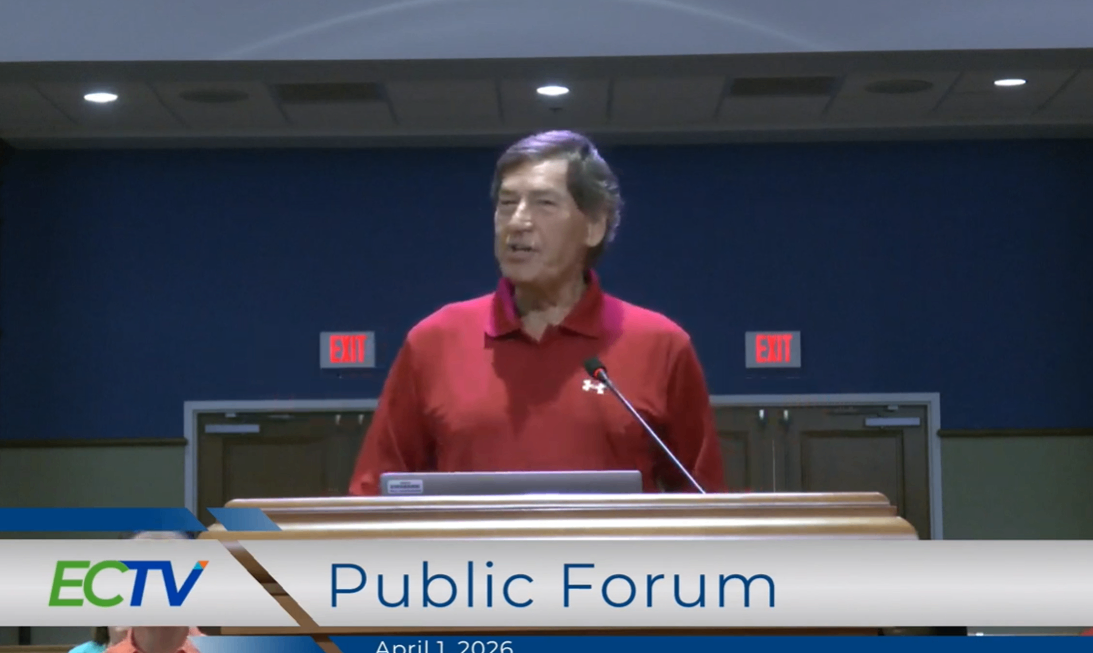
(Photo: Resident Joseph Kleinpeter defends private beach access at the April 1, Gary Sansing Public Forum)
“When we bought our condo at Indigo, we paid quite a premium to be on the beach, and the county gave us a deed that said the condominium association and each of these owners has a private beach to the main high tide waterline,” Kleinpeter said.
Noting that the gated community protects its rights, it requires bracelets to prove they are permitted on the private beach.
“We pay more than 2 million dollars in taxes and provide a tremendous amount of revenue to the county, and we support tourism,” Kleinpeter said. “All of those are facts that are indisputable.”
Al Cofrancesco said a looming lawsuit is a waste of time and money.
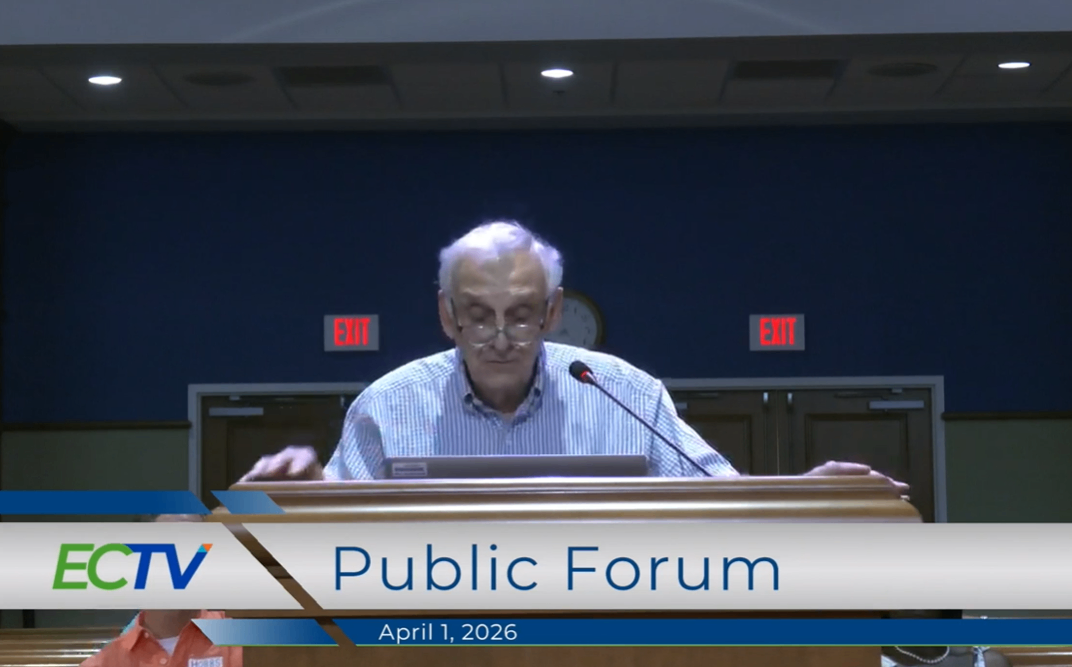
(Photo: Resident Al Cofrancesco defends private beach access at the April 1, Gary Sansing Public Forum)
“Over the years, I have watched Escambia County become involved with various lawsuits, spending millions of dollars of taxpayers' money on legal fees, often with nothing to show for it, and I am concerned that customary use will lead us down the same path.”
Cofrancesco noted the activists' absence.
“I have seen individuals in the last meeting with shirts that say 'Public lands belong to the public,’” Cofrancesco said. “And I agree with that statement, but the property in question is private property.”
Margaret Shrewsbury, Indigo Condo owner, ironically started by noting Save Our Beach, which had no presentation at the public forum.
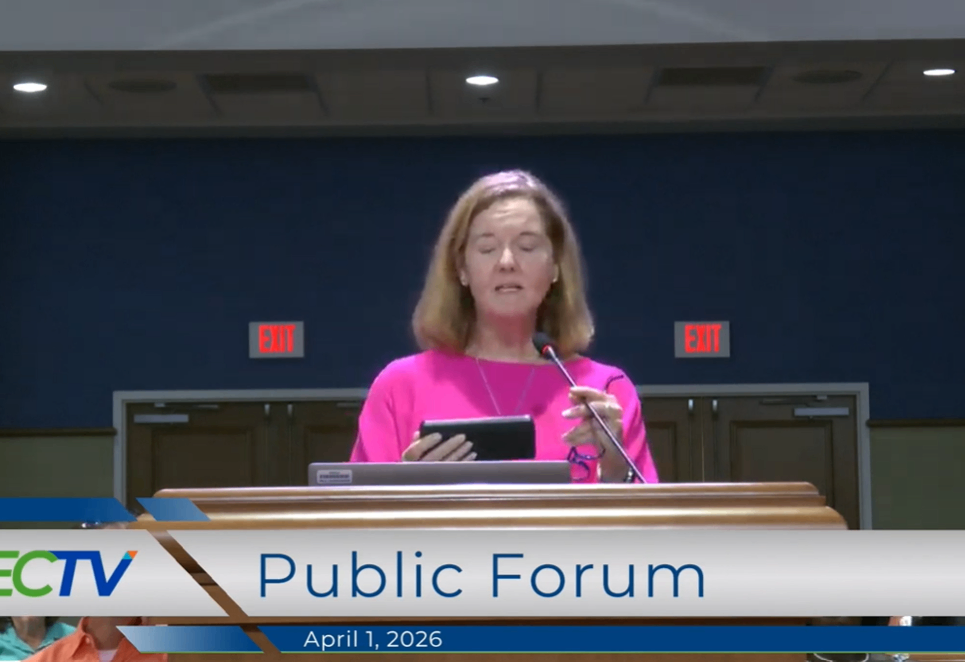
(Photo: Resident Margaret Shrewsbury defends private beach access at the April 1, Gary Sansing Public Forum)
“I am trying to understand why Save Our Beach has gained so much traction here since I don’t see a public beach problem,” Shrewsbury said, adding that the issue she finds is beach access and parking in Perdido Key.
“Perdido Key already has two large public beach areas, Perdido Key State Park and Johnson Beach, providing about 60% of the coastline for public use,” Shrewsbury said.
In fact, Shrewsbury said the adjacent public beaches are “lightly used,” and she often escapes there when the condominium beaches are crowded. She asked commissioners to focus on improving access and parking in public areas and not to violate private property rights by adopting a customary-use ordinance.
She cites the association deed, noting it was never public and the “reason she bought there.” She ended on a warning, letting officials know what would happen if they considered a customary use ordinance.
“If it passes, we will all be in court,” Shrewsbury ended.
0
1

Comments