(CONTRA COSTA, COUNTY, C.A.) A County Clerk Recorder may not sound sexy, but it is.
Without the role, marriage licenses would not be issued, recording the love and commitment that two people make. Or protecting citizens' property rights, arguably a passionate fight. But most of all, securing voter integrity makes the role the most appealing in this history-making political landscape.
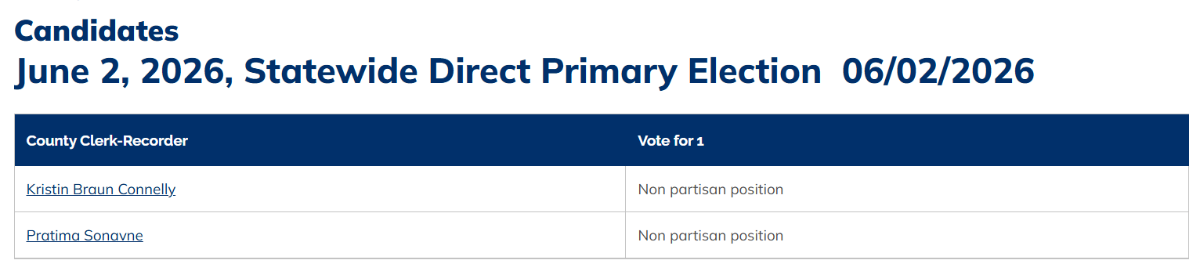
Pratima Sonavne has made it clear she wants the post in Contra Costa County, vying against Kristin Braun Connelly to get it.
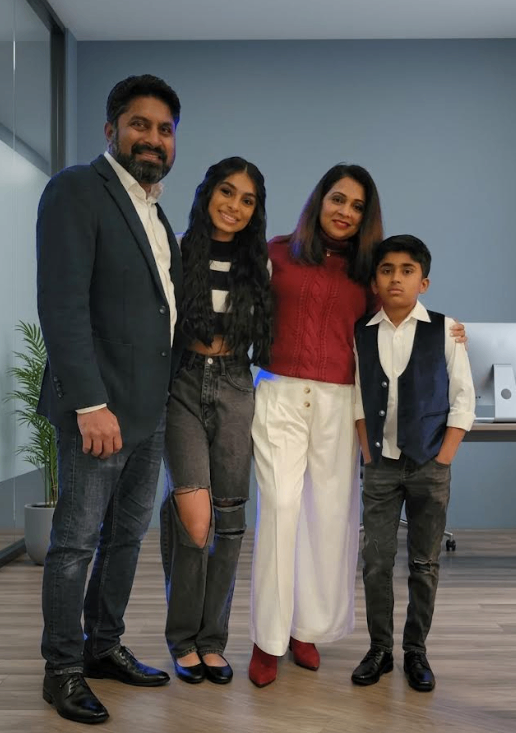
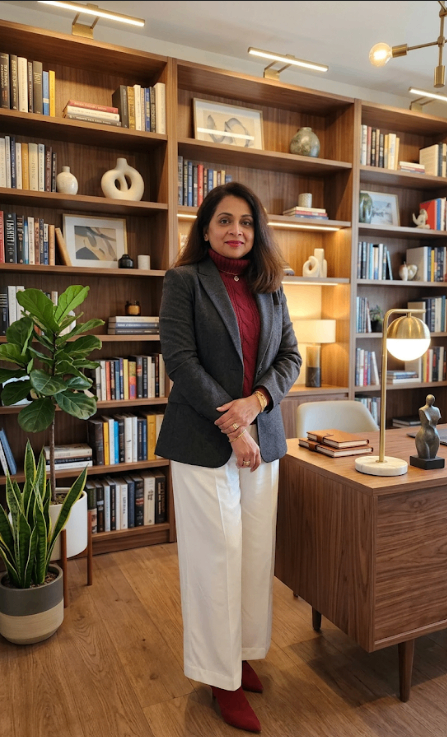
Interviewed at home by Molly Scheid, a candidate, offers a personal glimpse of the candidate, while I come in with different questions.
This Q&A is an excellent way to get to know Sonavne better without any interjections.
With that, let her tell you how she feels about what I asked.
You note that you want to start a civic conversation regarding participation, creating teams, if you will. How do you intend to do so as soon as you take office?
Right now, the Clerk-Recorder’s office feels like a void. You drop off a deed or cast a ballot, cross your fingers, and hope the gears of government don’t chew it up. That ends on Day One. I’m not just opening the doors; I’m tearing down the walls.
Here is my "Day One" plan to turn this office into a powerhouse of transparency:
1. The "First 72" Transparency Blitz
Within 72 hours of taking the oath, I’m launching a Public Integrity Dashboard. No more waiting for quarterly reports or filing paperwork just to see if we're doing our jobs. You’ll see real-time data on our website: average wait times, deeds recorded, and new voter registrations. If we’re lagging, I want you to see it. Accountability isn’t a threat—it’s the only way to get better.
2. Deploying a "Civic Strike Force"
I don’t want "committees" that meet once a month to eat cookies and flip through PowerPoints. I’m forming action-oriented teams of people who actually use our services:
The Tech Panel: Local developers finding the security holes I might miss.
The Small Biz Crew: Real estate agents and title officers who need us to move fast so the economy stays moving.
The Youth Council: High schoolers designing a "voter experience" that actually makes their peers want to show up. These teams won’t just "advise"—they’re going to help me rewrite how this office works.
3. Killing the "Main Office" Monopoly: Your access to the government shouldn't depend on your zip code. If you live 30 miles away, you shouldn't have to take a day off work to reach us. I’m pulling the budget out of "central administration" and putting it into Regional Access Hubs. We’ll use libraries, fire stations, and even empty storefronts to bring the office to you. "The Clerk" should be a person in your neighborhood, not a name on a distant letterhead.
4. The "Buck Stops Here" Sessions: Once a month, I’m holding Grievance Hours. No appointments, no filters. You show up, tell me where we failed, and we fix it in front of everyone. Most politicians hide from angry constituents. I’m inviting you in. You build trust by having the spine to listen to the truth.
A Clerk-Recorder shouldn't be a quiet bureaucrat; they should be the front line of your community’s trust. My job is to protect your vote, your home, and your identity. If I’m not being aggressive about that protection, I’m not doing the job.
I’m not here to be a caretaker for a broken system. I’m here to be a champion for you.
2. Why is your extensive Human Resources experience key to seeing change in the Clerk-Recorder's Office?
An office that hasn't been challenged in years gets slow. I’m performing a total reset—moving the staff from "gatekeepers" to "problem solvers" by rewarding service over status quo.We need to stop hiring "clerks" and start hiring Digital Archivists and User Experience specialists. I know how to recruit and retain the talent a 21st-century government actually needs. Whether you’re filing a death certificate or a ballot, emotions run high at our counters. I’m bringing my years of conflict resolution training to the staff so that no matter how frustrated you are when you walk in, you feel respected when you walk out. My brain is wired to find redundancies. If a process exists "just because," it’s gone. We’re going to use Lean principles to make sure your time isn't wasted by 1950s-era bureaucracy. Bottom line, If I take care of the people and the processes, the "change" you see will be an office that actually works for you.
3. You also note bringing operational excellence to the office. What does that look like?
When I talk about "Operational Excellence," I’m not talking about some corporate buzzword. I’m talking about a total shift in the office DNA. It means moving away from a culture of "we’ll get to it when we get to it" and toward a culture of precision, speed, and reliability.
Here is what that actually looks like for you once I take office:
1. We’ve all been there—your document sits on a government desk for three days for no reason other than "that’s how we’ve always done it." I’m going to map out every single process, from marriage licenses to property liens. If a step doesn’t add value to you or fulfill a legal requirement, we’re cutting it. My goal is the straightest possible line from you submitting a paper to it being legally recorded.
2. In my world, if 20% of people are filling out a form incorrectly, that isn't a "confused citizen" problem—it’s a bad form problem. Excellence means making our instructions so clear that you never have to come back twice because you missed a signature or a fee. We’re going to redesign everything we give the public so it’s actually easy to use.
3. You can’t improve what you don’t measure. I’m implementing Live Dashboards so both the staff and the public can see exactly how we’re doing. Are we processing voter registrations in 24 hours or 72? By making that data public, we create a healthy pressure to keep the gears moving. No more hiding behind a black box.
4. The people sitting at the front counters usually have the best ideas on how to fix things. If a clerk tells me, "Hey, if we moved this scanner closer to the intake desk, we’d save two hours a day," we aren't going to put that idea in a suggestion box to die. We’re going to do it. Excellence means empowering the people doing the work to make it better.
When you walk into our office, you should feel like you’re in a high-performing organization that actually values your time. You get in, you get what you need with 100% accuracy, and you get out.
When the back-end operations are excellent, your experience with the government should feel like magic—not a headache.
4. What have you learned so far on your campaign trail?
Walking this trail and talking to people at coffee shops or on their own doorsteps has been a massive reality check. I don’t hear people saying, "I don’t care." What I hear is, "I didn’t even know the Clerk-Recorder did that."
Once we get past the title and the "government-speak," here are the three things that have really stuck with me:
1. There is a lot of "noise" right now about election security and property fraud. I’ve learned that when people are worried, a generic "just trust us" from an official actually makes it worse. But the second I explain exactly how a ballot’s chain of custody works, or how we can set up a text alert the moment a document is filed against your home, I see this visible wave of relief. People don't want empty promises; they want the receipts.
2. I talk a lot about modernization, but the trail has reminded me that "high-tech" isn't the only answer. I’ve met seniors who are terrified of "going digital" because of hackers, and I've met young people who won’t even look at a service if it isn’t an app. To me, "excellence" now means building a system that’s fast enough for a 20-year-old on their phone, but human enough for an 80-year-old who just wants to look a person in the eye across a counter.
3. I’ve heard story after story of people waiting weeks for a simple record or feeling like they’re being "processed" instead of helped. It has completely reinforced why my HR background is the missing piece here. This office shouldn’t feel like a trip to the principal’s office; it should feel like a resource. Voters have taught me they don’t expect perfection, but they do expect respect and visibility.
The Bottom Line: Running for this office has shown me that while the "Clerk" part of the job is about records, the "Recorder" part is about our community’s story. People want to know that their life’s biggest milestones—their homes, their marriages, their votes—are being handled by someone who realizes how much those things actually matter. It’s been humbling. It’s one thing to look at a spreadsheet of "voter participation" and another thing entirely to look a neighbor in the eye and realize that if I don’t do this job right, their voice in our democracy gets a little bit quieter.
5. Anything else you would like to add?
I want to leave you with a thought that drives every conversation I have on the trail: The Clerk-Recorder’s office is the "Quiet Essential. “We often only notice it when something goes wrong-a delayed house closing, a lost record, or a question about an election. But I believe this office should be a source of active community pride, not just a background utility.
Here are three final commitments I want to go on the record with:
1. My commitment to Operational Excellence isn't just about speed; it’s about creating a "fail-safe" culture where errors are caught before they ever reach the public.
2. I want this office to be a Civic Education Hub. I want to use my platform to teach the next generation how our local government actually works. If we can demystify the bureaucracy, we can increase participation across the board.
3. Campaigning has taught me that the best ideas don't come from a consultant's office; they come from the person standing in line at the counter. When I take office, the "conversation" we've started doesn't end. I will remain accessible, I will remain accountable, and I will keep asking, "How can we make this work better for you?"
I'm ready to get to work. If there are any other specific corners of this office you want me to shine a light on, or if you have a story about a time the system didn't work for you, I’m all ears.
2
2

Comments