(BRICK, N.J.) — Elected Officials introduce an ordinance to protect Brick Township from data centers.
At the September 8 meeting, the Brick Township Council voted to advance a clearer definition of a data center to final reading. The ordinance seeks to separate data centers and distinct land-use classifications.
Data centers in the ordinance would include buildings, campuses, facilities or structures that support digital data, “electronic information, computer servers, telecommunications equipment, cloud-computing infrastructure, artificial intelligence computing systems, high-performance computing systems, cryptocurrency mining equipment, network equipment, or similar electronic or technological equipment,” according to the ordinance.
Councilman Gregory Cohen stated that, as of now, data centers do not belong in Brick Township; however, he believes they could eventually be beneficial to the community once they have more structure in place.
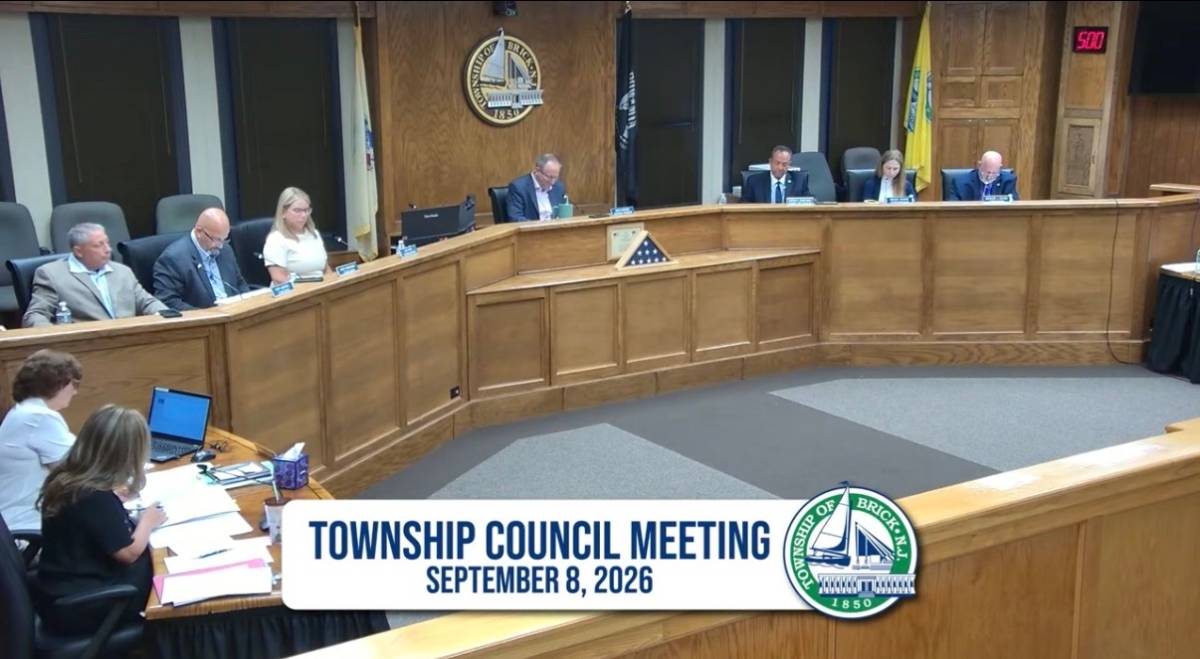
Photo Credit: Brick Township Council Meeting on September 8.
Cohen explained to the public and council that there could be a problem “with passing something like this,” as it could create challenges in reversing the ordinance to gain access to data centers.
“I totally agree that these data centers really do not belong in our township at this point,” Cohen said.
Cohen also raised concerns about industrial overdevelopment and “high density housing mandates,” which have led to a “strain” on the roads, schools and overall quality of life within Brick.
Cohen noted that if the township closes the door on data centers, it could ultimately close the door on future revenue for the town, even though they have raised many other concerns. An example Cohen used was Virginia, which is facing higher electricity bills, groundwater issues and wildfire risk.
“They’re (Virginia) also bringing in a lot of money in taxation from the data centers,” Cohen said.
Cohen explained that he wanted everyone to “keep those things in mind” because “the footprint of a data center can change in the future.”
“It may be shutting the door on future opportunities that may one day benefit Brick but currently do not,” Cohen said, “The downside of leaving this loophole open is greater than the downside of passing the ordinance.
The ordinance was unanimously passed on first reading and will go to a final reading.
To add to or correct any information in this report or to share tips or a story, please contact me at alexis.n@lead4earth.org.
0
0

Comments