The proposed Basic Health Care redesign would remove the program’s lower income threshold and eliminate annual enrollment fees. It could also help residents continue treatment during temporary lapses in Medi-Cal, California’s Medicaid program. An updated eligibility resolution and financing arrangements remain unfinished.
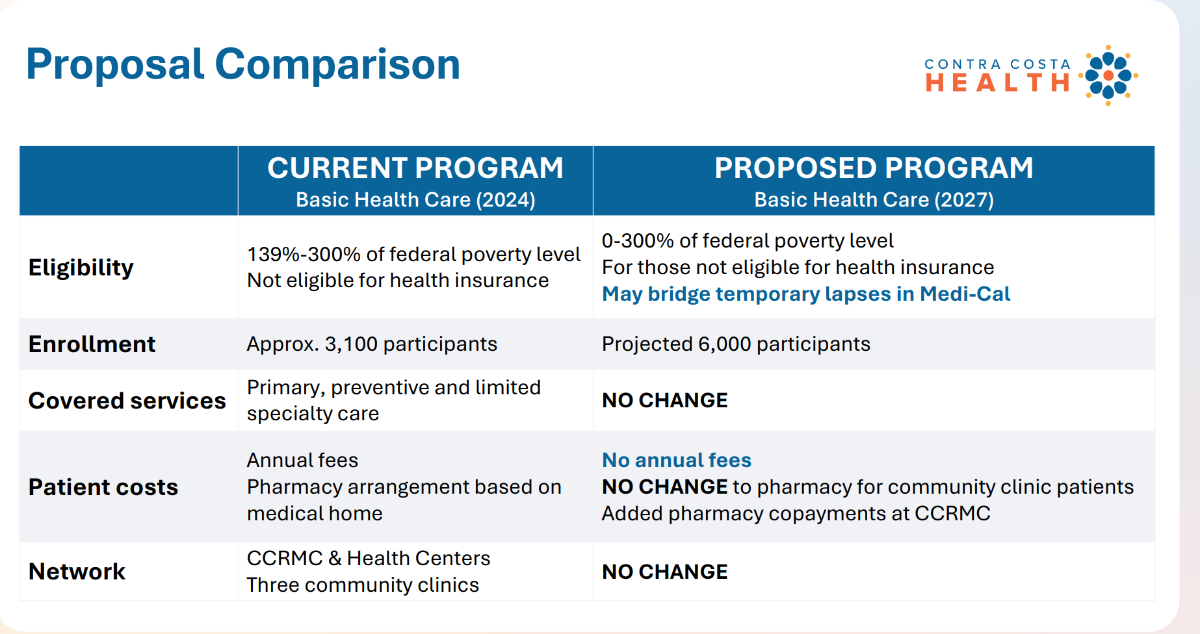
The central change concerns who qualifies. The current program generally serves uninsured county residents with household incomes between 139% and 300% of the federal poverty level. The proposal would extend eligibility down to people with no income while retaining the upper limit. The federal poverty level is an income benchmark that varies with household size.
That would open the program to poorer residents without another coverage option. It would remain a program of last resort, with financial counselors helping participants obtain or regain Medi-Cal when possible.
Basic Health Care pays for a defined set of services in the local safety-net system; it is not health insurance. Under the proposal, primary, preventive and limited specialty care would remain available through the county medical center, health centers and participating community clinics. Officials project enrollment would nearly double from about 3,100 people currently served across the county and related community-clinic programs.
Removing annual fees would not eliminate every patient charge. The proposal adds pharmacy copayments for county medical-center participants while leaving community-clinic pharmacy arrangements unchanged.
Health Director Dr. Grant Colfax told supervisors that losing access to routine care can leave people seeking emergency treatment when they are sicker. Officials developed the redesign in response to federal and state coverage changes, aiming to preserve ongoing treatment as residents face new barriers to keeping insurance.
The estimated $13.5 million annual cost includes $7.5 million in care the county already provides. The additional $6 million would support community-clinic care, medication benefits, financial counseling, outreach, enrollment and administration. A dedicated source for that additional money has not been identified.
Supervisors discussed whether county reserves could provide temporary support. Supervisor John Gioia raised that possibility, while Supervisor Candace Andersen said she had not been told that tapping emergency reserves was necessary for the program to proceed.
The board accepted the report unanimously. Staff said they would return with an updated eligibility resolution and funding options as the county prepares for coverage changes beginning Jan. 1, 2027.
0
0

Comments