(ASBURY PARK, NJ) — The Asbury Park City Council’s Feb. 25 meeting blended routine business with emotional public testimony and significant decisions on housing policy and redevelopment.
Mayor John Moore opened with a moment of reflection honoring two former city employees who recently passed away: retired police detective Lt. Dominic “Faz” Fazio, remembered for his service to local education and youth sports, and longtime resident and former D8 commission representative Len Roall. “Thinking about them and thinking about everybody else… our loved ones that we have lost during this moment,” Moore said.
Council members offered updates on community issues, including storm response efforts, support for unhoused residents during freezing conditions, and a visit from the Asbury Park High School Video Club, which is producing a documentary about the city.
During public participation, several residents stepped forward—some to challenge the council, others to extend olive branches.
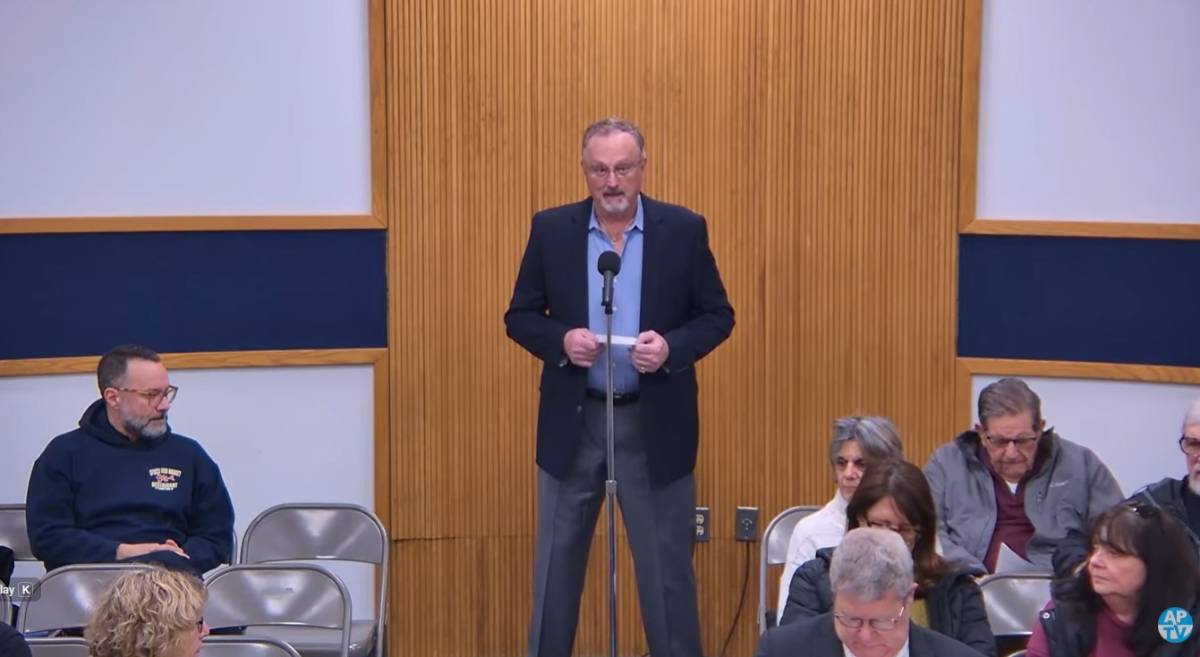
(Image of Charles Lada from Youtube video.)
Charles Lada, administrator of the Facebook group Save Asbury Park’s History, opened with a direct apology for a heated exchange at a previous meeting. “I'm here to apologize because as a professional, I lost my cool and it's just my passion,” he said. “Please don't take that personal… We look forward at your convenience to getting together to mutually resolve these issues.”
Council members accepted the apology, noting that tensions can flare in challenging moments.
Resident James Miller pressed the council for more transparency around redevelopment documents discussed the previous week. “Did you not get the documents about everything that went on?” he asked, questioning the status of materials expected from developers. He also voiced concern about the frequent use of long‑term tax exemptions, saying, “At what point are we at our limit of doing that? It's a constant frustration… to see that and not know where the tax dollars that should have been going are going and how that works.”
Council members responded that the outstanding materials were still being finalized and may require a special meeting once submitted.
Another speaker, Henry Vaccaro Sr., struck a conciliatory note after reviewing redevelopment documents himself. “You guys really got dealt a bad hand with what was handed to you,” he said. “If there's any way that we can help with getting these buildings restored, we're here for you. Not against you and not fighting with you, but together we can make this happen.”
Following public comment, the council approved several resolutions, including a $75,000 application to the New Jersey Urban Enterprise Zone Authority for a citywide marketing initiative.
A major focal point of the evening was the second‑reading adoption of a long‑term tax exemption (PILOT) agreement for a redevelopment project at 90 Memorial Drive, featuring 92 rental units—19 of them affordable—along with commercial space and more than 100 parking spaces. Redevelopment counsel Dave Clark explained that the agreement includes phased payments beginning at 10 percent of gross annual revenue and gradually increasing over 30 years.
Despite questions raised during public comment, the ordinance passed 4–1, with Council Member Bez Anderson voting no.
The council also unanimously adopted two affordable‑housing compliance ordinances: one updating the city’s development fee structure and another fully revising Asbury Park’s affordable‑housing regulations to align with the Fair Housing Act and state affordability rules. These updates define standards for income limits, unit sizes, pricing, and administration.
The meeting adjourned after a flurry of final votes, but not before reflecting the community’s intense engagement on issues shaping the city’s future—whether through sharp questions, heartfelt apologies, or promises of partnership.
If you have any Asbury Park story tips or ideas, please reach out to Sarah Denos at sarahkdenos@gmail.com
0
0

Comments