(FOLEY, Ala.) On October 28, 2026, OpGov.news sat down to interview U.S. House of Representatives Congressional District 1 Democratic candidate Clyde Jones. District 1 was redrawn in 2026. Under the current map used for the November 3, 2026 election, it includes: all of Mobile County, Baldwin County, Escambia County and a portion of Covington County.
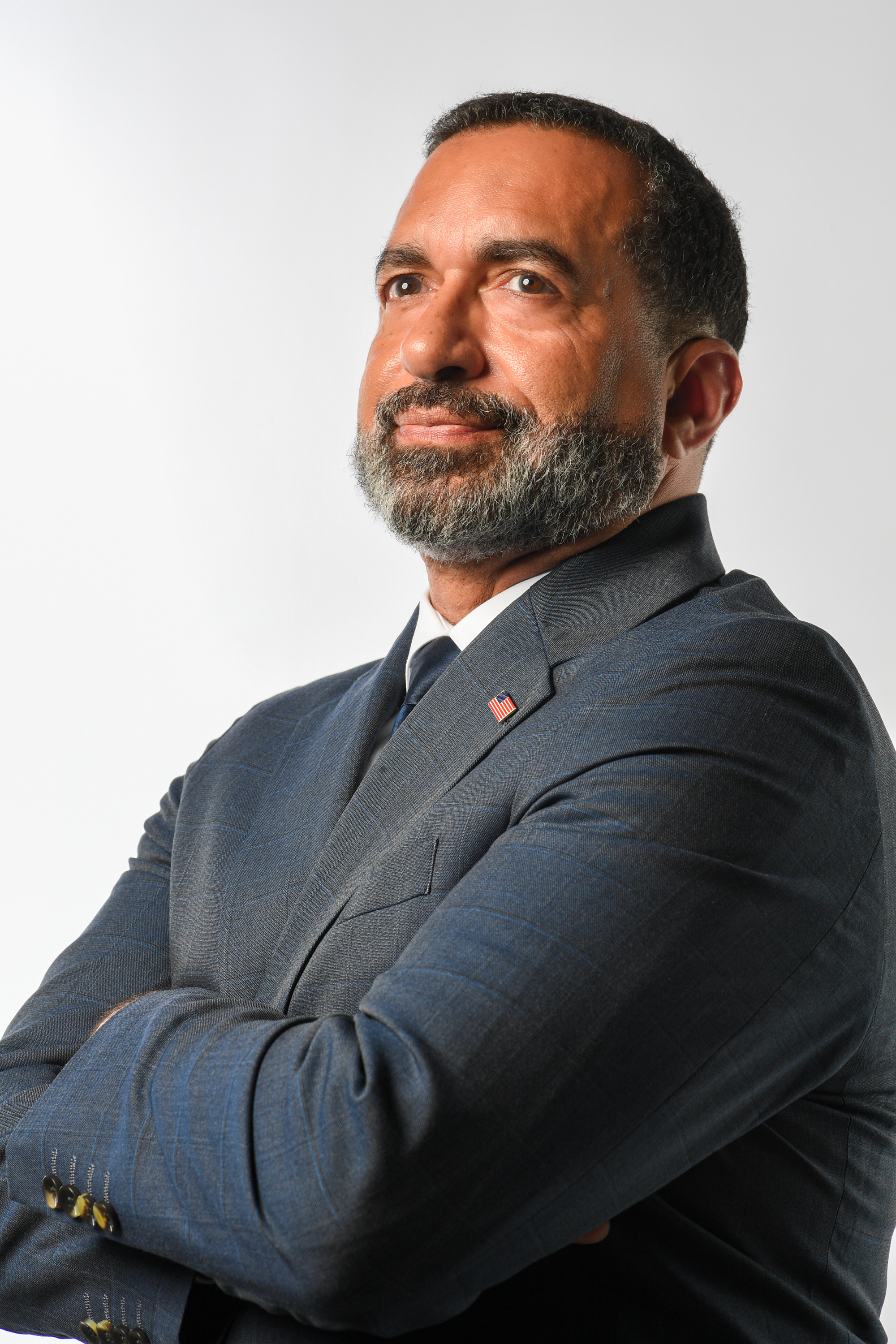
Credit Source: ClydeforCongress.com
I would like to ask you what you would like to say that you feel differentiates you from your opponent, Jerry Carl, and why people should vote for you?
Mr. Jones began by sharing his experience that he feels is relevant to holding this Congressional seat in Washington, D.C.:
“There's a lot. So, just a little bit about myself, a little background, if you don't mind. We'll start there. I joined the Army at 17 years old, so I served the Army for 21 years. I've lived all over the world. I did two combat tours, Desert Storm and Operation Iraqi Freedom, as well. So I learned a lot in those 21 years, traveling all over the world. And I was awarded the Bronze Star in my second combat tour. I think to me, it was more of a recognition of all of us, all the soldiers I had, and myself, for all of us coming back home safely together. I took 120 or so soldiers over, and I brought 120 back safely. So that was more important to me, more important than anything else.”
Post Military Experience:
“I went to work for Dupont after that. I retired from the Army at 38, actually turned 39 the same month I retired. But I went to work for Dupont, which is a chemical company, and I went to work back in Richmond, Virginia. Originally I'm from that area, in that vicinity there. I worked there for a few years and I decided, look, I'm not ready to be home. So I saw a job opening in Mobile, Alabama, and I said, well, if it's meant to be, I told my wife, I said, ‘Hey, I think we're gonna move to Alabama.’ She said, ‘What?’ Because she's never lived in Alabama, either. She's raised up from Miami. So I flew down to Mobile; they flew me down. I interviewed, and long story short, I got the job. We moved here, so we've been here … January would be 14 years for me, and then she came in July that year. So after being here six months, I came home from work, and she said, ‘If you decide to move again, you can come home to visit on the weekends, because I'm not leaving.’ So I figured we would be here. So we have been. It's a great place. A great place to raise a family. Although we only had our youngest son with us when we moved here, he did his senior year here, and then he went off to college and has been going ever since. He's up in Cincinnati teaching in that area. So, I got more involved. I've always been interested in the political realm, but I got more involved once I got out of the active duty Army. You can't be really too political when you're active in the military, right?
Shift from State to Federal Race:
“So, once I started working for DuPont, particularly once I moved here, I got definitely more active in the community, more active in politics in general. I became a board member of Alabama Arise, the nonprofit, statewide. It’s a nonprofit that helps to try to develop policies to help alleviate poverty in the State of Alabama. And I became the president of the board of Alabama. So I really saw how the state and the policies sometimes help keep people oppressed … helps, you know, not provide opportunities for some people. So that made me more interested in state level politics. I did run for office in 2018 for school board, because to me public education is the backbone of our society, right? It's extremely important. My wife actually works for the Baldwin County School System. So I did run for school board in 2018. I didn't win. But again, I became more and more interested in how the political system works. So when I retired from DuPont in FMC*** back in 2024, I knew I would run for office again, because I could dedicate my time. Again, I was already the president of board directors for Alabama Arise at that time. I saw what the state was doing at the state level. So, really, my intention was for the next election cycle, I was going to run for state representative in Alabama for my district, District 64, and I had told a few people.
“So, I called a good friend of mine, a political consultant in Tuscaloosa. I say, ‘Look, I'm running for state House of Representatives.’ She said, ‘That's great. You would be awesome. Whatever I can do for you, let me know.’ So about a week later, she called me back and said, ‘Well, I know you want to run for state house, but I talked to some people at the national level, and we really need you to run for the U.S. Congress. Have you considered that?’ And I said, ‘No, I hadn't considered that, hadn't thought about it.’ I was looking at the state level. So I asked my wife, and she said right away, without any questions, ‘Go for it. That's you. You can do that.’ I say, ‘Well, I know I can. But I mean, asking her, ‘Are you ready for the long hours and what's going to come with that, right? And particularly running as a Democrat in Alabama, you know, it can be kind of difficult, right?’ So, she said, ‘Yeah, you're the candidate. I'll support you 100 percent. So, I started developing my team. I called her back in Tuscaloosa and said, ‘Yeah, I'm in.’ I started developing my team, and that's kind of how we are where we are now. And it's been great. October 17th of last year is when we kicked off our campaign. So we just went over a year on the 17th, and it's been great. I mean, I met a lot of great people. There's a lot of enthusiasm, no matter where I go. Because with the redrawing of the lines, it changed a lot of things. So, I went from having basically nine counties, or eight plus part of Mobile County to just four. Just Baldwin County, Mobile County, Escambia County, and Covington County, most of Covington County, except the far northeast corner.”
He expounds on the election turnout this cycle:
“Really, I believe it's based on voter turnout this year. This election is going to come down to, you know, we're less than a week away now. But it's going to come down to who's mobilized, who gets to the polls. My opponent has a lot of money, but he hasn't been spending a lot of money I don't think. He really hasn't. I think he feels comfortable in the fact that he's a Republican in Alabama, and I don't think that's something you need to take too much comfort this time. I think things are changing, and I see people every day. I run into people who are really frustrated the way things are right now. They're frustrated with gas prices, fuel prices. They're frustrated with grocery prices. Because when gas is $6 a gallon for diesel, everything that you and I buy from the stores is delivered by a diesel truck. Those costs are passed on. People are really frustrated. People are really frustrated, and I think people are really looking for change. And I believe I provide that change. And that's one of the major differences. You know, my opponent talks about running on experience, but what did he do for Congressional District 1? I mean, really? I mean, other than voting alongside the president at the time, who is the current president. Vote along with whatever they wanted. And so for me, it's more personal.”
Tariffs and cost-of-living pressures, candidate for change:
“The tariffs, you know, everything that's causing the prices to go up. This illegal war in Iran—it's personal, right? My older son is in the Army. He's deployed to the Middle East right now, so to me, these things are personal. And I think people are starting to wake up and realize that we have an opportunity for change, and that's what we're hoping for. If people are realizing those things that we have an opportunity for change and then will get out to the polls. Voter turnout here in Alabama has been abysmal, terrible. This year alone, 3.8 million people registered to vote in Alabama. Only 800,000 voted in the primary back in May; so 20 percent. And then in the runoff in June, 400,000 people; 10 percent. And I don't even want to talk about the numbers in the congressional runoff that they … of course, we had to slide in there because of the changing of the congressional district. Those numbers were, they were so low it's hard to even count. So those numbers are extremely low. But we're hoping right now, next week – and the early vote, absentee, in person, the numbers are way up – A lot of people – A lot of people voted. I talk to people every week. I talked to some last night. ‘I've already voted,’ they said. Every week I'm talking to people who have already voted, whether they had some type of disability or they're going to be out of town next week or whatever. But they're voting, which is encouraging that they're putting in the effort to go, even though they know they're not going to be here or they're not able to get there. They're voting ahead of time.
“October 29, 2026 is the last day to vote absentee in person for the November 3 election. Many people are doing it. We're excited about that too. And again, it all depends on voter turnout. There are a lot of different agencies in all these counties that are encouraging people, and a lot of them are nonpartisan. They're encouraging people to vote. They're not telling people who to vote for, but they're encouraging people. We're planning on winning. We're already making our plans for transition into the role. There's no second guessing, and people are excited. I feed off other people, too, because they have that enthusiasm. It comes back to me. So it helps a lot. I want to work on affordability. Our congressional district is just so diverse. We have tourism, agriculture, and the port in Mobile. All these things are affected by prices. It’s about affordability. We're excited. We want to get up to D. C. to make sure, and I'm ready to represent the people.”
Refusal of corporate and PAC money:
“ Our campaign hasn't taken any corporate PAC money. We haven't taken any AIPAC money, anything like that. I had somebody comment on my threads last night about, ‘Are you bought by AIPAC and all that?’ I'm like, ‘No, I haven't taken any corporate money or AIPAC money. But you can donate.’ So we'll see if they donate, right? Because people ask those questions. But I mean, you are going to ask. And you're gonna give to a candidate that is not taking those funds. So they are the ones who need it. I don't have a lot of money for TV ads and all that. But you know what? What we do have, we have a team. We have people that are motivated to talk to other people. We have people who volunteer. I have some paid staff, but many of my staff are volunteers. They're putting in a lot of work, over a year long. My hat goes off to these statewide candidates, because I'm just traveling to four different counties now. So these people who have to travel all over this all over the state, I mean that's hard. It's rough. It's tough. I just spent the day in Covington County on Sunday, so I went to seven different churches in one day. I'm also an associate minister in Daphne, at Macedonia Missionary Baptist Church.”
What are your feelings about data centers and solar farms?
Call for a moratorium and clear processes:
“Well, I think we need a moratorium until we have a better understanding of the effects on our community, on health, on the effects on our electrical grid, on our water. I don't think we really have a clear understanding of it all. And the other thing is, we don't have a clear system of how we go about making those things come into existence. Who it has to go through in the local government. Take for instance, the City of Prichard right now. They're up in arms about this data center coming, and really, they had no say so in it. You know what I'm saying? And even the mayor and the city council really had no knowledge. It was already a done deal. So until we get clear lines of the process, until we get clear lines of how it affects our communities. I can’t say whether it affects the health of our citizens, or whether we're talking about the resources, the electricity, the water; we don't have a clear understanding. I think we need to slow down. And why the big push all of a sudden, right? When people push really hard on something like that, something's not quite right. You wonder. You have to wonder about those things. And then you have lawmakers investing in those things, and then you know and pushing for them.
Insider trading:
“One of the big things with me is I don't think legislators should be stock trading, right? Because to me, it's insider trading. If you know something's going to happen and you go out and buy stock in it because you know it's coming up, to me, that's insider trading. That's why Martha Stewart went to jail, went to prison for $40,000, and we have people in this administration now who're making billions, millions and billions of dollars, right? I mean, so how is that? How do we justify those things? So, again, we need the data; I think we need more information until we have a better understanding. We need federal guidelines. So I'm looking forward to having that conversation when I get to the Federal Government. And then the states need to have some structure. Right now, there's no real structure on how those things come. Even in Stockton, with the solar, County commissioners say, ‘Well, we didn't know about it.’ So how do we go about it? How do we get to the point where everybody should be? There should be a process, right?"
He continues, “And we see in other states, and I don't know how much it is here, but I know of, like in Louisiana, the big one they're building up there. You know, all of the officials had to sign non-disclosure agreements. So they couldn't talk about it. So how can that be transparent? And I had someone from one of the companies tell me, ‘Well, it's a business thing, because we don't want the word to get out, just in case it doesn't happen.’ No, there’s more to it than that … more to it than that. It's not telling the public what's going on, you know what I'm saying? Right. Until it's done. Until it's almost a done deal. So we have to fix those things. We have to fix those things. Absolutely.”
Voter turnout and civic engagement:
We just need to get everyone to the polls, man, November 3. If you get in line by 7:00 p.m., stay in line. Even if it's a long line, because if you're in line by 7:00, they have to let you in to vote. It doesn't matter if you don't get in the door until 8:00. We need everyone to turn out. Polling hours, I think are 7 a. m. to 7 p. m. If you're in line at 7 p. m., no matter how long the line is, they have to let you vote.
“I try to talk to as many people as I can. I don't know how many people. Because there are so many people who just don't vote, and you wonder why. I mean, they just aren't engaged at all. And I was in D. C. a few weeks ago, and Congressman Jonathan Jackson, who's Jesse Jackson's son, he told a story about running for Congress, and he told his dad the voters were apathetic. So Jesse said, ‘Don't ever say that they're apathetic. Say, they're uninspired, and then think about what you're going to do to inspire voters.’ I'm like, you know what? I'm not going to say that anymore. But what do we have to do to inspire folks? What do we have to do to meet them where they are, to get them motivated to or inspired to go. Your vote is your voice, right? I mean, you can get on social media and talk all day long, and you know, being an influencer. But so many don't actually vote. Sometimes people influence other people to do certain things, but they're not even taking that action of voting themselves, right? So, that's what happens.”
For any questions, comments, or concerns, you can contact Clyde Jones at Clydeforcongress.com.
To add to or correct any information in this report, please reach out to me at tracey.g@lead4earth.org
0
1

Comments