(SAN FRANCISCO) -- Past flooding fears are now a reality.
The SFPUC has created a 100-Year Storm Flood Map, depicting which exact areas will most likely be affected by this tumultuous weather.
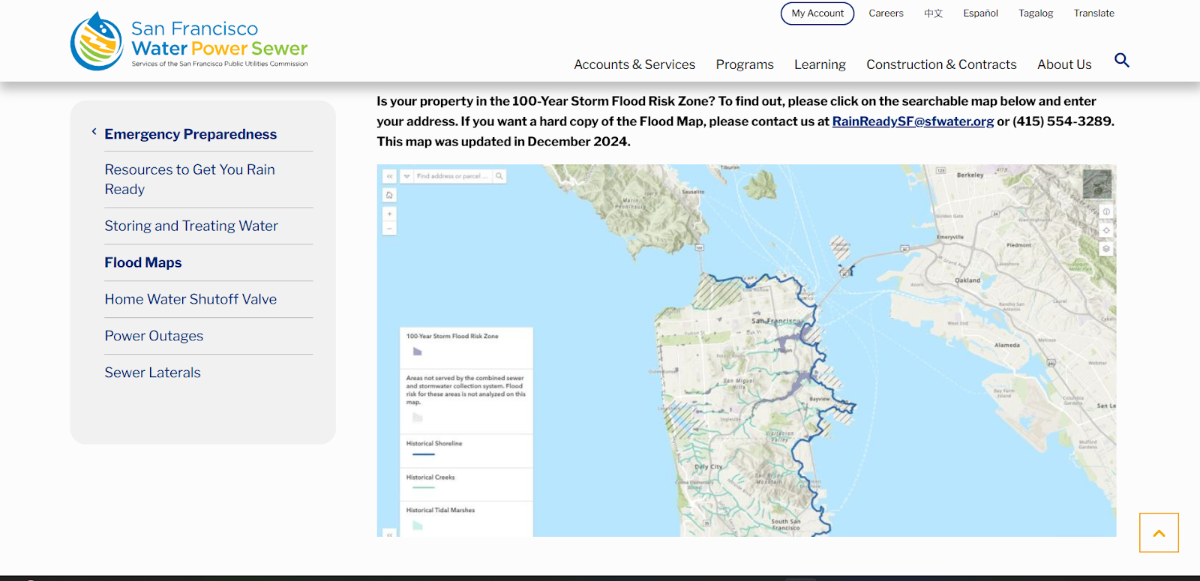
(Photo: SFPUC website)
According to their website, “A 100-year storm means a storm with a 1 percent probability of occurring at a particular location in a given year—meaning a very intense storm. Despite this statistical likelihood, such intense storms can and do occur more frequently, sometimes within just a few years or each other or even within the same year.”
Scientists predicted the flooding earlier this year. According to studies found on Google Scholar, climate change could potentially lead to flooding during heavy rain storms in the future, negatively impacting San Francisco.
The future is here.
Many of these studies also stated that harsh weather conditions, such as flooding, that would originally occur rarely in San Francisco would become far more common due to climate change.
In addition, environmental contaminants could reach the surface during flooding, posing major health risks to San Francisco residents. Therefore, if climate change is not managed, then the residents of San Francisco must brace themselves for the consequences, for this is only the beginning.
According to a study published on March 15, 2025, called Impacts to San Francisco’s Combined Sewer System from Climate Change Induced Stressors, San Francisco is the only city on the coast of California that has a sewage system that manages both wastewater and stormwater.
The abstract states, “Using geographic information systems data and climate change projections, this study estimates increased flow volumes and the frequency of combined sewer overflows.”
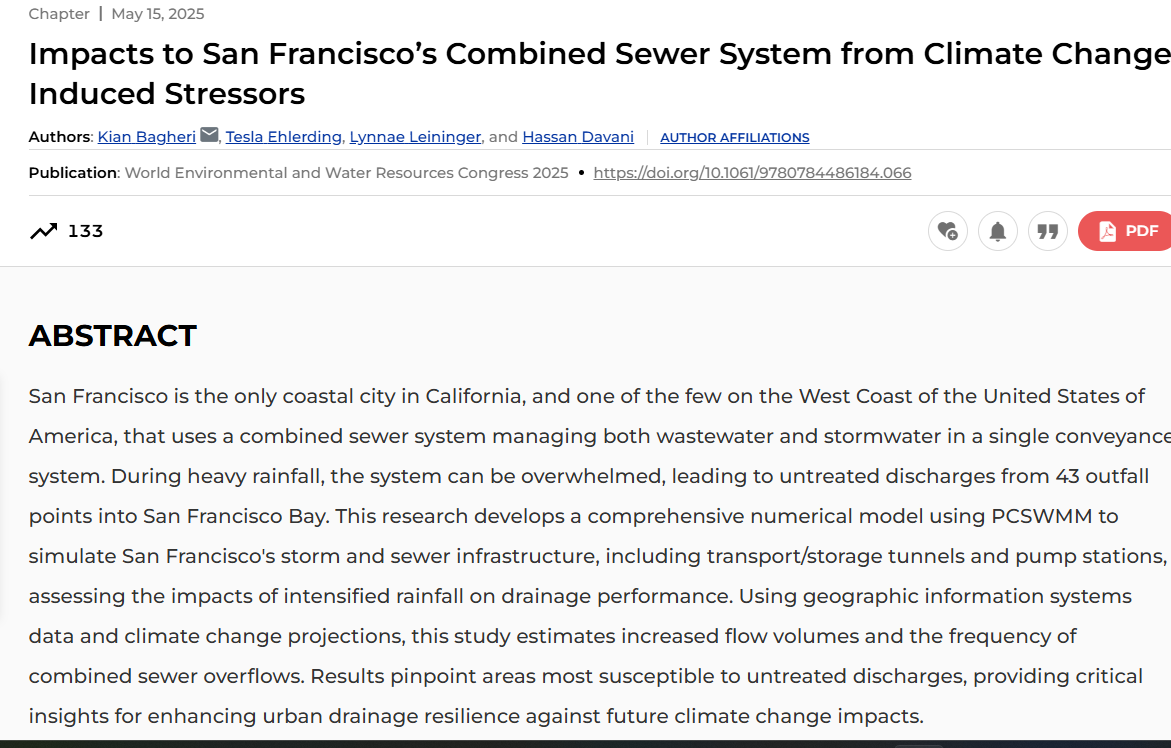
(Photo: ASCE Library website)
Another study published on January 13, 2025, called Compound coastal flooding in San Francisco Bay under climate change states that floods that were projected to occur once every few hundred years in the Bay Area would begin to happen yearly due to climate change.
Increases in rainfall, runoff, precipitation along with rising sea levels and rising groundwater levels are all due to climate change, and result in an increased risk of flooding and health hazards.
San Francisco is currently experiencing the hassle of the risk becoming a reality. In some areas, storms can not only cause flooding, but can create landslides. It is important for residents to avoid places where landslides could occur during harsh weather.
According to SF.gov, there are also other safety precautions that residents can take in the face of flooding.

(Photo: San Francisco Planning website)
Before a flood, it is recommended to gather supplies, elevate belongings to prevent damage, retrieve free sandbags provided by Public Works, turn off all electronics, and use flashlights instead of candles.
One might ask, how might issues like this be minimized or avoided in the future? San Francisco Planning is a source for how people are taking action against climate change and acting resilient in the face of what has already occurred.
The San Francisco Planning website lists organizations and initiatives that are dedicated towards minimizing climate change and its effects, as well as lowering emissions and keeping residents safe.
Such plans include the Climate Action Plan, the Port of San Francisco’s Waterfront Resilience Program, the Hazards and Climate Resilience Plan, and more.
These programs are meant to improve the quality of the environment and provide solutions to the problems of climate change and other possible hazards so that the residents of San Francisco can be healthy and safe.
Their website includes project applications and resources on how to stay informed and get involved.
Even the San Francisco Chronicle calls the water rise a "right now problem," in a recent report on sea-level sinking causing periodic flooding.
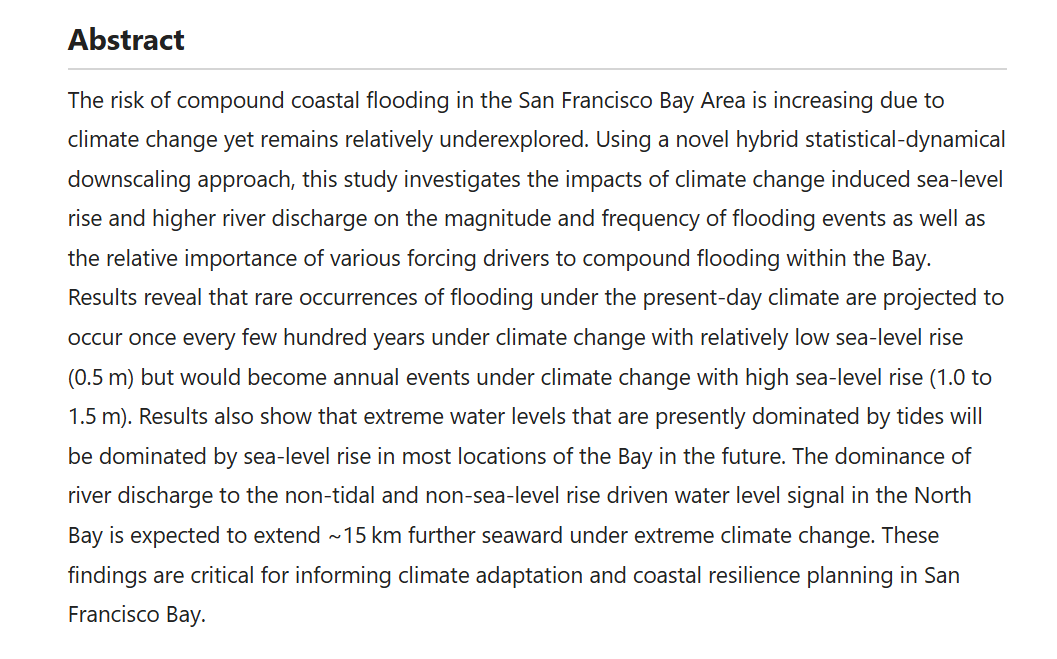
(Photo: NPJ website)
To solidify all the OpGov.ai research, one more study was considered. The impact of sea-level and groundwater rise on indoor exposure to volatile organic compounds near contaminated sites in the San Francisco Bay Area warns that flooding could bring dangerous contaminants to the surface, impacting many residents, including children, with VOCs (Volatile Organic Compounds).
If you would like to add anything to this report, please email me at brinna.r@lead4earth.org.
0
0

Comments