(CHARLOTTE, N.C.) — At two recent committee meetings, Charlotte City Council members confronted mounting challenges in affordable housing and workforce development, highlighting a widening gap between policy goals and on-the-ground realities.
With millions of dollars in unmet housing demand and evolving strategies to connect residents to jobs, officials acknowledged that while solutions are emerging, they may not yet match the scale of need.
Housing Trust Fund demand exposes deep affordability gap
At the Housing Committee meeting, council members reviewed the latest round of Housing Trust Fund (HTF) proposals, which far exceeded available funding. Eighteen applications requested more than $45 million, forcing difficult decisions about which projects will move forward.
The discussion quickly shifted from funding logistics to broader concerns about whether current policy is effectively addressing the city’s most vulnerable residents.
An estimated 40,000-unit shortage remains for households earning 50% of Area Median Income (AMI) or below, with the greatest need among those at 30% AMI.
“It’s just a lot, and it is something that we take exceptionally seriously and want to be very clear in our use of taxpayer dollars that is really going to drive good outcomes,” said Kimberly Owens.
The challenge reflects a broader national crisis. A 2026 report from the National Low Income Housing Coalition found a shortage of 7.2 million affordable and available rental homes for extremely low-income renters, with just 35 units available for every 100 households in need.
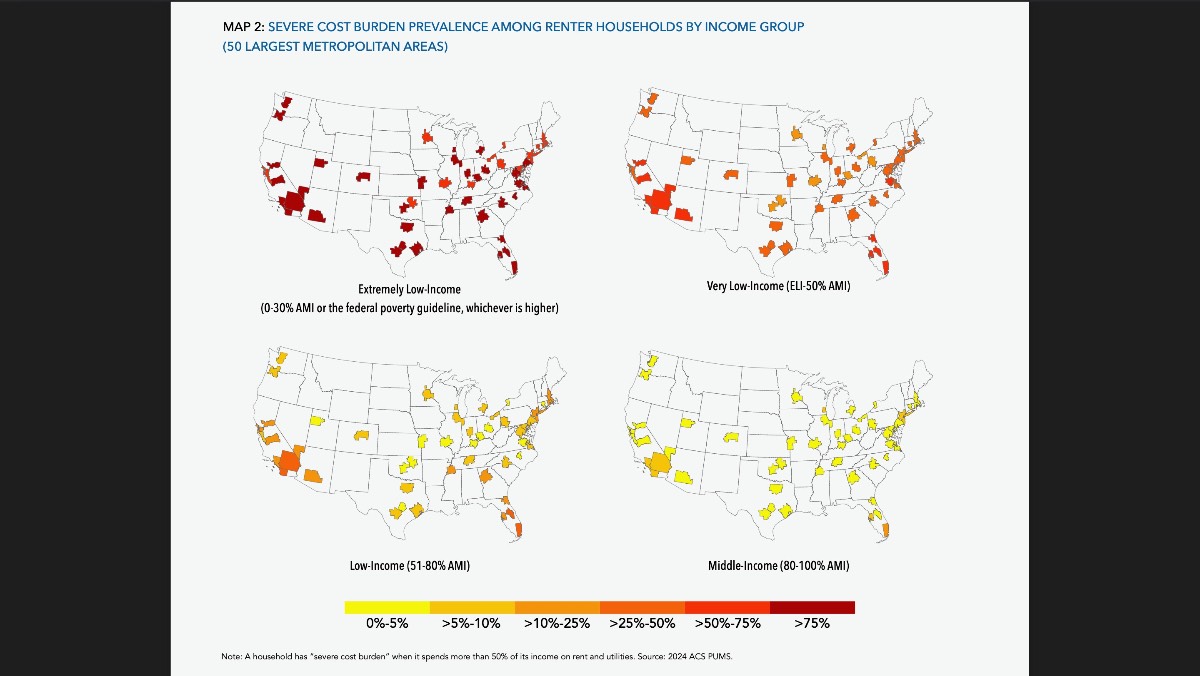
Data from the National Low Income Housing Coalition illustrates the severe rental cost burden driving Charlotte’s urgent debate over its 40,000-unit affordable housing shortage.
(Photo Credit: National Low Income Housing Coalition)
Equity concerns shape where housing gets built
Council members also raised concerns about the geographic distribution of affordable housing.
Several noted that lower-income developments are often concentrated in specific districts, limiting access to jobs, transit, and amenities while reinforcing patterns of economic segregation. Owens acknowledged that clustering housing without adequate infrastructure has created long-term challenges for residents.
The city’s location scoring system—used to evaluate HTF proposals- considers proximity to employment, neighborhood diversity, and displacement risk. Still, some members argued it needs to go further, particularly in accounting for future transit investments and displacement patterns.
The debate reflects a broader shift in how cities approach affordability, not just increasing supply, but ensuring housing is equitably distributed and connected to opportunity.
Public land strategies offer promise, but raise risks
To expand housing supply, the committee explored new strategies centered on public land.
One proposal—the “public development model”—would allow the city to retain ownership of land and potentially housing units, giving officials greater control over long-term affordability. However, the approach also raises questions about risk and responsibility.
Owens cautioned that taking on a landlord role could create reputational challenges for the city, particularly when navigating tenant relations and enforcement.
Other initiatives drew mixed reactions. The proposed “Teacher Village,” a partnership with Charlotte-Mecklenburg Schools and Mecklenburg County, would create approximately 138 affordable units near Garinger High School. Council members questioned whether projected rents, around $1,000 per month, would be affordable for the intended population.
Meanwhile, a “Housing Innovation Challenge” has attracted 33 university-led proposals focused on building faster and more cost-effective housing. While promising, the initiative remains in early stages, with questions about long-term scalability.
Similar debates over development and public trust are playing out in other cities. In Brian Swanson Vs. San Ramon City Council by Kathleen Parra, tensions surrounding development decisions and community input highlight the complexity of balancing growth with accountability.
Workforce strategy aims to link jobs to public spending
In a separate Economic Development and Workforce Council Committee meeting, officials turned their attention to economic mobility.
A proposed Vendor Workforce Participation Program would tie city contracts to workforce outcomes, encouraging contractors to hire locally and invest in skill development—particularly in construction and skilled trades.
City staff pointed to past projects as evidence that similar approaches can generate local wages and exceed participation goals, though details of implementation remain under development.
“Setting these goals, creating a path for the goals that you are trying to achieve, setting the criteria, measuring it, and holding your staff accountable for reporting back, for remaining in that policy level,” said City Attorney Andrea Leslie.
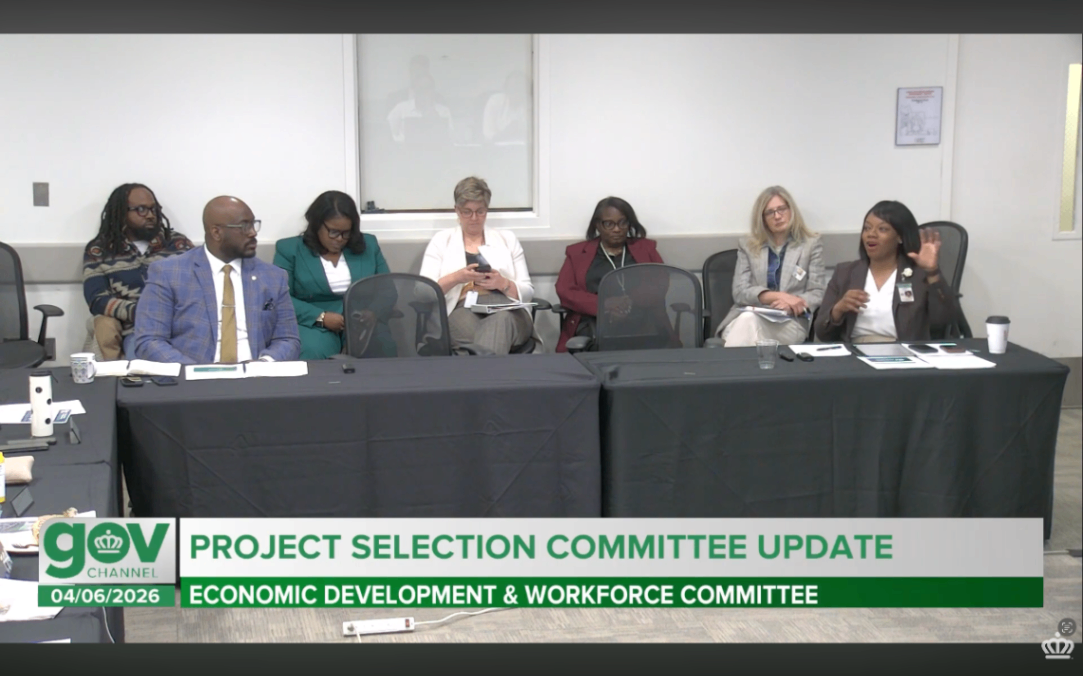
City leaders and legal staff deliberate on a new workforce participation program designed to ensure municipal contracts lead to local hiring and measurable skill development.
(Photo Credit: City of Charlotte/YouTube)
Youth employment demand highlights opportunity—and limits
The committee also discussed expanding youth employment initiatives through the Office of Youth Opportunities, which serves residents ages 13 to 24.
This year, the program received 1,200 applications for 1,000 available paid positions, reflecting strong demand but also limited capacity. Council members were encouraged to help secure additional opportunities through their networks.
Officials are also considering a longer-term investment in workforce pipeline programs such as Road to Hire, which provides sustained support from high school through early careers.
Broader conversations about transparency and modernization are also emerging in local government. In OpGov.news Interviews Pratima Sonavne - Contra Costa County Clerk Recorder Candidate by Molly Scheid, issues of accountability and public trust are central to the discussion.
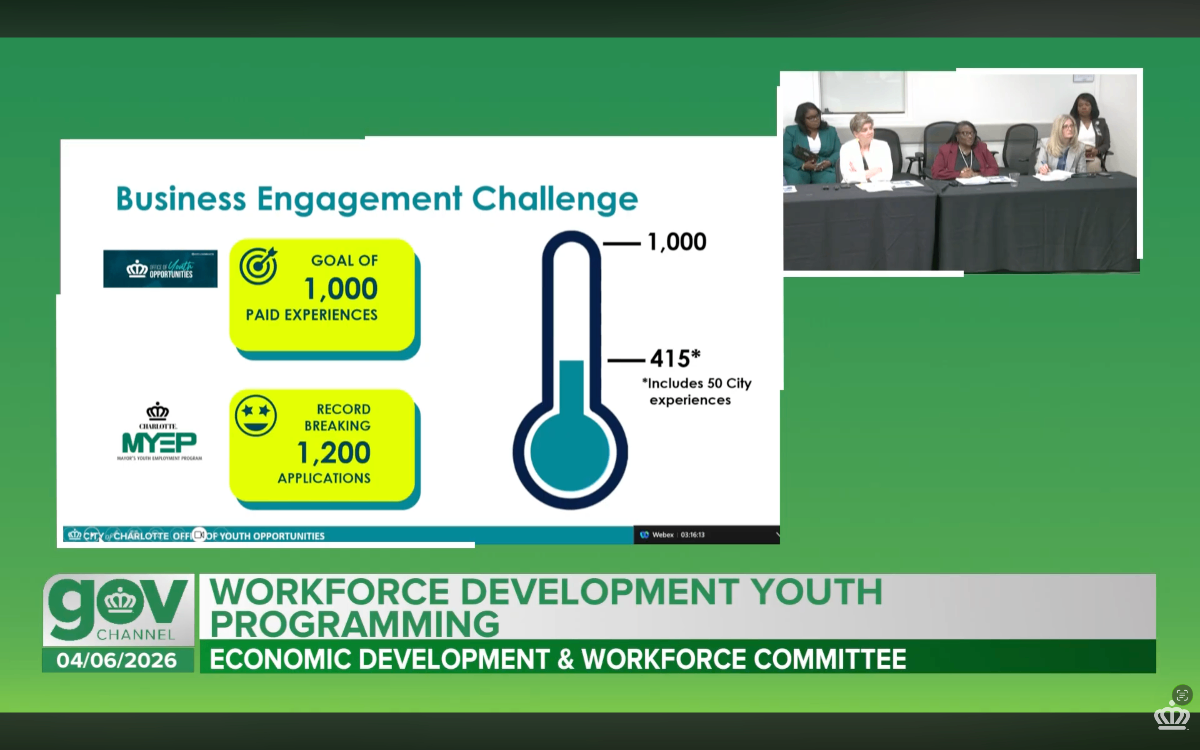
A progress update on youth programming reveals that student demand is outstripping capacity, with a record 1,200 applications submitted for a 1,000-position goal.
(Photo Credit: City of Charlotte/YouTube)
What’s next
Council members are expected to continue reviewing Housing Trust Fund proposals under tight state tax credit deadlines, while workforce program details are refined for potential implementation.
As Charlotte continues to grow, officials face increasing pressure to align funding, policy, and community needs—ensuring that both housing and economic opportunities keep pace with the city’s expanding population.
The full council meetings agendas and materials are available on OpGov.news at Charlotte City Council Meeting (Housing Committee) and Charlotte City Council Meeting (The Economic Development and Workforce Council Committee).
You can reach Victoria Osborne at victoriao@lead4earth.org.
(Thumbnail Photo Credit: National Low Income Housing Coalition)
0
0

Comments