(CHARLOTTE, NC.) — The selection of an interim mayor, infrastructure expansion, and automated traffic enforcement dominated discussion during the Charlotte City Council's June 22 regular meeting, where residents raised concerns about rapid development, transportation safety, and municipal procedural transparency.
The meeting centered largely on selecting a temporary replacement for outgoing Mayor Vi Lyles following her departure from office on June 30th.
After hearing public comments and conducting multiple rounds of voting, council members selected local attorney Robert Harrington following a runoff against community leader Carrie Cook.
Harrington will serve out the remainder of Lyles' term through December 2027.
The appointment came during a session that also served as an emotional farewell to Lyles, who became Charlotte’s first Black woman mayor when she was elected in 2017. Council members, community leaders, and residents recognized her decades of public service, culminating in her receipt of the Order of the Long Leaf Pine, one of North Carolina’s highest civilian honors.
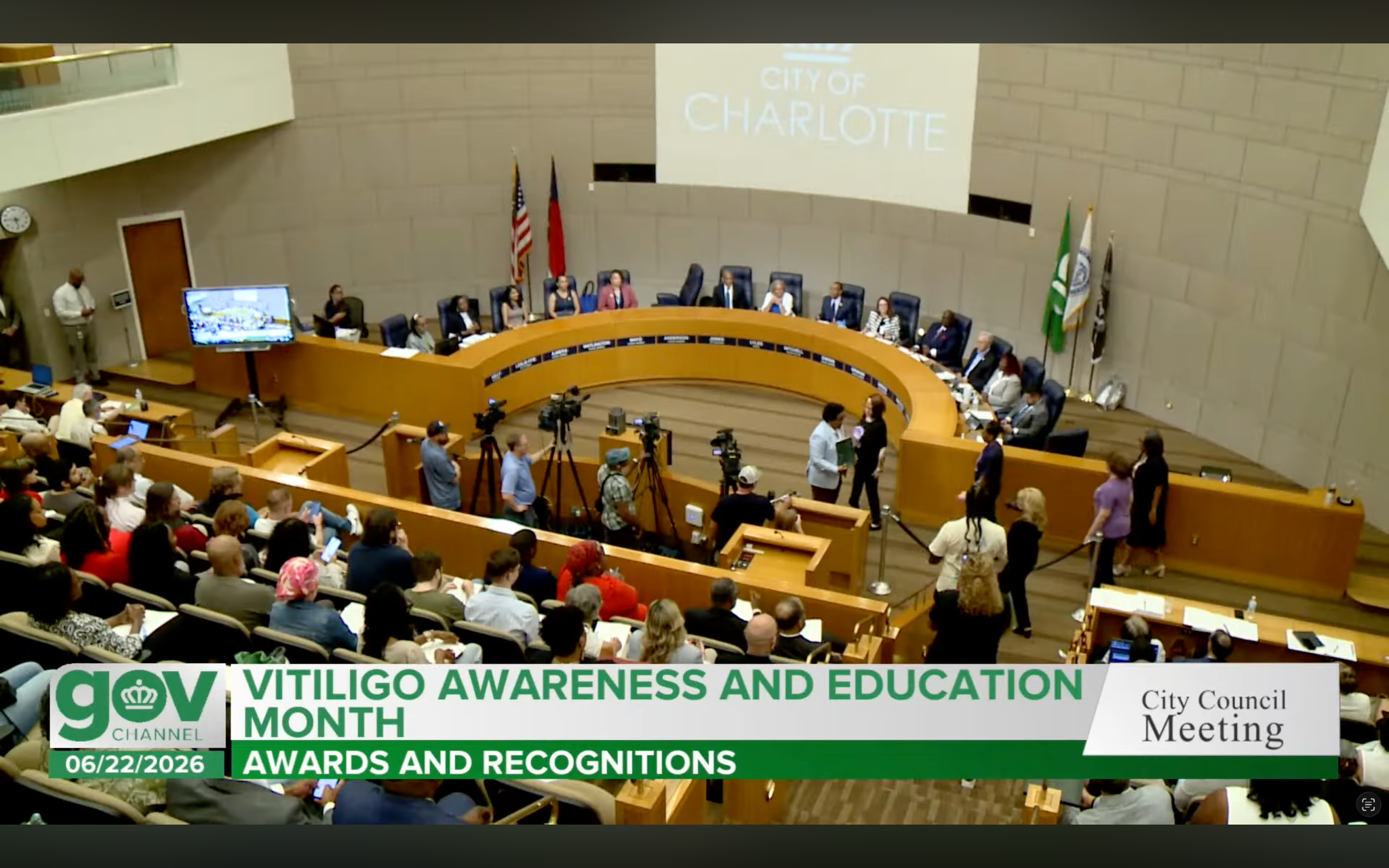
The council session opened with community awards and special recognitions before transitioning to high-stakes legislative matters.
Photo Credit: City of Charlotte/YouTube
Several speakers praised Lyles’ leadership through periods of rapid population growth and major economic development projects.
The interim mayor appointment drew significant public interest, with dozens of residents speaking in support of finalists, including Harrington, Cook, and Mayor Pro Tem James Mitchell.
Supporters of Harrington described him as a consensus-builder capable of maintaining continuity during the transition period, while supporters of Cook and Mitchell emphasized their community involvement and deep leadership experience.
Public comments also reflected broader structural concerns facing Charlotte residents as growth continues. Several speakers addressed transportation and traffic safety issues, including congestion on major highways and gaps in the city’s bicycle infrastructure.
One resident described injuries sustained in an e-bike crash caused by an abruptly ending bike lane and urged the city to improve cyclist safety along the Lynx Gold Line corridor.
Traffic fatalities also emerged as a major topic.
Representatives of Charlotte’s Vision Zero Task Force called on the city to move quickly on automated traffic enforcement efforts, citing dozens of traffic-related deaths that have occurred in recent months. In response, the council approved a one-year pilot automated red-light enforcement program later in the evening.
The shift toward prioritizing protective measures over standard urban development mirrors similar planning choices playing out in other municipalities across the country, where local councils face intense scrutiny over how planning decisions shape residential safety outcomes.
In one recent regional development review written by Angela Underwood, detailed in “Westside Redevelopment Board Prioritizes Safety Over Beautification,” board officials similarly chose to redirect resources toward urgent public safety infrastructure rather than aesthetic community upgrades. The decision reflected a broader administrative recognition that public protection must anchor local development before secondary neighborhood enhancements can be addressed.
Housing affordability and development policies generated additional discussion in Charlotte.
Speakers argued that zoning regulations continue to contribute to rising housing costs and encouraged city leaders to consider reforms that would increase housing supply.
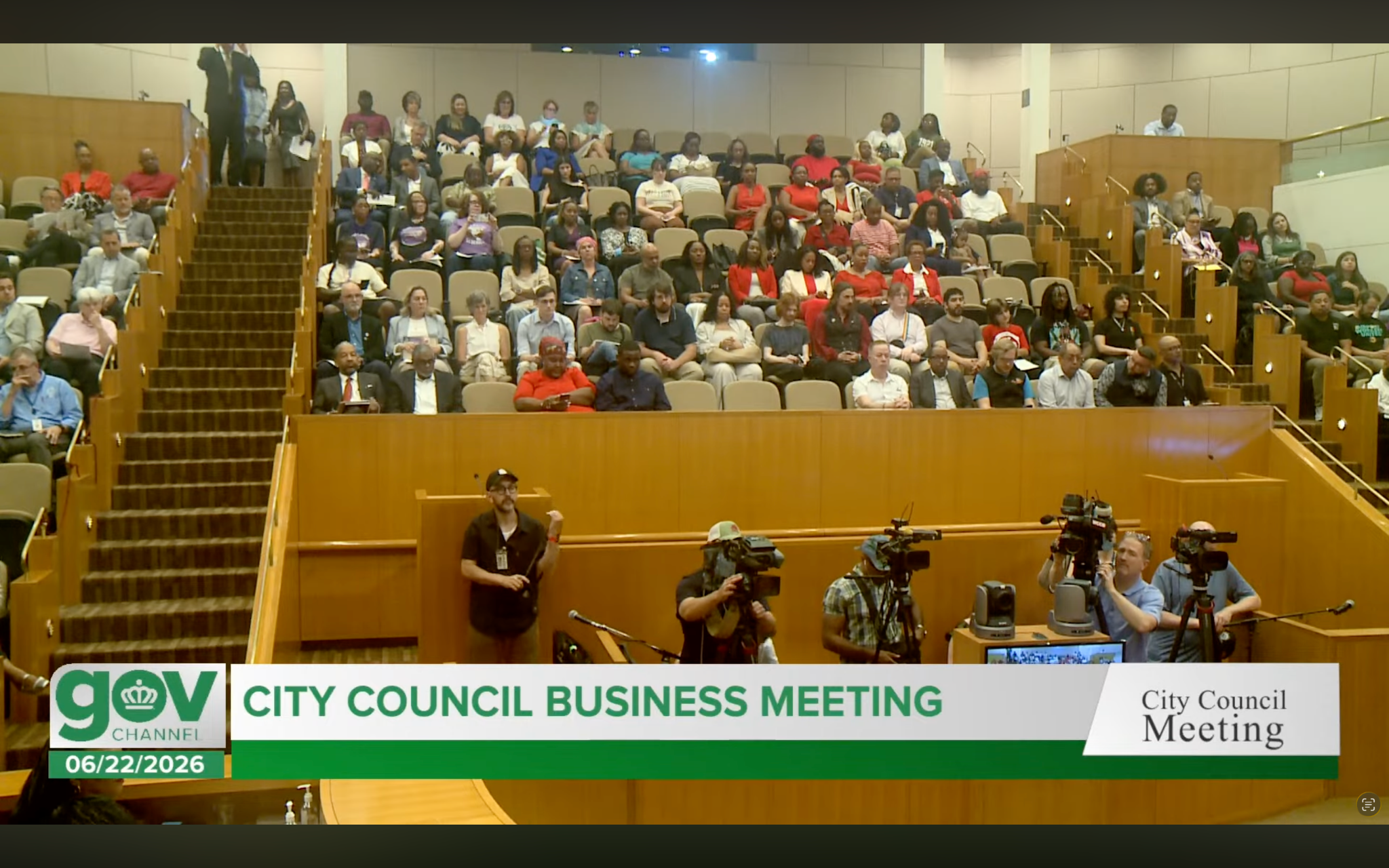
Local community advocates and residents fill the council chamber gallery to deliver public comments on rapid urban development.
Photo Credit: City of Charlotte/YouTube
Others focused on the impacts of new development in established neighborhoods, raising concerns about congestion, parking availability, and quality-of-life issues.
The city’s ongoing debate over data center construction also resurfaced during public comments. Several residents urged council members to take stronger action against future projects, arguing that data centers place burdens on local infrastructure while providing limited community benefits.
Council members additionally approved several land-use and infrastructure items, including historic landmark designations for Dilworth Methodist Church South and the Foard House, as well as the voluntary annexation of Northway Woods Phase 1.
A separate discussion centered on amendments related to Bank of America Stadium property agreements. While the measure ultimately passed, some council members questioned whether residents had received sufficient opportunities to review details before a final vote.
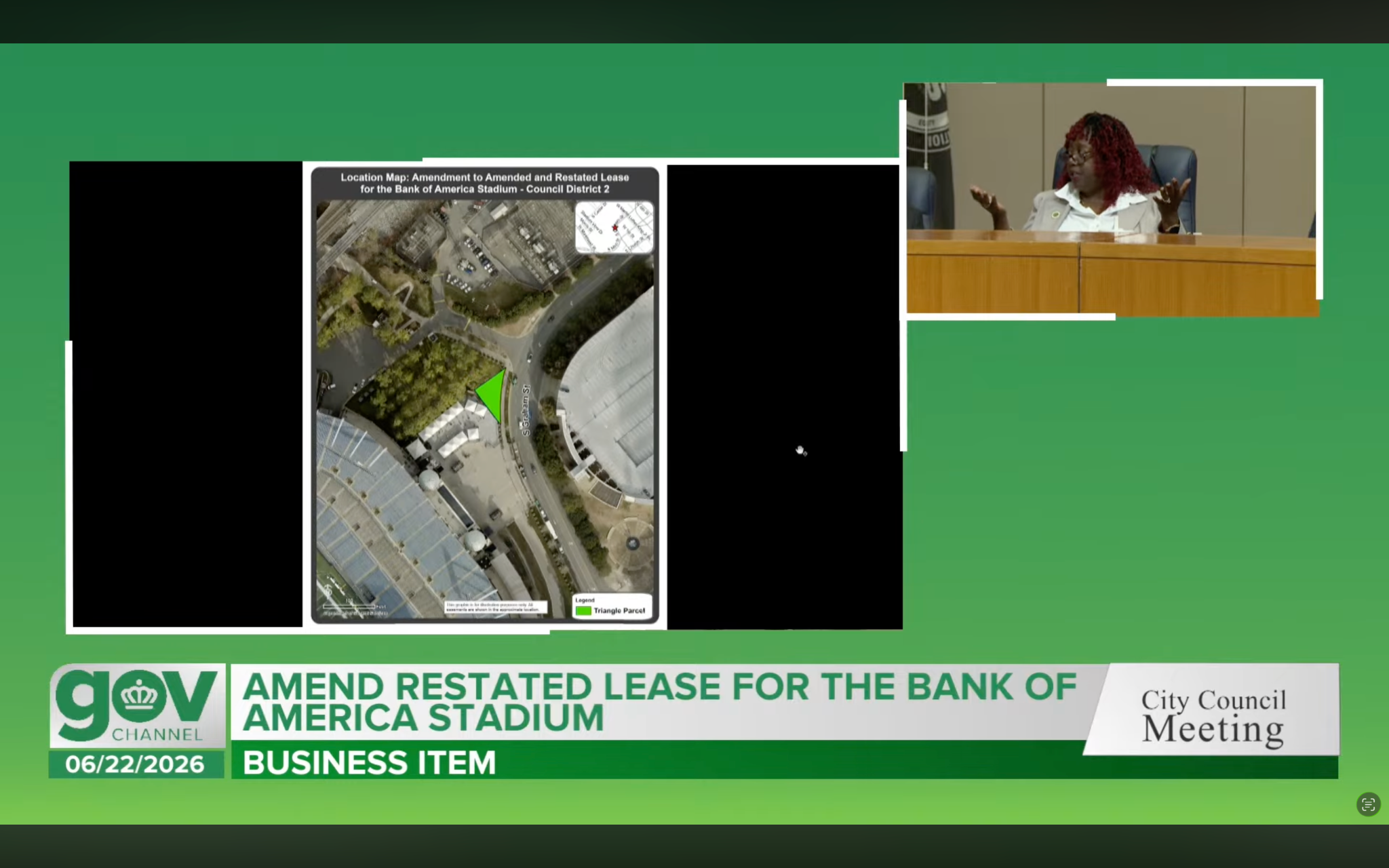
Councilmember LaWana Mayfield raises procedural concerns during the presentation of the Bank of America Stadium restated lease amendments.
Photo Credit: City of Charlotte/YouTube
Councilmember LaWana Mayfield repeatedly raised concerns about the city’s practice of conducting public hearings and taking final action on the same night, arguing the process limits public participation. Mayfield voted against several agenda items due to these procedural concerns.
This friction over civic transparency and public input echoes broader national tensions regarding how local governments engage with their constituents during high-stakes sessions.
An intense local dispute documented by OpGov reporter Sarah Denos, “Sacramento Residents Challenge City's Gun Violence Narrative During Emotional Council Meeting,” highlighted how public frustration can boil over when communities feel that official city narratives do not align with their daily, lived realities. The confrontation underscored how critical open, deliberate procedural structures are to maintaining institutional trust when local policies are on the line.
Following the debate, the Charlotte council voted to refer the procedural issue to its Budget, Governance, and Intergovernmental Relations Committee for further review. Additional approvals included stormwater financing measures, transportation governance agreements, an expansion of the University City Municipal Service District, and an eight percent salary adjustment for City Clerk Stephanie Kelly, effective July 1.
As Charlotte enters a leadership transition, many of the issues discussed during the meeting, housing affordability, transportation safety, development pressures, and public engagement, are expected to remain central topics for both the council and its newly appointed interim mayor.
To add to or correct any information in this report, please contact Victoria Osborne at victoria.o@lead4earth.org.
Thumbnail Photo Credit: City of Charlotte/YouTube
0
0

Comments