(CHARLOTTE, N.C.) — Charlotte city leaders on Monday approved a sweeping slate of infrastructure, transit, and community initiatives totaling hundreds of millions of dollars, aiming to address rapid growth while spotlighting ongoing questions about public engagement and property rights.
Council members authorized an installment financing contract not to exceed $120 million for city facility improvements, including expansion of the 911 Communications Center, a new Animal Care and Control Adoption Facility, and citywide Americans with Disabilities Act (ADA) transitions.
Transportation dominated the session. Council approved a $37.9 million contract amendment with HDR Engineering, Inc. to advance the Red Line commuter rail project to 30 percent design completion by late 2027.
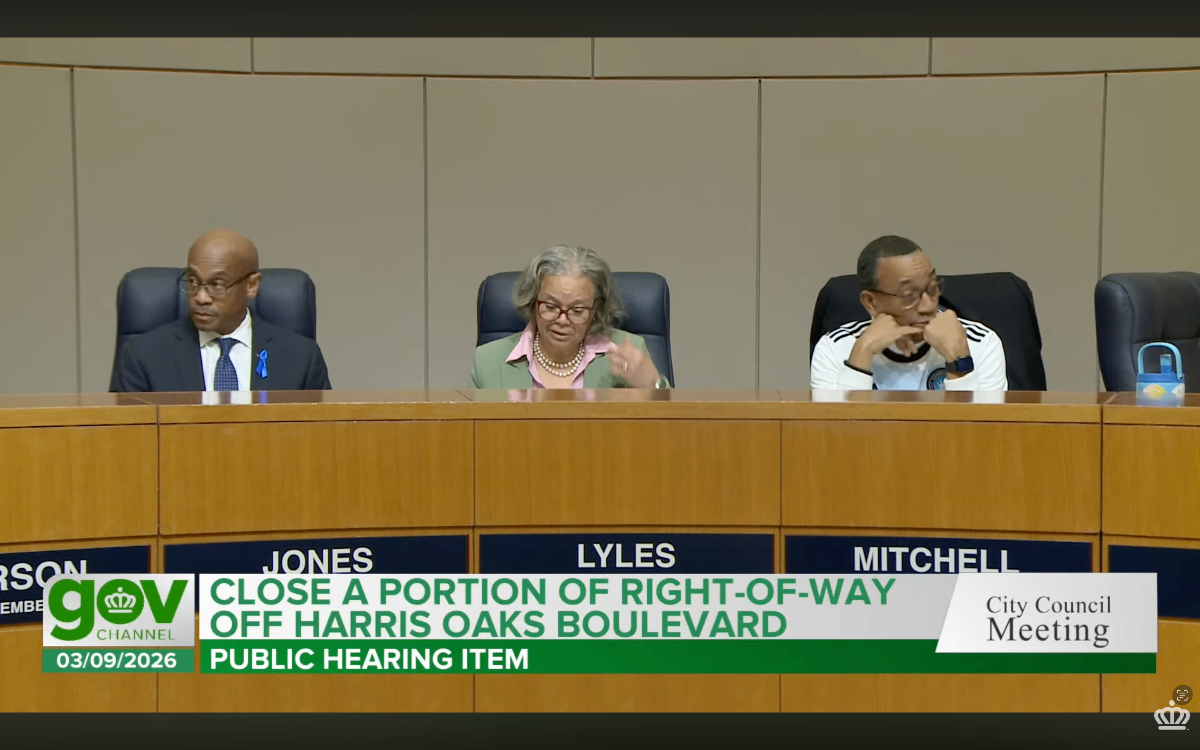
City Council members presided over a session that advanced the Red Line commuter rail to 30% design completion.
(Photo Credit: City of Charlotte/YouTube)
The Red Line, funded under the PAVE Act, will link Uptown Charlotte with northern suburbs such as Davidson and Concord and represents a multibillion-dollar regional transit expansion. Reporting on the Red Line’s progress is available from WFAE.
Research shows that commuter rail investments can have broader public health and equity impacts. A health impact assessment of the proposed Red Line found that reliable and accessible transit can improve physical activity, reduce pollution-related respiratory risks, and expand economic opportunities for low-income residents.
Council also approved an interlocal agreement with Rock Hill to expand CATS Regional Express Bus Service, with Rock Hill reimbursing half of net operating costs, and accepted a $149,564 Transportation Demand Management Program grant from the North Carolina Department of Transportation, contingent on a 50 percent local match.
Housing and equity issues were highlighted during discussions about naturally occurring affordable housing (NOAH).
Council member Lawana Mayfield emphasized the importance of community input, “So I do want to thank my colleagues, some who are not currently with us, but those that supported us pausing long enough to have more community conversation for the seven.”
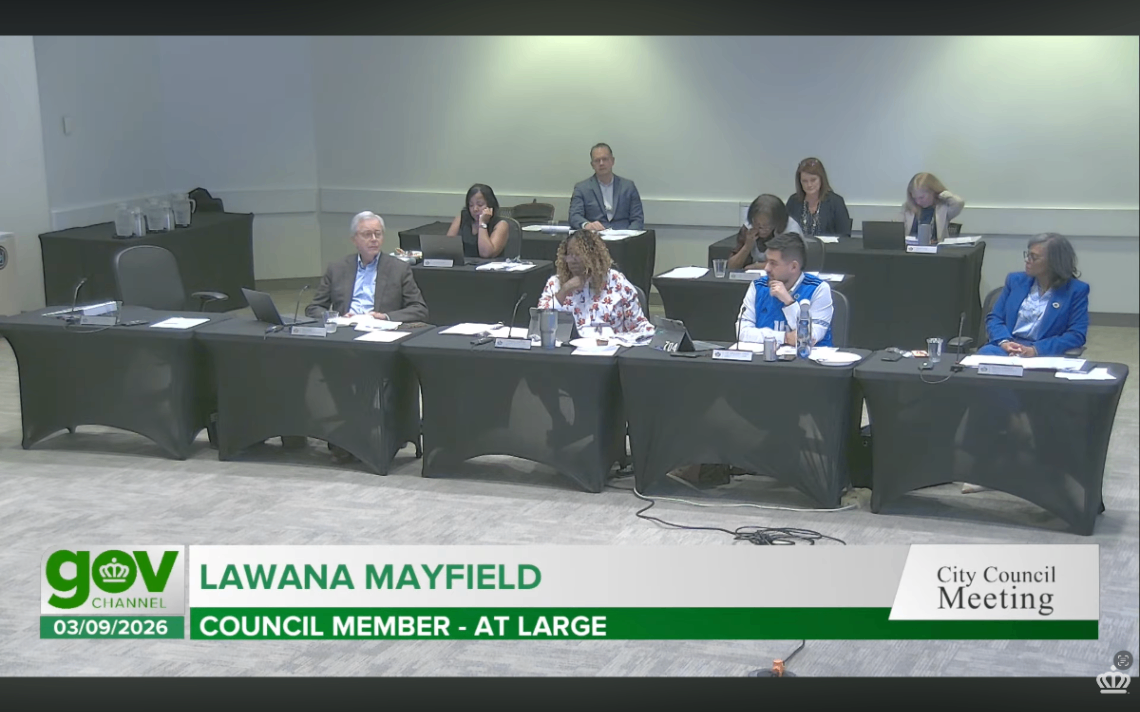
Council Member Lawana Mayfield emphasizes the critical need for community conversation during discussions on preserving naturally occurring affordable housing.
(Photo Credit: City of Charlotte/YouTube)
Warren Wooten, a city planning advisor, added perspective on the broader purpose of NOAH acquisitions: “NOAH acquisition is one of your broad range of strategies that you use to both build and preserve affordable housing in your community.”
Airport improvements advanced with the adoption of an initial findings resolution to seek $235 million in General Airport Revenue Bonds and $175 million in construction financing for runway rehabilitation and parallel runway projects. Public hearings on airport financing are scheduled for April 27.
Council also approved a five-year lease with American Express for a Sidecar Lounge at Charlotte Douglas International Airport and amended a lease with American Airlines for additional office and warehouse space.
Community health initiatives included a $657,259 contract with Atrium Health to expand Community Health Worker services in the West Boulevard Corridor. The council also recognized March as Brain Injury Awareness Month, underscoring ongoing advocacy efforts.
Street and stormwater projects received major funding, with contracts totaling over $15 million for McCullough Drive Extension, Monroe Road Streetscape improvements, and multiple drainage enhancements, alongside specialized maintenance services and water treatment upgrades.
Despite these investments, the session revealed tensions between city priorities and property owners. Council authorized condemnation proceedings for four parcels after negotiations for easements on Arrowood Road and the CATS ADA Bus Stop projects failed. Owners cited concerns over compensation and potential impacts, highlighting friction between municipal planning and private property rights.
Nationally, OpGov.news coverage illustrates how engagement challenges play out in other cities.
In Portland, public frustration dominated a February council meeting, particularly around financial oversight and accountability within city bureaus.
Similarly, a Kennesaw City Council session in March highlighted the effects of minimal citizen participation, showing how limited engagement can constrain dialogue on local policy decisions.
Council nominations to advisory boards and committees also drew scrutiny. Several incumbents were ineligible for reappointment or failed to meet attendance requirements, prompting calls for stronger accountability and broader public involvement.
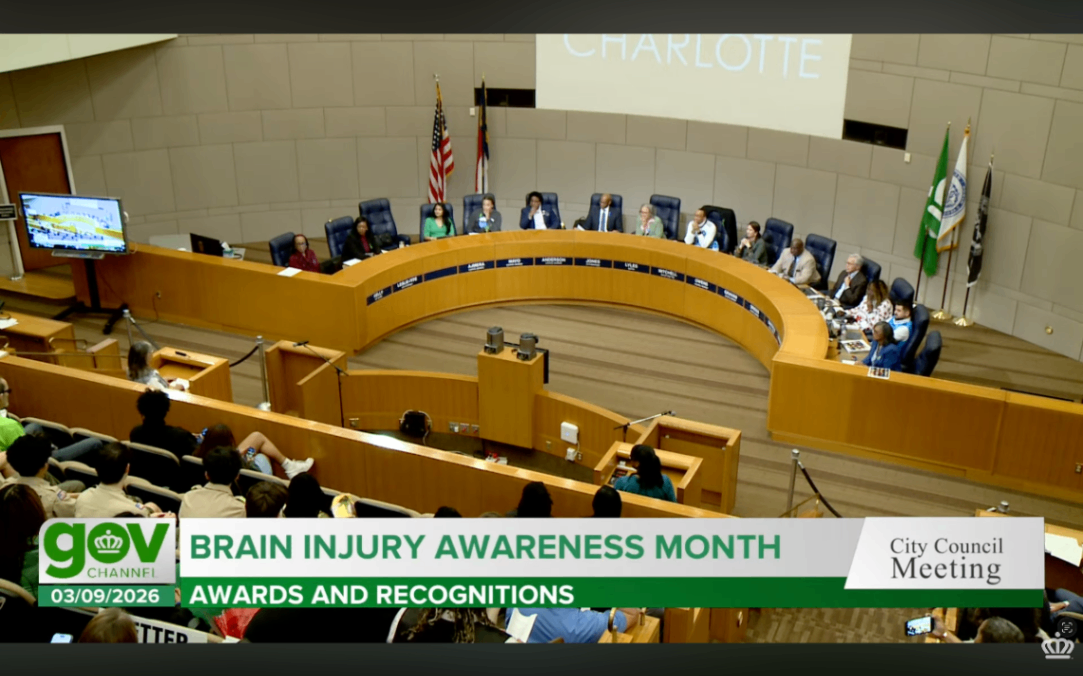
The Charlotte City Council convenes to approve more than $600 million in infrastructure and community projects and to officially recognize March as Brain Injury Awareness Month.
(Photo Credit: City of Charlotte/YouTube)
Observers noted that the council’s reliance on a consent agenda could limit deliberation and public visibility for complex and impactful decisions.
Other actions included voluntary annexation of 49.09 acres in Summerwell Mountain Island for mixed residential redevelopment, historic landmark designation proceedings for the Faires Farm Silos, and scheduling public hearings for alleyway and right-of-way abandonment.
The full council meeting agenda and materials are available on OpGov.news at Charlotte City Council Meeting.
You can reach Victoria Osborne at victoria.o@lead4earth.org.
(Thumbnail Photo Credit: City of Charlotte/YouTube)
0
0

Comments