(CHARLOTTE, N.C.) — The April 27, 2026, Charlotte City Council meeting revealed a city increasingly strained by competing demands across housing, transit governance, emerging infrastructure policy, and livability concerns voiced throughout public comment.
While the council advanced major investments in housing, transportation, and infrastructure, the meeting also underscored persistent concerns about transparency, responsiveness, and whether city systems are adapting enough to issues repeatedly raised by residents, workers, and business stakeholders.
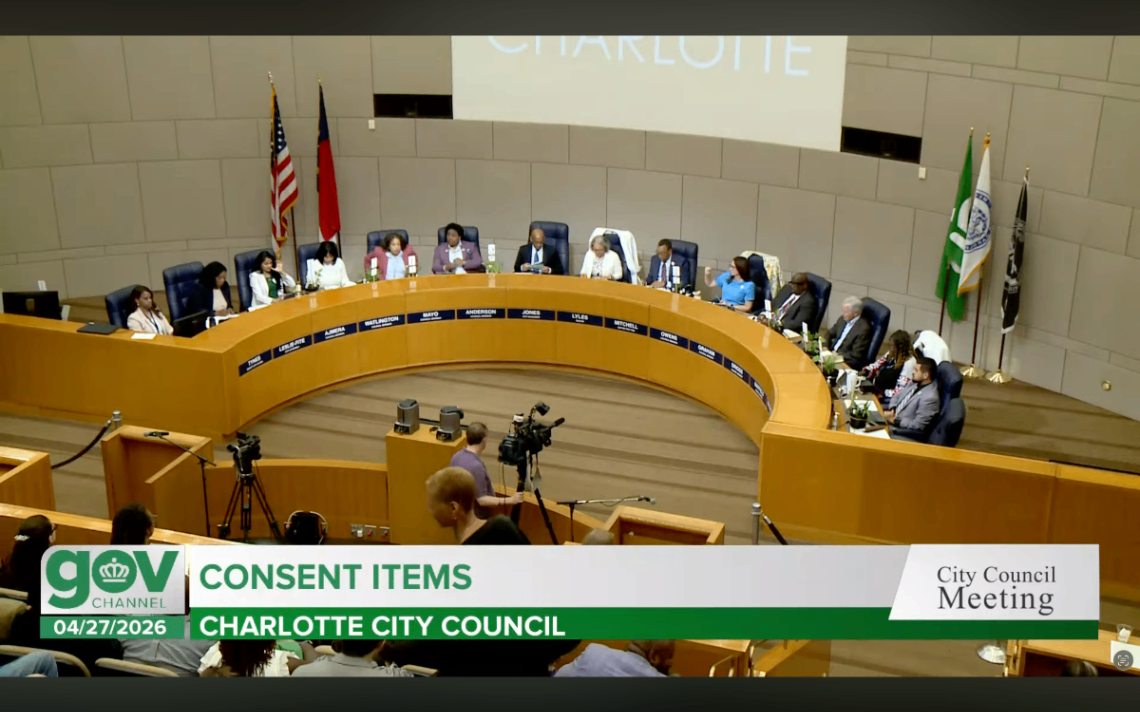
Members of the Charlotte City Council gather for the April 27 session to deliberate on a complex agenda involving housing allocations, transit restructuring, and emerging infrastructure regulations.
(Photo Credit: City of Charlotte/YouTube)
Housing Trust Fund decision highlights policy tension
A key point of debate centered on Housing Trust Fund allocations, where a substitute motion ultimately funded both River District 2 and Evoke Living at Wilora Lake, overriding prior committee recommendations to defer at least one project.
The 6–4 vote renewed concerns about consistency in housing decision-making and whether shifting allocations undermines long-term planning discipline.
Council discussion reflected a broader national housing challenge: even when cities increase funding, affordability outcomes often depend on deeper structural factors such as land access, zoning constraints, and neighborhood opportunity gaps. The U.S. Department of Housing and Urban Development has emphasized that housing policy must balance production with accessibility and long-term affordability protections.
The council also approved the Fiscal Year 2027 Housing and Community Development Annual Action Plan and authorized the sale of four city-owned properties to Habitat for Humanity for $1 each.
These tensions around balancing flexibility with policy consistency are not unique to Charlotte. In Inability To Override The Mayor's Veto Causes Tension At Apr. 23 Meeting, reporter Kristin Hassel highlights how internal divisions within the Minneapolis City Council similarly complicated decision-making and exposed deeper disagreements about governance direction.
Transit governance overhaul raises oversight concerns
Council members approved termination of the CATS Transit Governance Interlocal Agreement, dissolving the Metropolitan Transit Commission by July 1, 2026. While the restructuring is intended to streamline oversight under the Metropolitan Public Transit Authority (MPTA), multiple members raised concerns about communication gaps and readiness during the transition period.
Transit governance restructuring has been a recurring issue in rapidly growing metro regions, where agencies often face pressure to modernize oversight structures while maintaining service continuity. The Federal Transit Administration has documented that major governance transitions frequently require phased implementation to avoid service disruptions.
Additional discussion included CATS capital program management and utilization of small and minority-owned business (CBI) firms, with council members emphasizing the need for more consistent payment timelines and a six-month follow-up report on implementation progress.
Governance tensions surrounding oversight and administrative control are also reflected in other municipalities. In Community Redevelopment Agency Remains in Mayor's Hands, by Angela Underwood, similar concerns were raised about transparency and centralized authority, underscoring how structural decisions can influence accountability across city systems in Florida.
Data center debate reflects regulatory uncertainty
Emerging technology infrastructure policy also surfaced as a major point of discussion, particularly around data center development. Several council members described the sector as operating in a “wild west” environment, citing unclear regulatory frameworks and potential environmental and infrastructure impacts.
A proposal to impose a temporary moratorium ultimately failed in a 5–5 tied vote, with the mayor casting the deciding vote against it and citing the need for further research before regulatory action. The issue is expected to return in future meetings alongside broader infrastructure planning discussions, including the I-77 South expansion.
In addition, federal energy forecasts indicate that this growth represents one of the fastest structural shifts in electricity demand in decades, reversing years of relatively flat national consumption patterns.
These pressures are now forcing local governments like Charlotte to confront regulatory questions in real time, often before clear statewide or federal frameworks are fully established.
Public comment highlights noise, tourism, and labor conditions
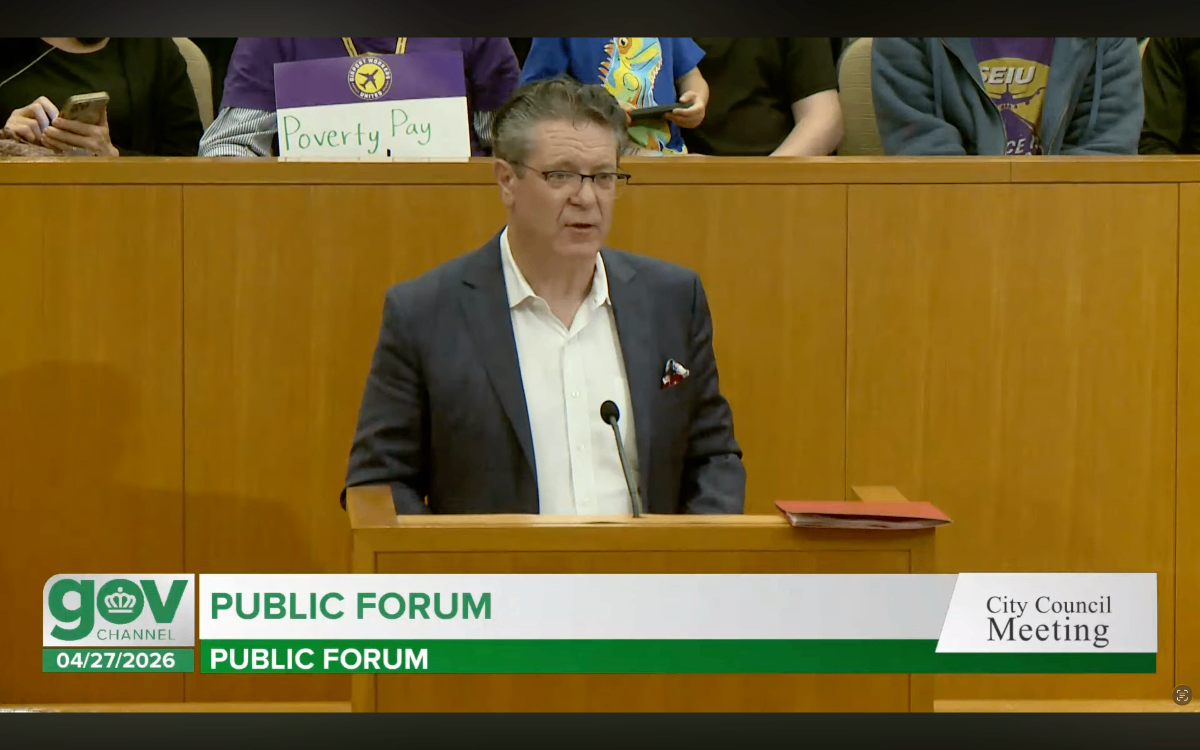
Hugh Templeman, General Manager of the Grand Bohemian Hotel, addresses the council during the public forum to discuss the negative economic impact of urban noise on Charlotte’s tourism sector.
(Photo Credit: City of Charlotte/YouTube)
Public testimony reflected growing frustration over urban livability issues, particularly noise pollution in Uptown Charlotte. Residents and stakeholders described ongoing disruptions from modified vehicle exhaust systems, street takeovers, and inadequate enforcement, arguing that these conditions are affecting both quality of life and perceptions of safety in the city center.
Hospitality leaders also raised concerns about the economic impact of these conditions.
Hugh Templeman, General Manager of the Grand Bohemian Hotel, pointed to declining visitation trends and directly linked part of the downturn to urban noise conditions, stating, “The market is down 4% of travelers coming into Charlotte over the last 12 months. Part of that problem is amazingly attached to the video we heard earlier, noise in the city.”
His comments underscore how quality-of-life concerns can extend beyond resident experience to broader economic competitiveness.
Tourism research from the U.S. Travel Association has consistently found that urban visitor experience, including noise, safety perception, and walkability, directly impacts destination competitiveness in major U.S. cities
Labor conditions at Charlotte Douglas International Airport were also a major focus of public comment. Workers described low wages, physical strain, and limited benefits despite performing essential safety-related duties.
Dorothy Griffin, an airport worker with eight years of experience, described the emotional and physical toll of the job while emphasizing the importance of the work itself. She stated, “We play an important part in the travel safety of the passengers. But we work hard to make sure they have safe travels, but we’re underpaid. We’re tired.”

Airport worker Dorothy Griffin provides testimony regarding the physical strain and wage concerns faced by essential staff at Charlotte Douglas International Airport.
(Photo Credit: City of Charlotte/YouTube)
Other workers echoed these concerns, citing understaffing, long shifts, and housing insecurity among employees who support critical airport operations.
Infrastructure investments move forward amid equity concerns
Despite tensions in other policy areas, the council approved significant infrastructure and environmental investments, including up to $235 million in general airport revenue bonds and $175 million in construction financing for Charlotte Douglas International Airport. Officials emphasized that the funding is supported through airport revenues and airline agreements rather than general taxpayer dollars.
Additional approvals included funding for the Interstate 277 Rail Trail Bridge Project, a $1.2 million urban street tree maintenance grant targeting underserved areas, and interlocal agreements supporting water system improvements and conservation programs across the region.
Conclusion: governance systems are under growing pressure
Across housing, transit, infrastructure, and regulatory policy, the April 27 meeting reflected a city navigating increasingly complex and often competing demands.
While major investments continue to advance, persistent concerns around policy consistency, transit oversight, labor equity, and urban livability suggest growing pressure on council members to better align governance systems with the realities described by residents and workers.
To provide a complete and balanced account of the concerns raised during the public forum, we followed up with several public speakers to obtain additional context, clarification, and follow-up comments on their testimony. However, responses were limited at the time of publication.
As Charlotte moves toward upcoming decisions on data center regulation, transit restructuring oversight, and housing strategy refinement, the central challenge emerging from this meeting is not simply growth—but the capacity of city governance to respond to it with consistency, clarity, and speed.
The full meeting agenda and materials are available through OpGov.news at the City of Charlotte Meeting.
(Thumbnail Photo Credit: City of Charlotte/YouTube)
0
0

Comments