(CHARLOTTE, N.C.) — At a series of meetings on April 6, 2026, the Charlotte City Council confronted fundamental governance challenges: an increasing strain on administrative support for council members, a tightening fiscal outlook for the city’s airport, and stark funding gaps in the Financial Partner program. The discussions underscored broader tensions in resource allocation and communication capacity that accompany Charlotte’s rapid growth.
Council Says Current Support Model Is Outpaced by Growth
Central to Tuesday’s Budget, Governance, and Intergovernmental Relations Committee meeting was the council’s assessment that existing administrative support structures are struggling to keep up with Charlotte’s expanding population and policy demands. Council members examined whether the current system, built largely around scheduling and constituent follow-ups, adequately equips elected officials to address increasingly complex district issues.
During the discussion, committee leadership emphasized the need for operational improvements and stronger coordination across council offices. As Chairman Malcolm Graham noted, “As Chairman of the committee, again, reimagine what we’re doing is that we’ve just got to be a lot more effective and efficient in what we’re doing.”
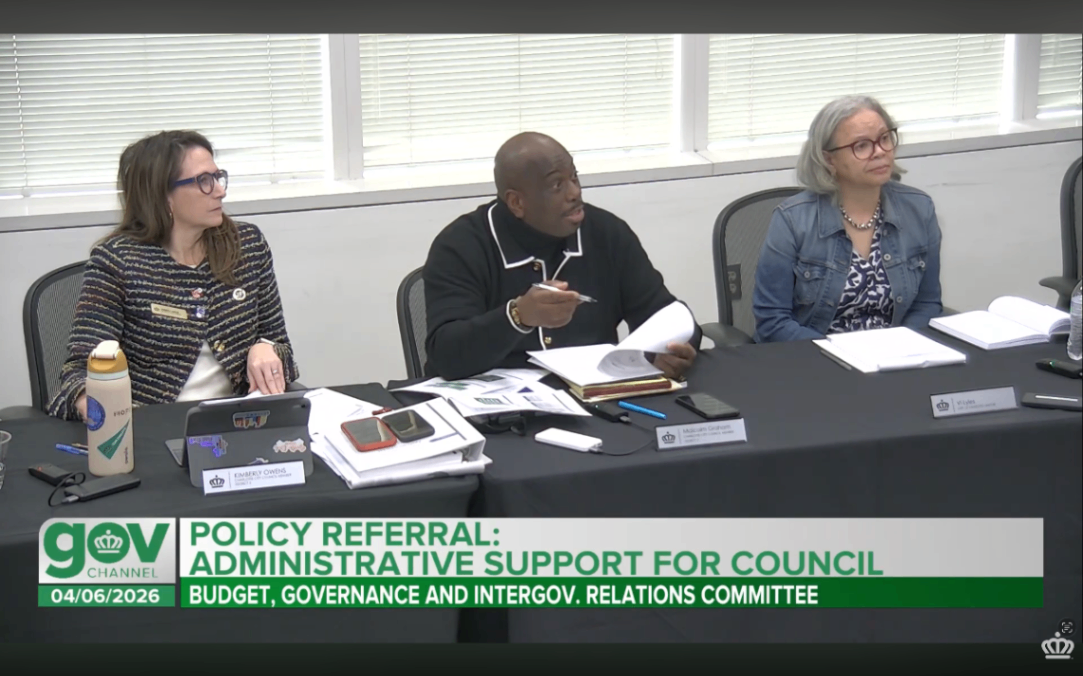
Chairman Malcolm Graham and council members discuss expanding administrative staff to better manage Charlotte’s growing constituent demands.
(Photo Credit: City of Charlotte/YouTube)
Potential changes under consideration include strengthening the Office of Constituent Services, reorganizing the Neighborhood Engagement Services team, and potentially adding several full-time staff members dedicated to council support. These proposals aim to give council members the capacity to handle growing constituent requests while improving internal communication and policy coordination.
Experts in local governance emphasize that clear communication between government officials and residents plays a critical role in maintaining trust and accountability.
The conversation surrounding transparency and community engagement echoes reporting by Angela Underwood in the Sacramento/Bay Area for OpGov.
In her article, Community Redevelopment Agency Talks Bay Center, Underwood highlights how local redevelopment projects require careful oversight and community involvement when public resources are being allocated.
Airport Budget Outlook: Costs Rising Faster Than Revenues
Later in the meeting cycle, Aviation Department officials outlined the proposed FY27 operating budget for Charlotte’s airport, which totals approximately $348.8 million. While the budget reflects a 4.5 percent increase in expenditures, projected revenue growth is expected to reach only about 2.3 percent, creating pressure on long-term financial sustainability.
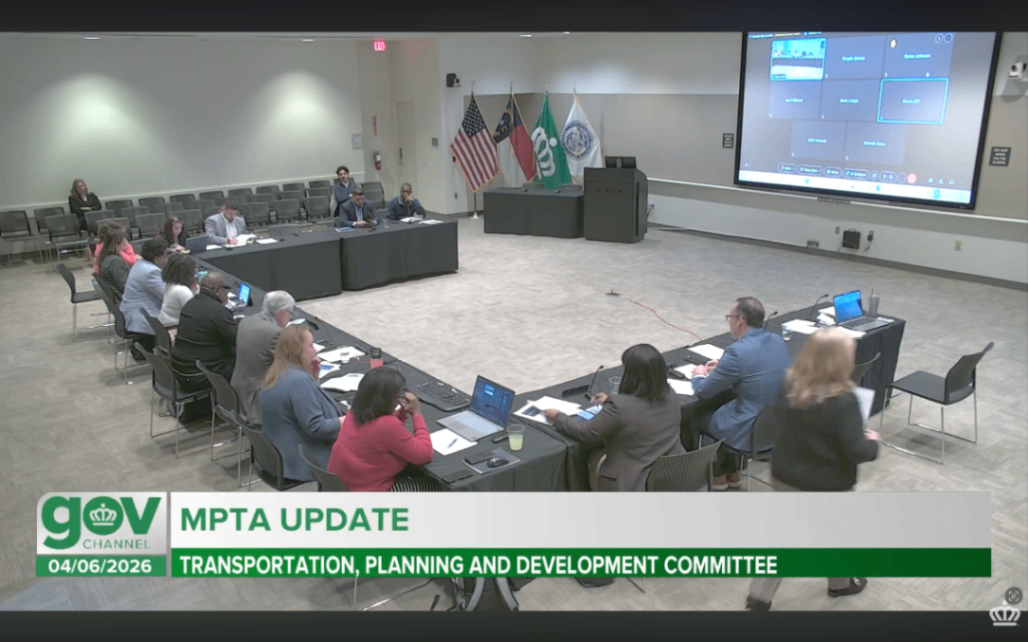
Committee members convene for a transit update to address the infrastructure challenges accompanying the city’s rapid growth.
(Photo Credit: City of Charlotte/YouTube)
Airport leaders identified safety, customer experience, workforce development, and strategic partnerships as priorities moving forward. A significant portion of the budget increase is tied to payroll costs and new staffing intended to reduce reliance on external vendors.
National trends show that Charlotte is not alone in facing financial challenges related to airport operations. According to Airports Council International, airport passenger numbers have largely recovered since the pandemic, yet revenues have lagged while capital costs continue to rise. A related AviationPros report notes that many airports are now exploring alternative revenue streams to support long-term infrastructure investments.
Financial Partner Program Highlights Funding Gaps
Another key topic was the city’s Financial Partner program, which provides funding for nonprofit organizations delivering services aligned with Charlotte’s strategic priorities. For FY27, 39 eligible organizations submitted requests totaling more than $6.1 million, but available funding is expected to fall well short of that amount.
Council members discussed how policy changes, including a 30 percent cap on budget requests and five-year participation limits, could help distribute resources more equitably. Even with these updates, however, officials acknowledged the challenge of balancing limited funding against growing community needs.
Questions about fair resource allocation and infrastructure planning also surfaced in discussions surrounding the I-77 South Express Lanes project. Addressing the council’s focus on community engagement, Division 10 Engineer Felix Obregon emphasized the importance of gathering public feedback before moving forward with major transportation decisions.
“Part of this is our commitment to the extended community engagement process to have conversations with the community one-on-one, and hear from the community about community benefits.”
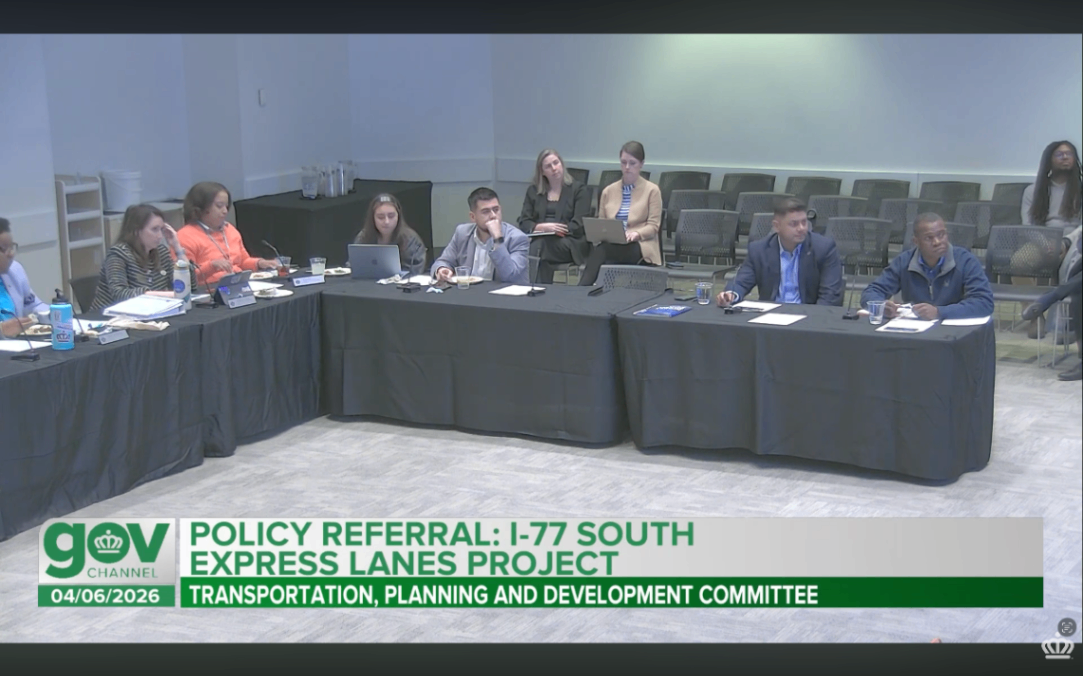
The Transportation Committee reviews the I-77 South Express Lanes project while prioritizing the need for increased community engagement.
(Photo Credit: City of Charlotte/YouTube)
These types of infrastructure debates mirror issues seen in other cities across the country. Minnesota-based OpGov journalist Kristin Hassel reported similar tensions in Tensions Rise At Recent Minneapolis City Council Meeting, where officials grappled with infrastructure planning, funding mechanisms, and public input during a contentious council session.
Closing the Communication Gap
Across the discussions, from council staffing and airport finances to nonprofit funding and infrastructure planning, one theme remained consistent: the need for stronger communication systems between government officials, city staff, and residents.
Research on public administration supports this emphasis. Studies show that two-way communication between local governments and citizens helps build trust and improve accountability, particularly as municipalities grow and policy challenges become more complex.
What’s Next
Charlotte City Council members concluded the meetings with plans to further analyze staffing proposals and refine budget projections ahead of the FY27 budget adoption process. As the city continues to expand, officials will likely face continued pressure to balance fiscal responsibility, infrastructure development, and community engagement.
The full council meeting agendas and materials are available on OpGov.news at Charlotte City Council Meeting (Transportation, Planning, and Development Council Committee Meeting) and Charlotte City Council Meeting (Budget, Governance, and Intergovernmental Relations Council Committee).
You can reach Victoria Osborne at victoriao@lead4earth.org.
(Thumbnail Photo Credit: City of Charlotte/YouTube)
0
0

Comments