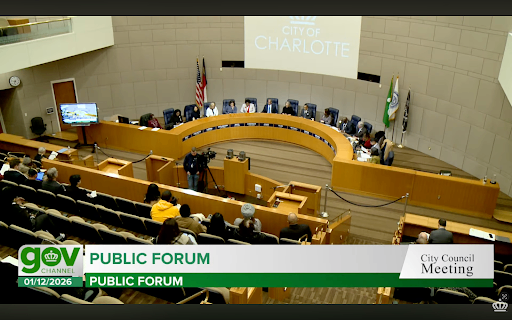
Members of the Charlotte City Council listen during the public forum portion of a City Council meeting where residents addressed council on issues including public safety, equitable development and immigrant community integration.
Photo Credit: City of Charlotte
(CHARLOTTE, N.C.) — The Charlotte City Council approved a wide range of contracts, grants and public-private partnerships Monday night, but not without pointed debate over how the city uses its land, funds public safety and ensures that development benefits long-standing and diverse communities.
The Jan. 12 meeting featured unanimous approval of a $4.3 million interlocal agreement to support the administrative startup of the Metropolitan Public Transportation Authority, which will assume control of the Charlotte Area Transit System later this year under the state’s PAVE Act. Council members largely agreed the new authority is essential for regional mobility, while stressing the need for strong governance and accountability as it launches.
The startup funding will come from existing transit sales tax revenues already collected by the city—not from the new one-cent transit sales tax approved by Mecklenburg County voters in November, which will take effect July 1. The funding covers governance development, legal and accounting services, insurance and other administrative requirements through June 30, 2026.
While the transit vote passed without opposition, sharper disagreements emerged around the use of city-owned property and the pace of equitable development.
Council approved subleases for four businesses at Eastland Yards—Rumbao Latin Dance Company, Alvaranga Realty, Artisen Gelato and Higher Grounds by Manolo—bringing cultural, food and service-oriented businesses to the long-planned East Charlotte redevelopment.
Supporters described the approvals as a major milestone for revitalization, while some council members cautioned against approving deals without fully addressing long-standing equity concerns which many in West Sacramento shared similar concerns in the past year.
Council member LaWana Mayfield warned against deferring difficult questions until after votes are cast.
“But what I don’t want us to do is keep having the same conversation where we’ll approve it now and we’ll try to address it later,” Mayfield said, urging clearer expectations around local business inclusion and community benefit.
Others framed the Eastland Yards decisions as a chance for the city to align its actions with its stated values.
“This is our land. This is when we can put action to our words,” said Council member Renee Johnson, emphasizing the city’s leverage in shaping outcomes on publicly owned property.
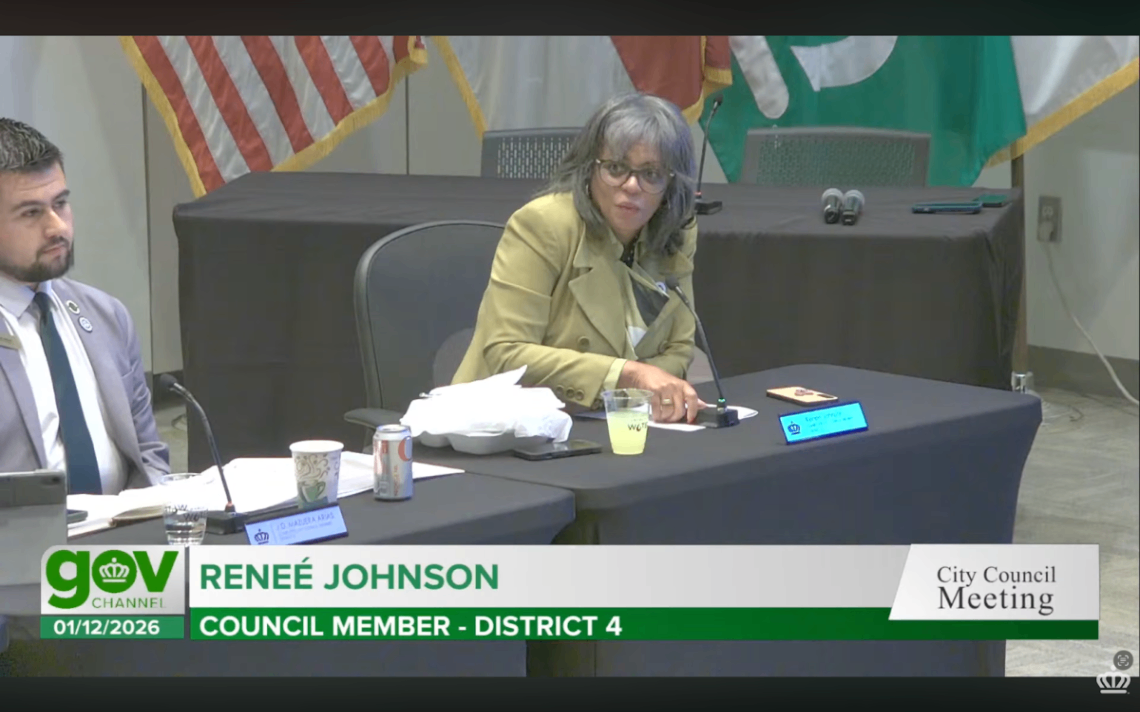
Charlotte City Council Member Renée Johnson (District 4) speaks during a City Council business meeting on Jan. 12, 2026, at the Charlotte-Mecklenburg Government Center.
Photo Credit: City of Charlotte
Public speakers echoed those themes. Business owners described plans for cultural programming, inclusive hiring and reinvestment in the surrounding community.
At the same time, the council deferred two agenda items tied to city land and infrastructure.
A contract for Phase 1 of the Norland Road Shared-Use Path was postponed to a future meeting to allow for a more comprehensive review of the project’s original scope and funding. Council members noted the project had been scaled back over time due to cost escalation and COVID-19 impacts, raising questions about whether the current proposal still meets neighborhood needs.
The council also deferred a proposed lease of city-owned property at 501 West Trade Street to Pivot Parking LLC, citing concerns about affordable parking for workers and the city’s obligation to balance fair market value with broader community priorities.
Public safety emerged as another major focus similarly to that in Sacramento. Council approved multiple consent agenda items related to the Governor’s Highway Safety Program, including grants supporting traffic enforcement overtime, the Driving While Impaired Task Force and the purchase of LIDAR radar equipment.
Despite the approvals, several members expressed alarm over rising traffic fatalities and serious injuries, calling for a renewed “Vision Zero” approach, improved access to crash data and prioritization of safety investments as new transportation funding becomes available.
During public comment, James Barnett told council that Charlotte’s murder rate declined last year but urged officials not to ease their efforts.
“The murder rate in Charlotte decreased last year, and we’re wanting to go all out this year to bring it down even more. We need your support,” Barnett said.
Council also approved an ordinance amendment exempting registered and properly maintained pollinator habitats and naturalistic landscapes from overgrown vegetation enforcement, formalizing a Housing Committee recommendation.
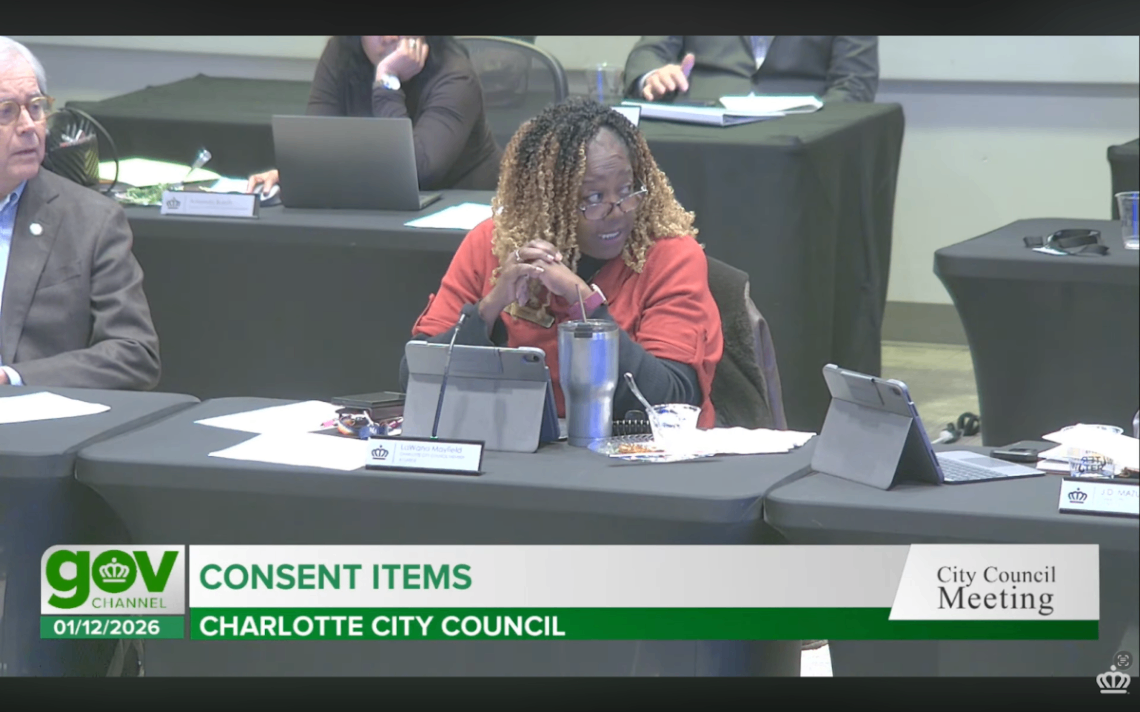
Charlotte City Council Member LaWana Mayfield listens during the consent agenda portion where she raised concerns about approving development items without addressing long-standing equity issues upfront, urging council to avoid delaying accountability.
Photo Credit: City of Charlotte
Workforce development issues surfaced with council extending application deadlines for the city’s “Skilled to Build” workforce development and business engagement grants to Feb. 3, citing low initial participation and the need for broader outreach.
Immigrant integration was another emerging theme. Lennon Caro, a District 4 resident and member of the Charlotte International Cabinet, urged the city to consider creating an Office of International Affairs.
“I wanted to come speak today to urge the city council to consider the development of an office within a city dedicated to better help integrate immigrant communities to the mainstream population like an office of international affairs,” Caro said, pointing to census data showing rapid growth in Charlotte’s foreign-born population.
As the meeting concluded, council members acknowledged progress on key initiatives while signaling that unresolved questions around equity, safety and governance will continue to shape future debates.
You can reach Victoria Osborne at victoria.o@lead4earth.org.
0
0

Comments