(ATLANTA, GA.) — Federal health officials have reported hundreds of cases of cyclosporiasis this year, including some cases in Georgia.
Georgia is currently listed in the 11 to 30-case range of people infected with cyclosporiasis, according to the CDC website. As of July 20, 2026, 1,645 lab-confirmed cases have been reported in the U.S., with the ages of those affected ranging from 5 to 88.
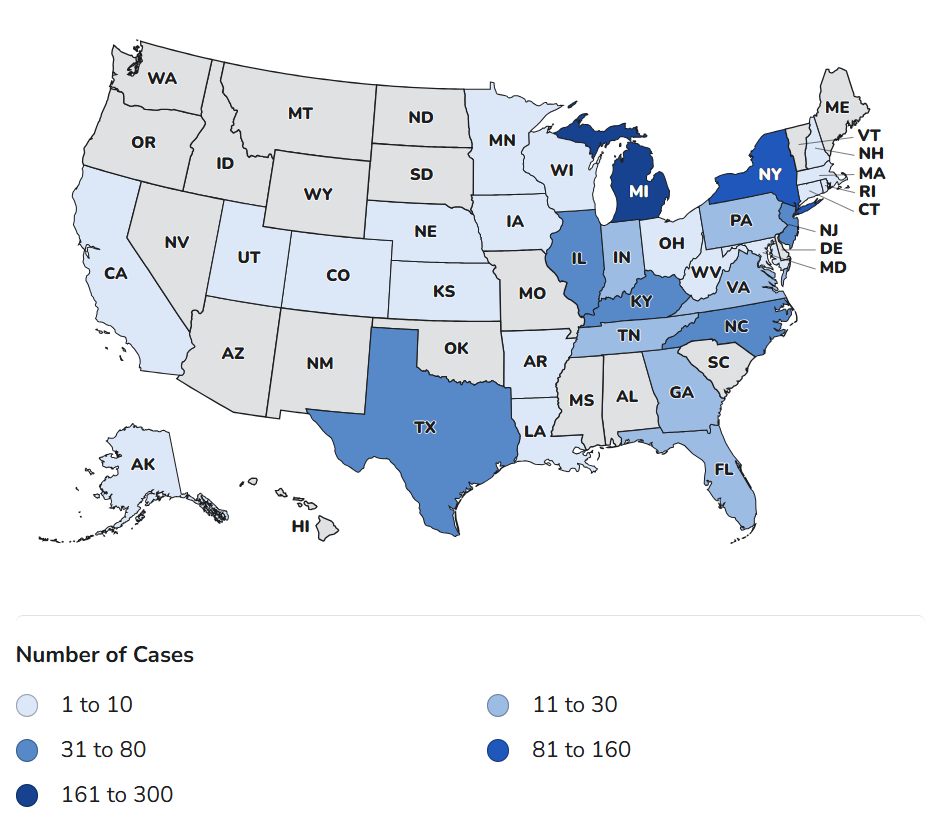
Photo Credit: CDC website
Cyclosporiasis is a foodborne parasitic illness caused by Cyclospora cayetanensis, a parasite that infects the intestinal tract. People become infected after consuming food or water contaminated with feces containing the parasite.
Past outbreaks in the United States have been connected to contaminated fresh produce, including:
Cilantro
Basil
Leafy greens
Raspberries
In 2018, Mcdonald’s was forced to remove their salads from 3,000 locations after dozens of people reported infection. Health officials have not identified a specific food source connected to the current cases.
Symptoms of cyclosporiasis usually begin about one week after a person becomes infected, but can take anywhere from two to 14 days. The most common symptom is watery diarrhea. Other symptoms include stomach cramps, bloating, nausea, fatigue, loss of appetite, and weight loss.
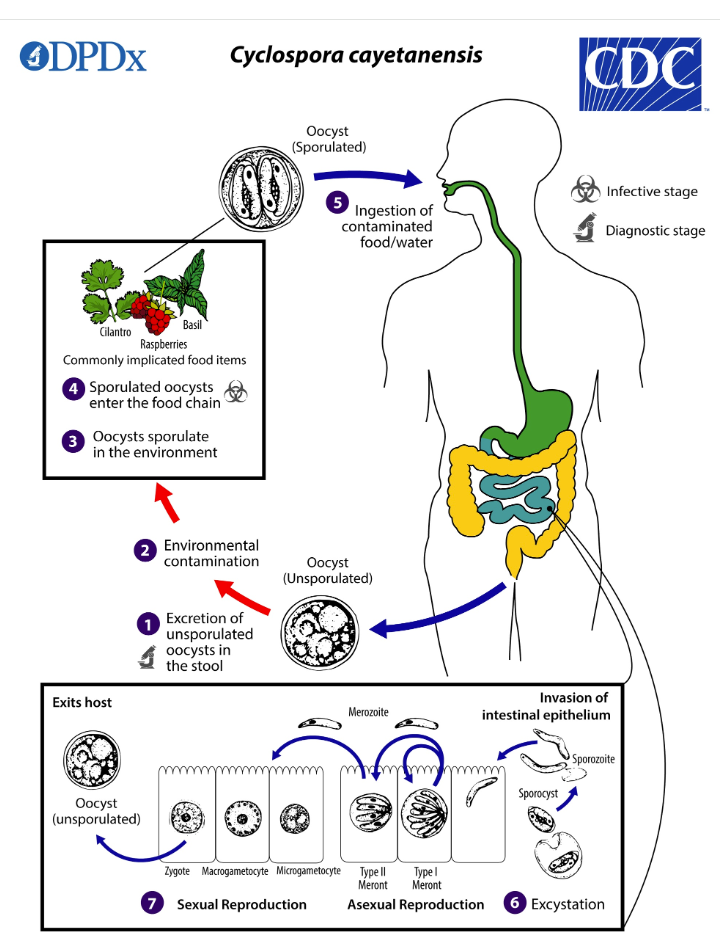
Photo Credit: CDC website
Cyclosporiasis can last for weeks or longe,r but it is usually not life-threatening. Some people may see symptoms improve before they return days or weeks later.
Most people who are in good health recover without treatment, but symptoms can persist without medication. Trimethoprim-sulfamethoxazole is the antibiotic typically prescribed for treatment for cyclosporiasis.
To reduce the risk of infection, health officials recommend washing hands with soap and water before and after handling fresh fruits and vegetables, rinsing and scrubbing produce under running water before eating or preparing it, and avoiding food or water that may be contaminated.
Please email mia.s@lead4earth.com for questions, concerns or comments.
0
0

Comments