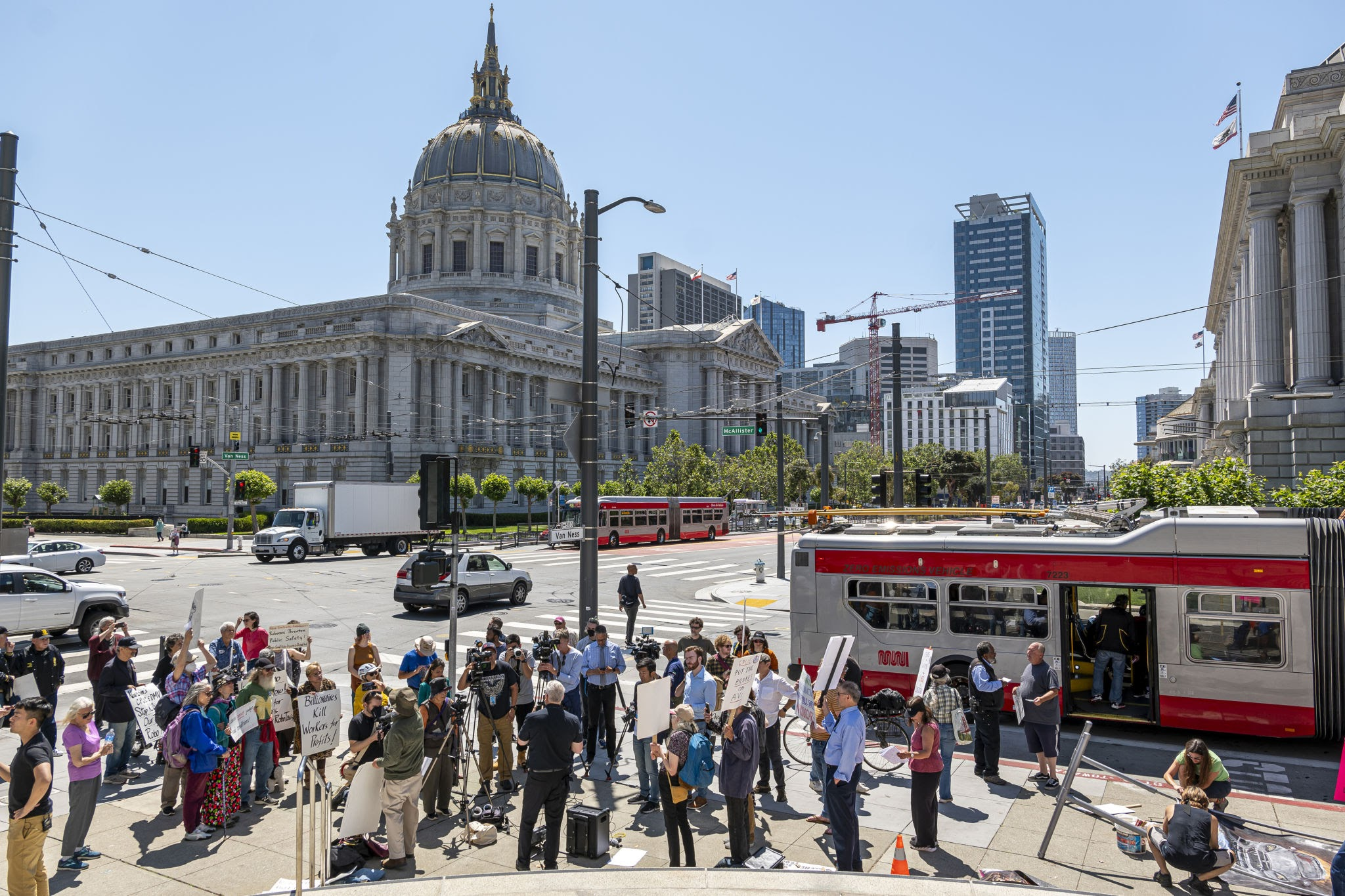
Photo Credit: Bloomberg / Protesters and taxi workers outside San Francisco City Hall during Waymo regulatory hearings.
(SAN FRANCISCO, CA) — August 14 poses a significant milestone for the new industry of autonomous vehicles. For the first time since 2023, the California Public Utilities Commission (CPUC) has approved a major expansion for Alphabet’s Waymo, an autonomous driving technology that operates fully self-driving “robotaxis.”
This approved resolution authorizes the company to scale its driverless robotaxis across 18 California counties, including the entire San Francisco Bay Area, Los Angeles, Sacramento, and San Diego, on both local streets and highways.
Following the new approval, Waymo released a statement announcing “Big news for the Golden State — we have received the CPUC’s approval to expand our autonomous ride-hailing service across the SF Bay Area and LA”.
CPUC officials maintain that the decision is grounded in regulatory safety, with Commission President Alice Reynolds emphasizing that the decision was based on “data and evidence, and on the proper scope of our authority." However, advocate groups raise concerns over the long-term ramifications of the increased presence of the Waymo.
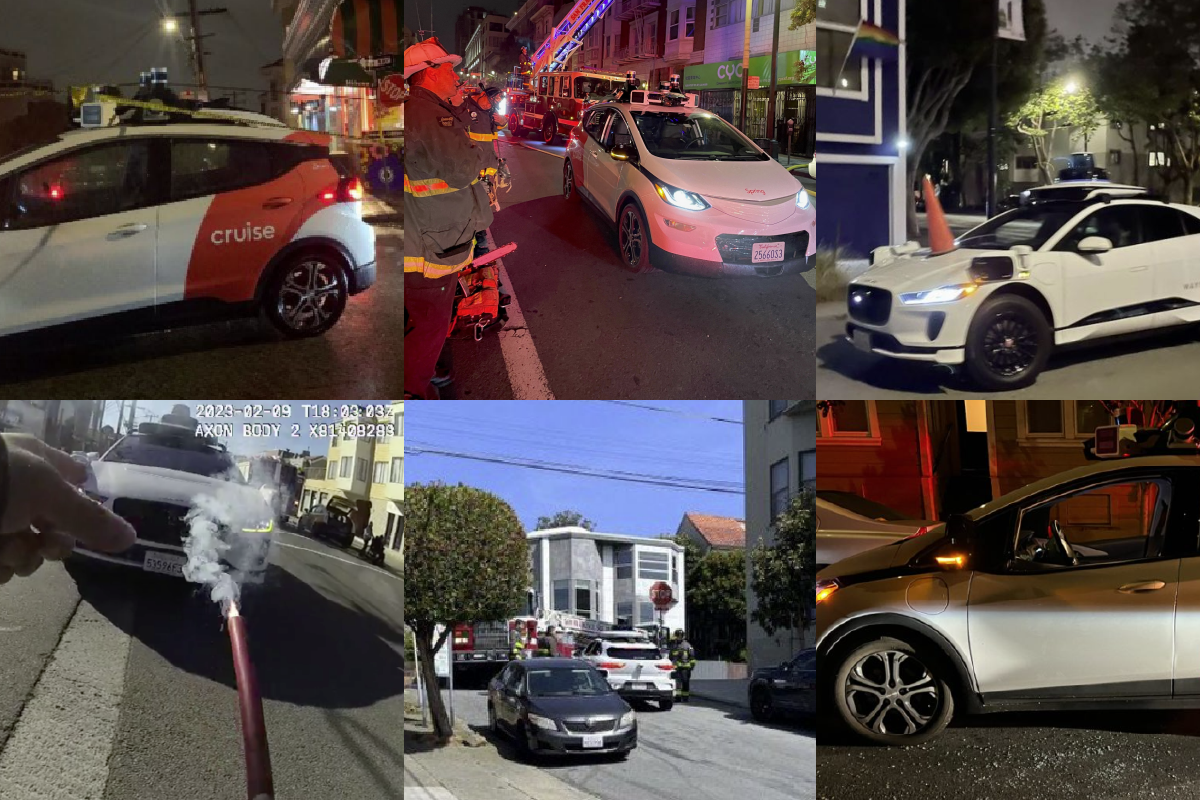
Photo Credit: Mission Local / As of August 8, 2026, the San Francisco Fire Department has recorded 55 incidents of Waymo interfering with first responder vehicles.
This expansion has the capacity to alter daily life of urban California residents in both tangibly beneficial and negative ways; supporters argue that removing human drivers eliminates human error, such as distraction, fatigue, or impairment.
Moreover, disability rights’ advocates praise the technology for unlocking new mobility options.
Lana Nieves, Executive Director of the Independent Living Resource Center of San Francisco, claims that autonomous transportation “represents a future with greater independence, the ability to go where we want to go, when we want to go, and to do so on our own without having to get into a car with a complete stranger.”
On the other hand, local emergency officials raise concerns about recurring software glitches, which poses a danger on the road; risks such as unexpected vehicle stalls blocking busy intersections, delayed public transit, and obstruction of emergency vehicles remain persistent safety concerns. CPUC Commissioner Genevieve Shiroma, who had dissented on expansion resolutions, cautioned that it was still “premature to vote for these resolutions today.”
As criticism for the increasingly visible impact of AI and its data centers emerges, citizens seek to also examine the nuanced impact of autonomous vehicles on the environment. Since Waymo’s fleet consists entirely of electric vehicles, supporters underscore its potential to reduce long-term carbon emissions and reliance on gas-powered vehicles. Waymo co-CEO Tekedra Mawakana states that she hopes to eventually see “more green spaces, more convening spots,” and the redeployment of transportation budgets into other services.
However, in contradiction to Mawakana’s claims, environmental advocacy groups actually cite concerns of increased traffic volume that render the efforts to mitigate greenhouse gaps ineffective. Large numbers of driverless vehicles cruising the streets between passengers (known as “deadheading”) could generate significant congestion and energy consumption.
City Attorney David Chiu in a legal challenge against Waymo’s expansion argued the regulators actually failed to comply with California environmental regulations because allowing thousands of unrestricted robotaxis would cause “serious harm” and “The decision permits industry expansion without solving any of the underlying problems”.
Additionally, as per Mawakana’s stated goals, critics fear that lower-cost autonomous rides could siphon passengers away from buses and trains, undermining the chance for future expansion of free public transit through funding reductions.
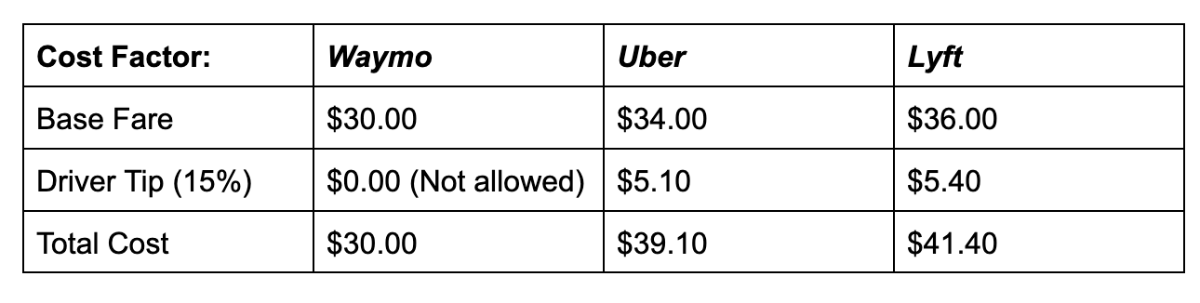
Photo Credit: Techcrunch.com / Ride Cost Comparison Breakdown for 7.5-8 Miles
This decision also carries notable financial implications for consumer budgets, local labor, and city infrastructure. For urban riders, the lower cost nature of Waymos could further influence decisions to forego private car ownership altogether, eliminating thousands of dollars in annual auto insurance, maintenance, fuel, and parking fees.
However, traditional taxi drivers and the gig-economy now face rapidly growing competition for fares, raising concerns about long-term income stability and job displacement, especially in lower-income households and communities.
Highlighting the labor and economic disparities, Justin Kloczko of Consumer Watchdog warned during public hearings that the “CPUC is helping accelerate a massive transfer of wealth away from working people to tech monopolies.”
As commercial, driverless fleets seemingly endlessly scale on our public roads, the coming years will serve to test Waymo’s promises of improved safety and accessibility. Simultaneously, consumers and businesses alike will come to see if new forms of AI will serve our communities new forms of convenience, or amplify current issues.
To add to or correct any information in this report, please contact me at alizeh.i@lead4earth.org.
0
0

Comments