(CHARLOTTE, N.C.) — As Charlotte continues to grow rapidly, housing affordability has become a recurring focus in City Council discussions, with residents and officials increasingly questioning whether the types of housing being built are meeting local needs.
Recent Housing Committee discussions have centered not only on rising costs but also on the composition of new development across the city, particularly whether ongoing growth is producing the mix of housing residents say they can realistically afford.
Shifts in housing development under scrutiny
While new construction continues across Charlotte, including a growing number of apartment complexes and townhome developments, concerns have emerged about whether enough single-family homes or lower-cost housing options are being added to the market.
City officials have pointed to ongoing efforts to address housing demand as population growth and development pressures continue to reshape neighborhoods.
Warren Wooten of the city’s Housing and Neighborhood Services department noted the scale of recent preservation efforts during the committee meeting, “So, you’ve invested over $56 million in 15 NOAH communities here since 2018. In that preservation count, it is up to 22.”
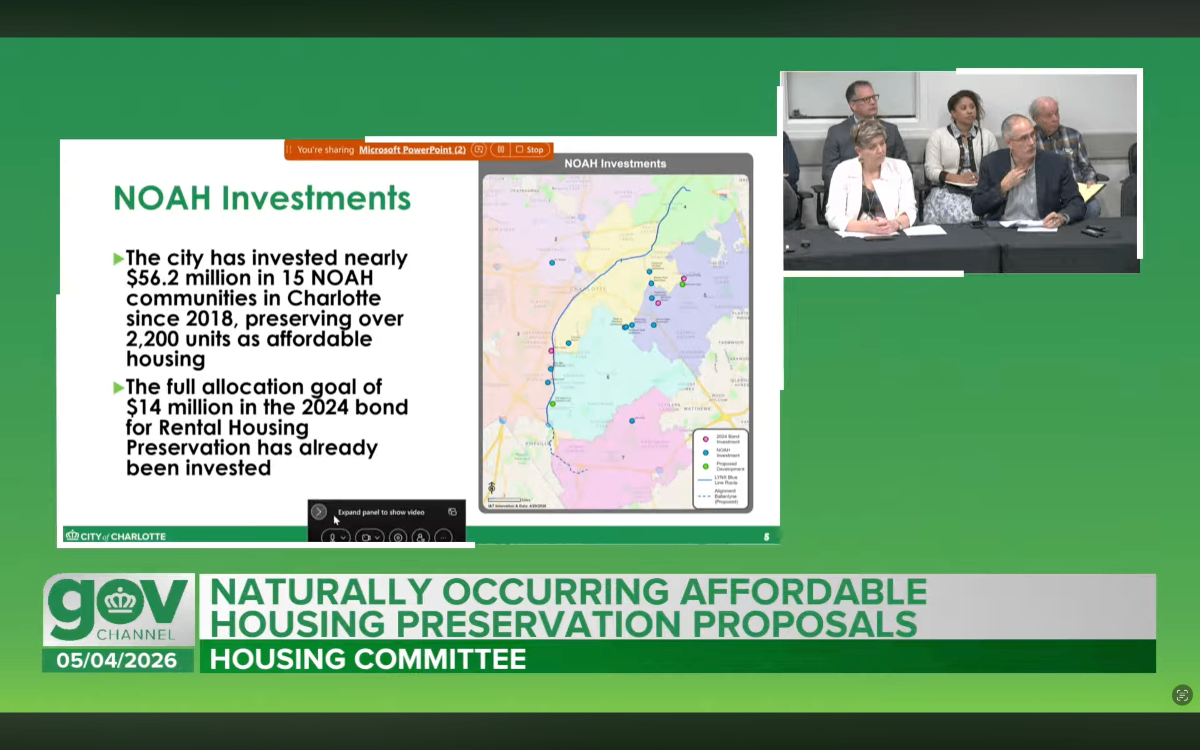
A map presented to the committee shows the distribution of nearly $56.2 million invested in 15 Naturally Occurring Affordable Housing (NOAH) communities across Charlotte since 2018.
(Photo Credit: City of Charlotte/YouTube)
According to the City of Charlotte’s affordable housing program overview, these investments are part of a broader strategy to preserve Naturally Occurring Affordable Housing (NOAH) units and prevent displacement as rental costs rise across the region.
Housing pressure is not unique to Charlotte. In Sacramento, California, policymakers recently expanded direct support programs for vulnerable populations. The initiative was detailed in Sacramento Launches Landmark Guaranteed Income Program for Foster Youth, written by Sarah Denos in Sacramento, and highlights how some cities are using direct financial assistance to address housing instability at earlier life stages.
At the same time, regional housing trends show continued emphasis on higher-density development, with much of the new residential construction in Mecklenburg County concentrated in apartments and townhomes due to land constraints and zoning patterns that encourage compact development.
Officials weigh growth and affordability challenges
The council members reviewed ongoing development trends and emphasized the need to balance continued growth with affordability goals.
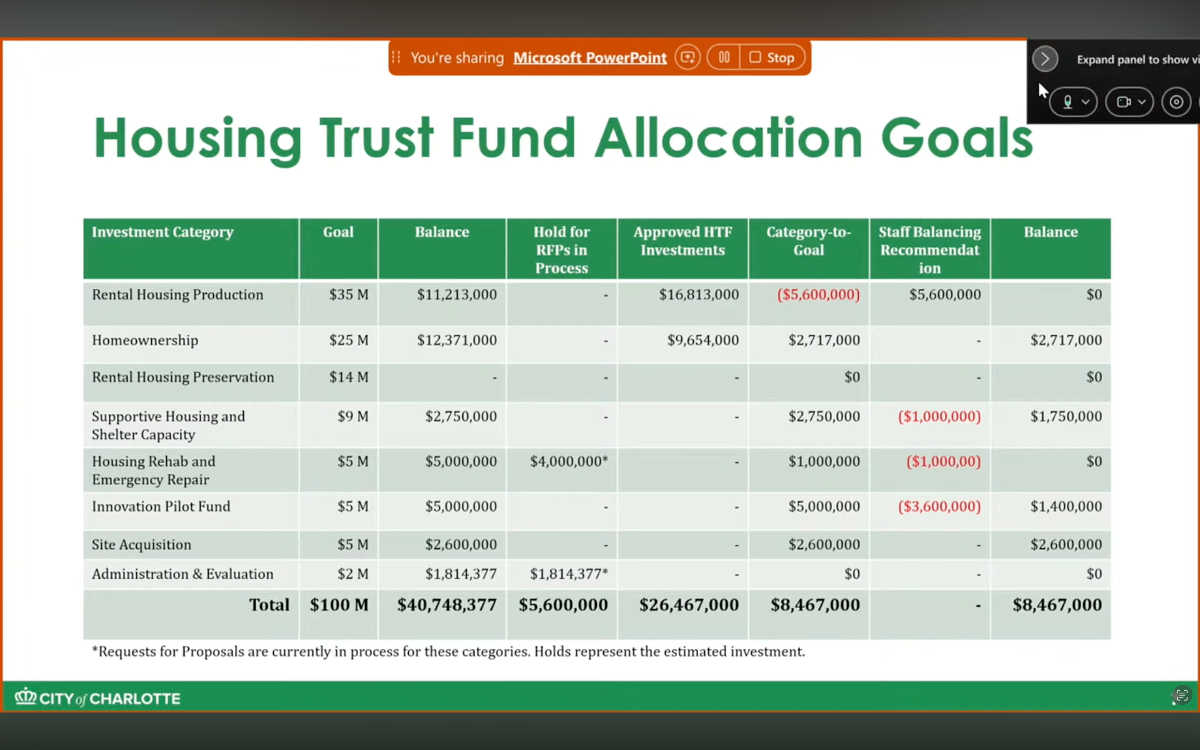
The city's Housing Trust Fund allocation goals highlight the specific financial targets for diverse housing needs, including production, homeownership, and emergency repairs.
(Photo Credit: City of Charlotte/YouTube)
Officials noted that while increased density can help address housing shortages, concerns remain about whether current development patterns are serving residents across a wide range of income levels.
City leaders have said that addressing housing affordability will require a combination of zoning adjustments, incentives for affordable housing development, and partnerships with private developers. However, officials also acknowledge that market forces and construction costs continue to influence what types of housing are ultimately built.
Similar tensions between development priorities and community expectations have also surfaced elsewhere.
In Escambia County, Florida, planning decisions have sparked debate over zoning and land use priorities. Escambia County Planning Board Rezoning Proves Developers First, written by Angela Underwood in Escambia County, Florida, highlighted resident opposition to commercial rezoning approvals, raising broader questions about how development decisions balance economic growth with community input.
Residents voice concerns over housing options
Residents echoed some of those concerns in community discussions, pointing to rising home prices and limited availability of single-family homes in certain areas of the city. Some expressed frustration that new development appears concentrated in apartments and townhomes, which they say may not align with long-term needs for families or individuals seeking more space or ownership opportunities.
The pressure on residents is reflected in the broader regional housing shortage. The 2025 Charlotte-Mecklenburg State of Housing Instability and Homelessness Report found that nearly 77% of the region’s low-cost housing stock has been lost since 2015, contributing to a widening rental affordability gap across the county.
Others noted that higher-density development may be necessary to accommodate continued population growth, particularly as available land within city limits becomes more limited.
Mirroring the report, it is reflected in official estimates from the city.
Rebecca Hefner with Housing and Neighborhood Services said, “So, in Charlotte, its city limits, as of 2024, the estimate of the rental affordability gap is approximately 42 thousand units at 50% AMI and below.”
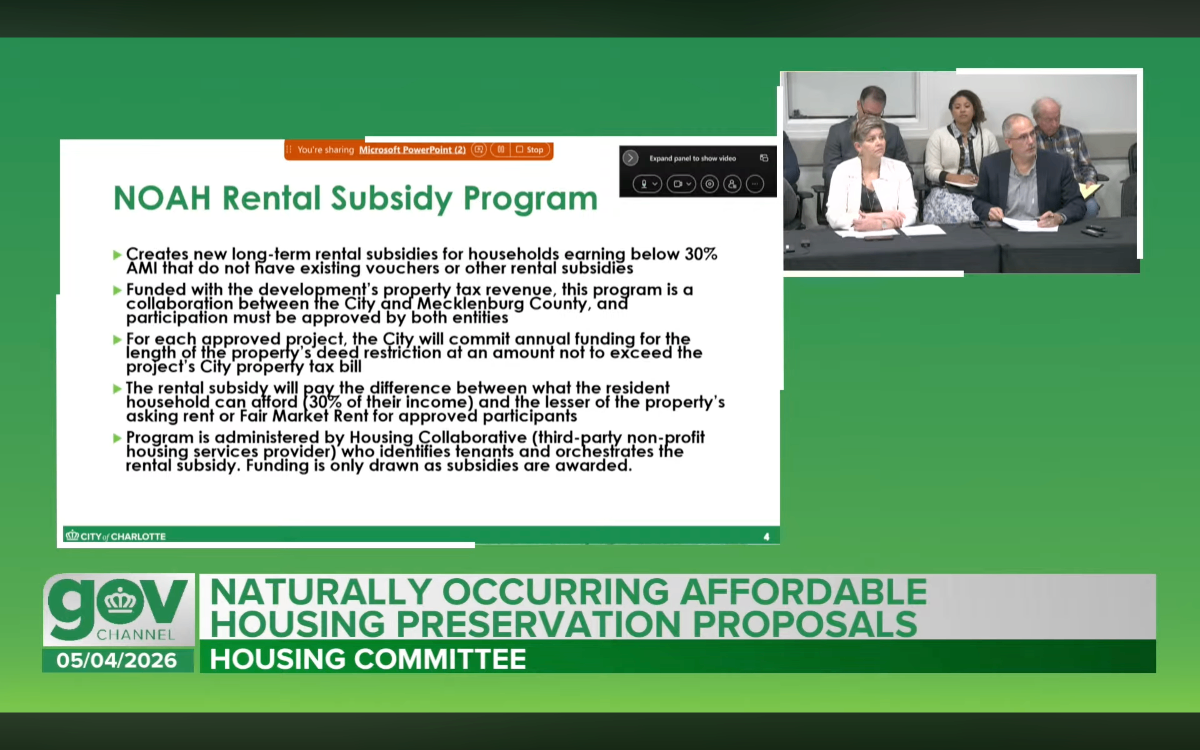
City staff reviews the NOAH Rental Subsidy Program, which aims to bridge the affordability gap for households earning below 30% of the Area Median Income.
(Photo Credit: City of Charlotte/YouTube)
Broader affordability questions remain
Housing affordability remains a central issue for Charlotte as the city balances rapid growth with infrastructure demands and land-use constraints. The debate over housing types reflects a broader challenge facing many growing metropolitan areas: how to ensure that new development aligns with both market realities and community needs.
Across the country, cities are experimenting with different approaches, from Sacramento’s direct income support model to zoning disputes like those seen in Escambia County, illustrating the range of policy tools being tested to address housing and governance pressures.
As discussions continue, residents and officials are expected to revisit housing supply strategies in upcoming committee meetings, with a continued focus on long-term planning and development patterns.
Looking ahead
For now, questions remain about whether Charlotte’s current development trajectory will produce a housing mix that aligns with the needs of its growing population.
Amid these concerns, residents’ experiences with rising costs and changing housing options, and whether current development meets those needs, remain an open question in the broader housing debate.
The full meeting agenda and materials are available through OpGov.news at the City of Charlotte Meeting.
You can reach Victoria Osborne at victoriao@lead4earth.org.
(Thumbnail Photo Credit: City of Charlotte/YouTube)
0
0

Comments