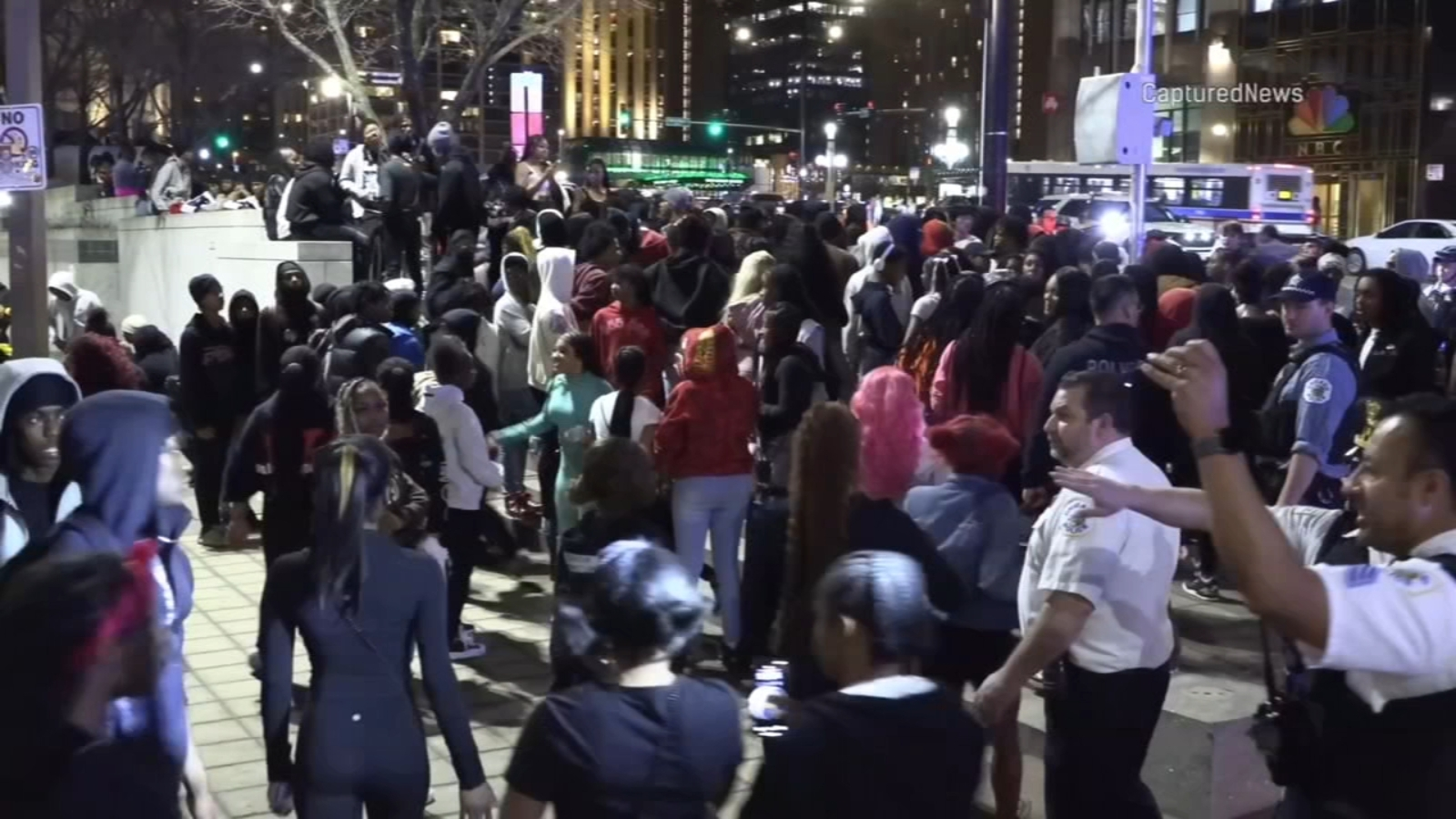
Photo Credit: ABC7 Chicago
(OPGOV GLOBAL) – Teen takeovers over the Independence Day weekend have led to multiple fatalities, injuries, and a growing concern for the youth of the country.
Incidents in Raleigh, North Carolina; Washington, D.C.; Pittsburgh, Pennsylvania; North Charleston, South Carolina; and Newport Beach, California, among others, were set forth by a series of “teen takeovers” with unprecedented consequences.
Reports of injuries and fatalities following gun involvement have flooded in over the weekend.
The aftermath doesn’t stop there; vandalism has been reported as a result of multiple similar gatherings, leaving local shops, cars, and other structures damaged or otherwise unusable. The addition of fireworks over the holiday weekend only exacerbated the chaos.
Local law enforcement agencies in locations where teen takeovers have become more frequent are exasperated and frankly overwhelmed by the commotion, unable to gain control over situations where thousands of participants are in attendance, outnumbering law enforcement agencies and refusing orders of dispersal.
Chief Michael Paris of the Fairfield Police Department spoke about the rising danger of these takeovers to the Police Executive Research Forum in May of this year, encouraging police agencies not to discourage the events, but to be aware of them and to be present for them.
“This has been a problem ever since it got warm. We’re seeing what I guess you would call ‘promoters.’ They go on Instagram—and TikTok and other social media, but mostly Instagram—and put out a flyer saying, ‘We’re taking over Navy Yard at this date and time,’” he said.
Chief Paris stated that while these events are being treated as public disturbances, discouraging them may trigger a sort of rebellion response.
“We’re very deliberate in the communication we send out. We don’t want to trigger reactance theory and say, ‘Don’t come down here.’ Because, especially with a juvenile mind, that’s an open invitation to challenge authority. So, if we put anything out on social media, it’s much more along the lines of, ‘We are aware of the event. The police will be present,’” he adds.
So, what is convincing teens to gather en masse and behave in a way that suggests no personal moral obligation to the fallout of these events?
Some experts say the gatherings started as a way for young people to connect in public spaces. This behavior is purported to alleviate boredom, encourage the advancement of social skills lost to the recent pandemic era, and fill a gap left by the fall of the “third space” away from the pressures of school or home.
Flyers like the one below are posted to social media websites and shared until they become viral, often reaching several thousand views within the first day.
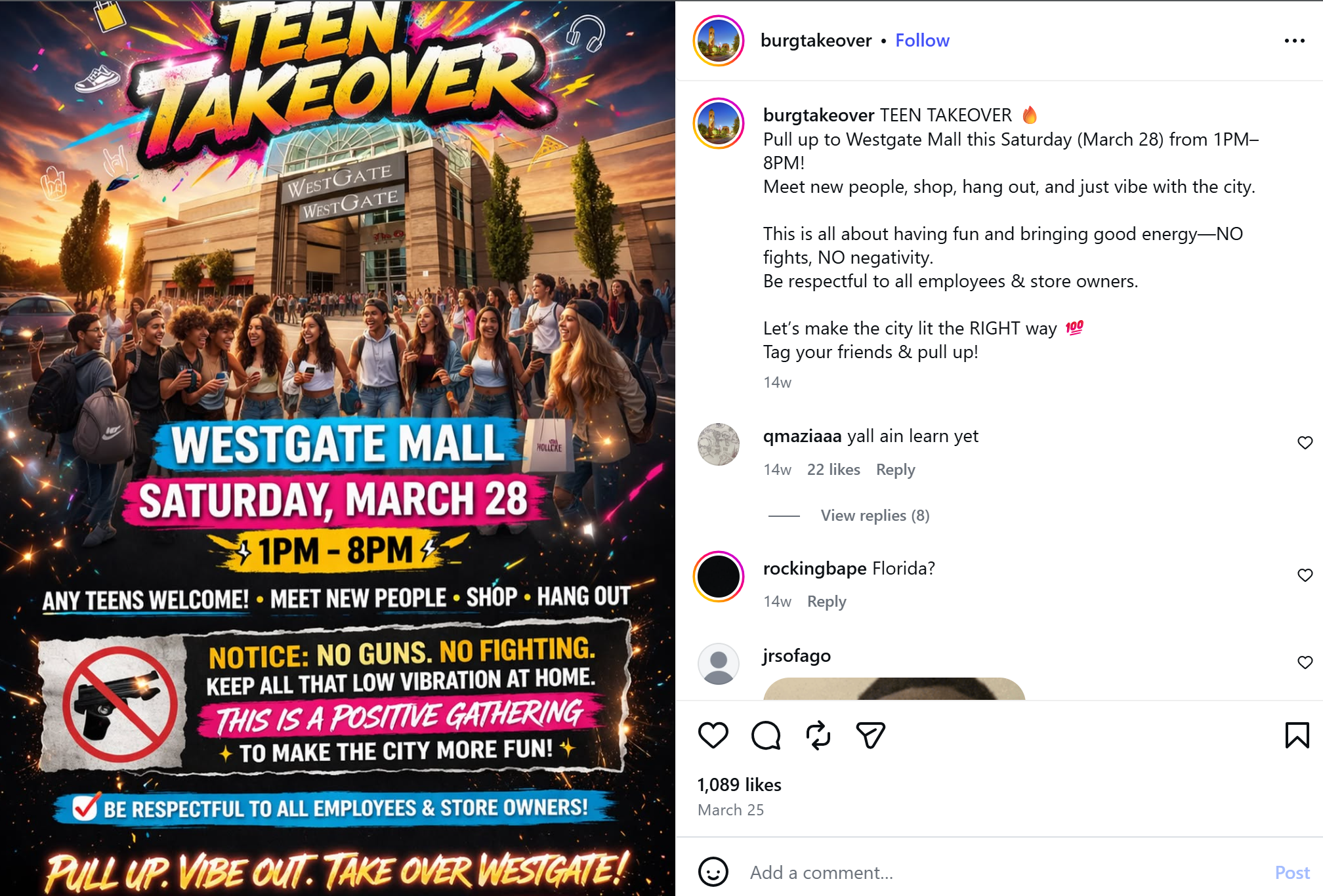
Photo Credit: Instagram / Burgtakeover
The promotion of such events often looks like a flyer, but those flyers can range from “no weapons/no violence” to messages conveying the intent of destructive behavior.
It’s easy to place blame on parents or on social media for this type of action in younger populations, and maybe it can be tied to parenting and screen time, in part. But experts think that the lack of socialization during critical years of development during the pandemic, alongside a growing lack of third spaces for teens, contribute too.
A piece published in Psychology Today recognizes the shortcomings of social media use with no parental interference. The downside, it says, is when parents allow unlimited screen time or impose limits without explaining the potential negative effects of long-term social media use.
The combination of a society fueled by distant, online connection while third spaces crumble away is driving action in teens, and while it’s (mostly) good-spirited to begin with, sudden, overwhelming social pressures in crowded situations can spark ill-intentioned outcomes.
Previous generations, such as Gen X and its “latchkey kid” era, saw similarities with today’s youth. With the current economy forcing an all-time high of 52% of American households requiring both parents to earn an income, the era of kids being left alone at home after school has returned with a force.
A 2015 study in the American Journal of Nursing Science outlined the effects of kids who were left to fend for themselves before or after school, or both. The study found that these children, who often found themselves home alone at a young age, were more likely to develop detrimental social habits such as “greater susceptibility to peer pressure, such as alcohol abuse, drug abuse, sexual promiscuity and smoking”.
This study also examined another, which concluded that, “middle school students left home alone for more than three hours a day reported higher levels of behavioral problems, higher rates of depression and lower levels of self-esteem than other students.”
While not all solutions are one-size-fits-all, a study in 2025 out of Kyoto University determined that providing a “third space” for adolescents significantly reduced their potential to turn to negative behaviors.
The study concluded that, “adolescents with access to a third place demonstrated a reduced likelihood of experiencing internalizing issues, including emotional difficulties and problems in peer relationships, compared with those lacking such a space. Consequently, having a third place may help mitigate the risk of behavioral issues among teenagers.”
A sharp decline in third spaces as local businesses shutter doors, parks and public areas face budget cuts, and costs of living rise all impact the way kids interact with peers in their communities.
Hyperlocal government legislation across the country is seeing less and less support for youth engagement, further pushing the gap between the country’s youth and the socialization they clearly want as they grow up in a society connected primarily by web pages.
Some adolescents are advocating through these systems, pushing for more recognition and awareness in their communities and demographics while promoting positive perspectives on youth engagement across communities.
Though opening a new coffee shop downtown isn’t the solution to the rising problems the American youth face right now, pivoting the way our governments support them could be the spark needed to change the way kids are heard and supported as they grow up in the U.S.
To add to or correct any information in this report, please contact me at tracy.t@lead4earth.org.
0
0

Comments